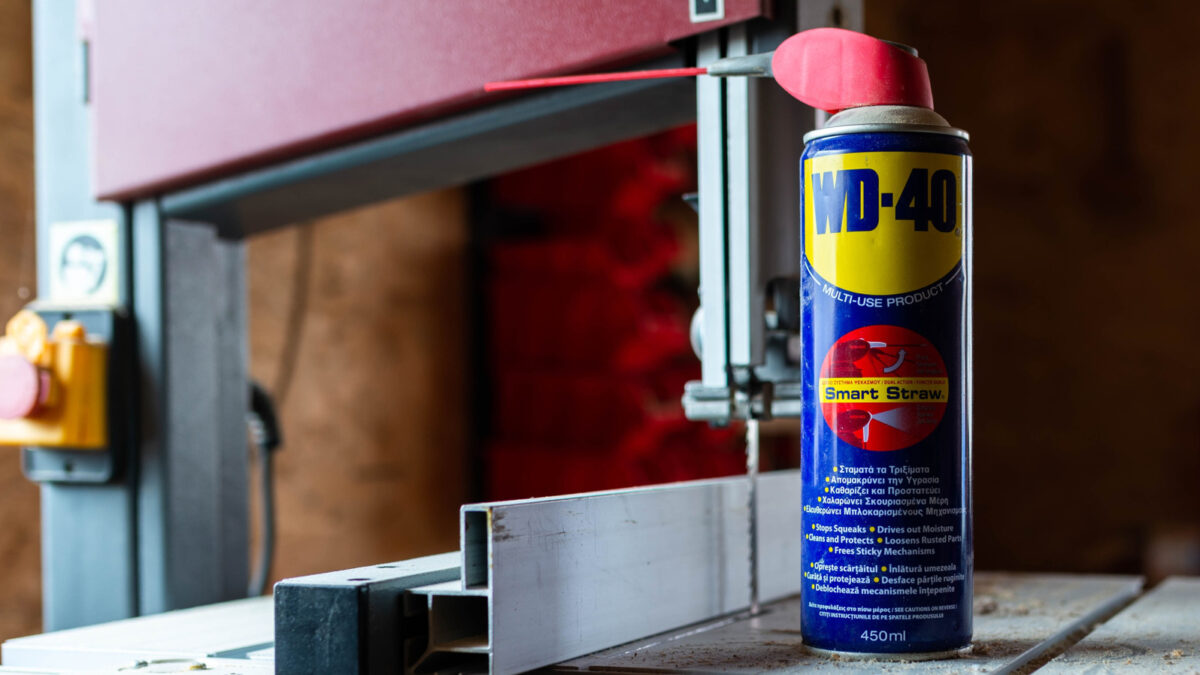
WD-40 disadvantages as a lubricant, Digi Mart USA News: Many homeowners reach for a can of WD-40 when a latch sticks or a shed key will not turn. According to a House Digest article, the original WD-40 Classic Multi-use Product helps loosen corrosion, displaces moisture and lightly lubricates moving parts.
The article notes, however, that freeing a mechanism is not the same as keeping it properly lubricated, and a freed part may wear down faster or stick again.
The article says WD-40 does contain lubricating ingredients and solvents that displace water, so it is not accurately described as a non-lubricant. It adds that the manufacturer describes the product as a light lubricant that does not offer the longer-lasting protection needed for heavy-duty jobs.
For a lightly used metal hinge, a quick spray may be adequate, but chains, grease-packed bearings and some mechanisms with plastic or rubber parts may not be suited to it.
The solvents in WD-40 evaporate soon after application, leaving a light protective film that the article says is suitable only for light tasks. Lawn equipment rollers, chains and bearings, a gunky chainsaw and a struggling garage door mechanism are described as needing thicker grease or a manufacturer-specified lubricant.
The article cites WD-40’s White Lithium Grease as an example of a special product for garage doors.
The article also warns about dirt collection. A sliding door track gathers dust, pet hair, crumbs and outside debris, and a generous oily coating can make that debris stick, creating a gritty buildup that stiffens the door and can damage the track.
Applying more lubricant to an already dirty part does not remove the underlying problem, so the article recommends cleaning first. Where a greasy film is a problem, it suggests dry lubricants such as polytetrafluoroethylene (dry PTFE) as an alternative.
Because WD-40 contains solvents, it can wash out or displace grease that a mechanism already needs, as the article says can happen inside a sewing machine. The article advises checking the manufacturer’s instructions and first determining whether a part is worn, misaligned or damaged before spraying.
It also notes that overspray can reach rubber, plastic and wood. Some rubber compounds can swell, certain plastics are vulnerable to solvent damage, and oily residue can stain bare wood or interfere with finishes.
The article recommends a compatible silicone-based product for rubber or plastic parts and a test spot on wood.
Finally, the article states that the original WD-40 multi-use product carries an extremely flammable classification and should not be sprayed near a lit burner, pilot light, hot appliance or other ignition source, with good ventilation advised. It also says WD-40 should not be sprayed into a live switch, outlet or powered appliance, and that it is not an electrical contact cleaner.
For electrical components, the article recommends shutting off power and using a product designed for that application.