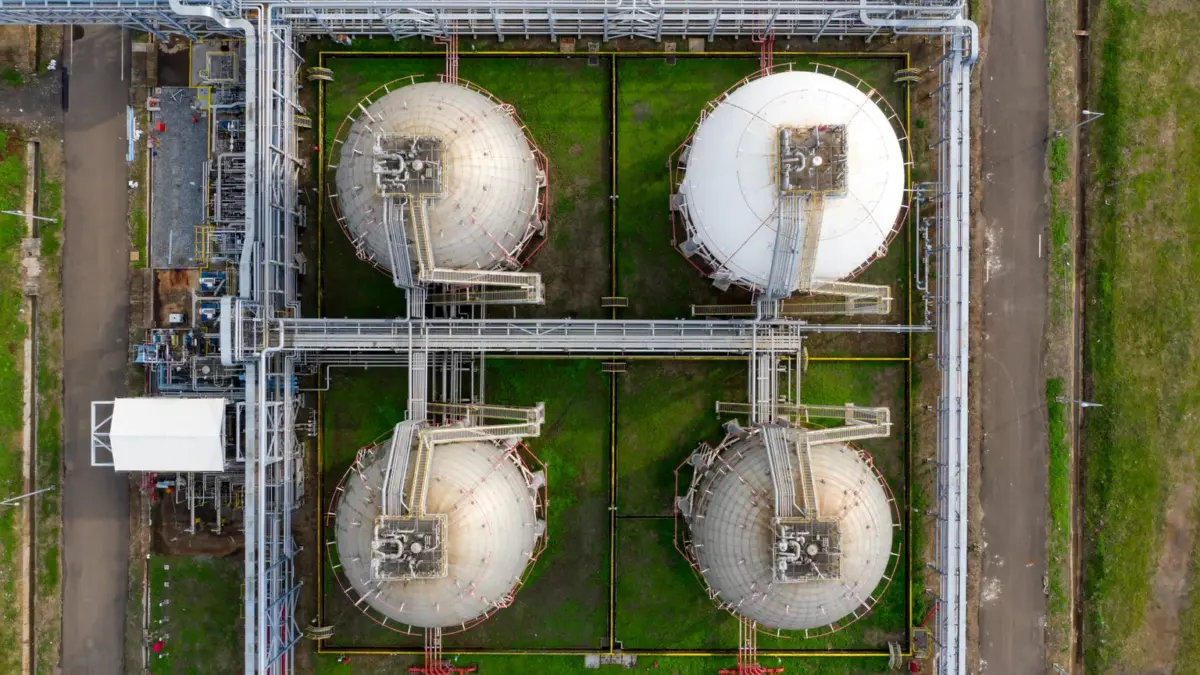
Kamensky chemical plant, USA News: Russia has once again been hit behind enemy lines after a huge Ukrainian drone and missile operation struck a major fuel production facility in the early hours of Saturday morning. The Kamensky chemical plant in Russia’s deep south Rostov region was hit, according to the general staff of the armed forces of Ukraine on Telegram. The facility produces solid rocket propellant which is essential for several Russian weapons used in the ongoing assault on Ukraine.
Overnight, Ukraine also targeted other energy facilities, including the Bashneft refineries in Ufa, which set one of the complex’s reforming units on fire, according to Bloomberg. A complex system of drones and navy Neptune missiles was launched against Kamensky, the Ukrainian military said. It suggested the facility produced solid rocket fuel for the Uragan, Smerch, and Tornado-S MLRS ammunition, as well as for a number of missile systems and aircraft weapons. The stated aim of the strike was to reduce the ability of the Russian army to shell Ukrainian settlements with multiple launch rocket systems.
Ukrainian general staff also said it had hit four army warehouses in the Donetsk region in synchronised strikes overnight. Taken together with the hit on Bashneft, it makes it clear that Ukraine is continuing to target Russian energy production facilities despite warnings from Washington.
Impact on Russian Energy Capacity and Economy
Scott Lucas, professor of international politics at University College Dublin, said the strikes will put pressure on Russian energy capacity which could affect its war effort. Professor Lucas added the blow comes just days after Russia reopened the flow of fuel to regions where there had been severe shortages earlier in the year. He noted that the Russians had lifted restrictions on fuel sales in 15 regions, including Crimea, accompanied by Donald Trump’s announcement that he was going to purchase fuel from Russia.
In fact, renewed Ukrainian attacks over the past few weeks have contributed to a waning Russian economy, Professor Lucas said, accentuating severe constraints.
Implications for the US Diesel Deal
Earlier this month, Donald Trump agreed a deal with Vladimir Putin that will allow Russia to immediately release diesel into the US and global markets. The move led to accusations that Trump is helping to fund Putin’s war against Ukraine, and Volodymyr Zelensky later attacked the US over the deal, describing it as a weak decision. The US Department of the Treasury issued a temporary license to enable Russian diesel to flow to global markets through April 2027, allowing Russia to deliver more than 300,000 tonnes of diesel Trump said would be delivered immediately, as well as further 500,000 tonnes in November.
On Saturday, Russia announced it would extend its export ban on diesel through to the end of January 2027, indicating it is worried about domestic supply. However, Professor Lucas pointed out that exceptions would include diesel sent across to the US as Russia continues trying to secure support from Trump.