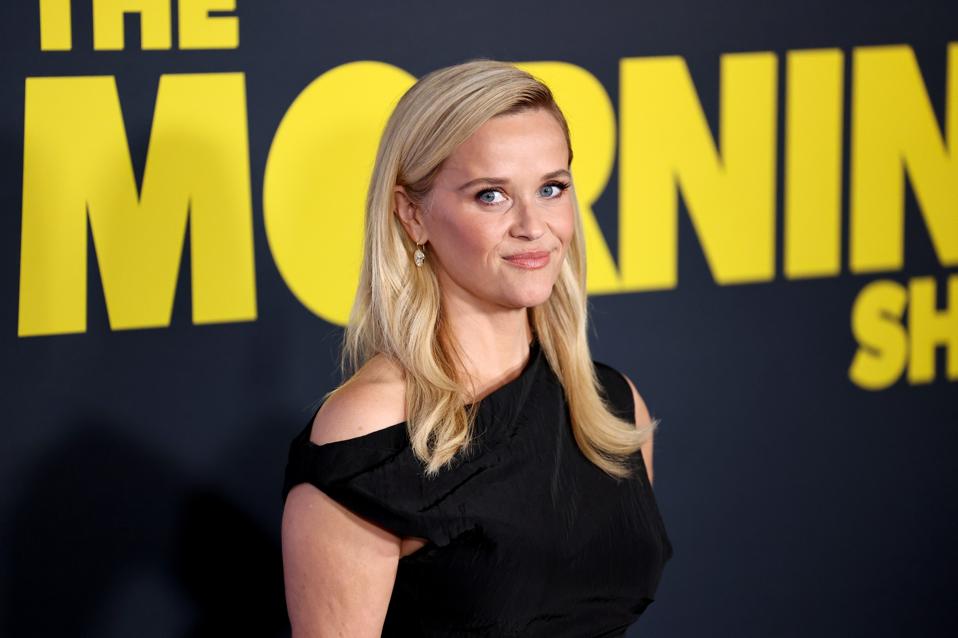
Reese Witherspoon buys back Hello Sunshine, Digi Mart USA News: In 2021, Reese Witherspoon became a prominent example of a female founder exit. Blackstone-backed Candle Media, led by former Disney executives Kevin Mayer and Tom Staggs, took a controlling stake in Hello Sunshine at a reported $900 million valuation.
Blackstone put more than $500 million in cash on the table to buy out early investors, including AT&T and Emerson Collective, while Witherspoon rolled her remaining equity into the new company.
Forbes put her net worth at an estimated $400 million on the back of the deal. Five years later, she is buying the company back.
On October 13, Witherspoon and Paris-based studio Mediawan announced they would acquire Hello Sunshine from Candle Media. No price was disclosed, but Axios reported it in the low- to mid-eight figures.
Even at $50 million, that would be a drop of roughly 94%.
Within weeks, Variety and TheWrap reported that about 30 roles, roughly half the staff, had been cut. The direct-to-consumer division was gutted, and the company refocused on film, television and Reese’s Book Club.
Most coverage has framed this as a fall. The author argues that misreads it.
What happened at Hello Sunshine reflects what the author calls the Valuation–Values Gap: the distance between what capital prices a founder-led company for, and what actually creates its value. When that gap widens, the business is mispriced.
When the investor thesis collapses, the founder can step back into the gap and reclaim the company on her terms.
Candle’s thesis was scale. Hello Sunshine was its first acquisition in a plan to build an independent studio that would sell content to every streamer and spin off commerce and merchandising businesses from its brands.
Blackstone was reported to believe Candle could be worth $20 to $30 billion and be ready to go public within a couple of years. The deal was struck at the peak of streaming, when buyers were paying for libraries and pipelines as if demand would never slow.
Demand did slow. In 2023, Bloomberg reported that Hello Sunshine was on track to deliver only around 10% of its expected annual earnings, as the writers’ and actors’ strikes froze production and streamers cut content budgets.
By early 2025, Blackstone was exploring options for Hello Sunshine, including a merger, and Candle had moved from building an integrated company to exiting its brands one by one. In February, it sold a majority stake in digital media company ATTN: back to its co-founders.
Hello Sunshine is the second founder homecoming at Candle this year.
The author argues the valuation story misses a key point: the asset that made Hello Sunshine valuable never really left Witherspoon. According to the company, Reese’s Book Club reaches 6.2 million readers and drives around $900 million in US book sales.
The club serves as the front end of an intellectual property pipeline, turning books into the film and TV adaptations the company is known for, including Big Little Lies and Where the Crawdads Sing.
That engine runs on trust in the founder’s taste. Investors priced the structure, including scale, synergy and an exit multiple.
The value sat with the founder and the community she built. When the structure lost its value, what remained was what she could buy back.
The restructuring involved a strategic narrowing. Cutting around half the workforce and the direct-to-consumer team refocused the company on its core: stories, screens and the book club.
CEO Maureen Polo, who succeeded Sarah Harden in 2025 after Harden’s seven years in the top role, came up through that same direct-to-consumer business, where she oversaw Reese’s Book Club. The author notes that focus carries a cost borne by people, and that founders who reset their companies should be honest about that cost.
The author also points to the buyer. Mediawan, the Paris-based studio group backed by KKR, has assembled nearly 100 production labels, including Brad Pitt’s Plan B and Chernin Entertainment, on a model of keeping each label’s creative identity intact.
Witherspoon said Mediawan has built a studio “by putting creators first,” adding that this “has always been my vision for Hello Sunshine.” She also described the deal as a homecoming. Peter Chernin, whose Chernin Group backed Hello Sunshine at its launch in 2016, joined Mediawan’s board when it bought his North Road Company.
Co-founder Seth Rodsky joins the board alongside Witherspoon and Mediawan’s representatives.
Mediawan has a private equity backer of its own, so the deal is not a founder escaping private equity. The author says the difference lies in the model: Candle was a roll-up built toward an exit, while Mediawan is a network built to keep creative labels independent.
In 2021 the central question was how much; in 2026 it was who, and on what terms.
The author suggests that founders selling into a growth thesis should plan for the day that thesis fails. Three questions are worth asking before signing: what exactly is being priced, the company or the founder; if the investor thesis fails, who gets first call on the business; and whether the capital is patient enough for the mission.
Rights of first refusal, buyback provisions and retained board seats can turn a distressed sale into a founder opportunity.
The author concludes that the headline number fell by more than 90%, but the founder’s leverage did not. Witherspoon did not just buy back a company; she bought back the right to decide what it is.
Publisher article retrieved; not independently verified.