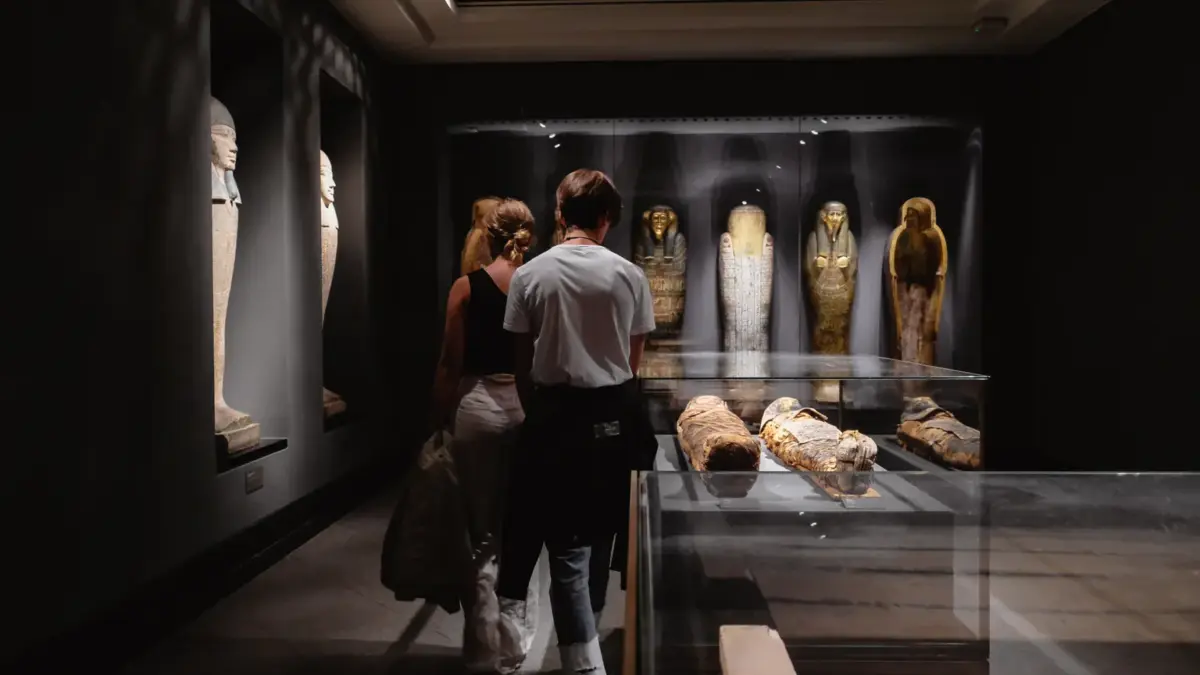
Egyptian mummy, USA News: Egyptian authorities have formally demanded the return of a mummy’s remains following their removal from public display at a Scottish museum. Glasgow Life, the council-funded charitable body operating the Kelvingrove Art Gallery and Museum, confirmed receipt of the repatriation request.
Last month, the museum withdrew all mummified remains from its Egyptian hall entirely. The organization cited the absence of consent from the deceased individual or their ancestors as justification for removing the artifacts. A Glasgow Life spokesman confirmed the request to repatriate the remains of the priest Nekht was received recently, though the exact origin of the request could not be confirmed.
The items taken off display included a painted coffin holding the remains of priest Nekht, who lived between 1985 and 1797 BC and was donated to Glasgow in 1923. Other items removed included a mummified male head, a mummified foot, and a mummified right hand from the Valley of the Kings in Luxor. Glasgow Life stated that removing the human remains is more respectful, and transferred them to the Glasgow Museums Resource Centre in Nitshill.
The decision followed a reassessment of the museum’s duty of care. The revised Icom Code of Ethics for Museums states that institutions should uphold the dignity of human remains in collaboration with descendants or communities of origin. Glasgow’s Hunterian Museum previously concealed the remains of a 2,700-year-old Egyptian mummy known as Lady Shep-En-Hor using Tyvek material, a practice the museum confirmed it will maintain for privacy in death.