Organic sugar beet sugar refinery project in northern France, Digi Mart USA News (Gouzeaucourt, Nord, France): Amid debates over the possible reintroduction of controversial pesticides, a farmer in the Nord department is close to completing funding for a small sugar refinery devoted entirely to producing raw sugar from organic sugar beets, a first in France.
Sébastien Lemoine, a farm operator in Gouzeaucourt, shows raw sugar (unrefined) and syrup that he currently has manufactured in Germany from organic beets grown in the Hauts-de-France region. Lemoine said his first job was in pesticide product testing, so he knows the hazards and toxicity of these products and pesticides in general.
When he took over the family farm in 1996, he immediately set out to “work differently,” observing that “when you respect nature, it rewards you well.” That conviction led him to convert to organic farming about ten years ago.
A few kilometers away, in the village of Les Rues-des-Vignes, Gaëtan Doisy is growing organic beets with bright green leaves. His field is full of weeds of all kinds, far from the neat plots of his conventional neighbors.
“If it’s not dirty, it’s not organic,” the farmer said with a grin.
“We have been growing beets for six years. We look for yellows disease, but we can’t find it,” Doisy said, referring to the disease feared by beet growers, which causes significant losses.
His field is bordered by a flowering strip one meter wide, which botanist and professor Marc-André Selosse of the Muséum national d’histoire naturelle in Paris admires. According to Selosse, these flowers host many species that retain nitrogen and phosphate, which are known to favor aphids, the insects that spread yellows disease.
Vincent Guillot, environmental director of the Confédération générale des producteurs de betteraves (CGB), notes that northern France is less affected by aphid problems because of its colder climate, though global warming could change that.
Selosse said the healthy beets of Gaëtan Doisy show that the argument that beet growers need flupyradifurone, often considered a new-generation neonicotinoid, is “nonsense.” Lemoine agreed that natural fertilizers used in organic farming, such as manure, produce far less nitrogen than conventional systems. With conventional fertilizers, he said, “when the beet grows, you end up with an excess of nitrogen that attracts aphids.”
In July, Parliament adopted an agricultural emergency law providing, among other things, for the reintroduction of flupyradifurone for apples, cherries and sugar beets. The national food safety agency (Anses) must decide whether the conditions are met for a temporary exemption.
Lemoine remains convinced there is room for organic sugar. For ten years he has promoted his project, la fABrique à sucres, with the letters AB in capitals referring to organic farming (agriculture biologique).
He has already found a site in Escaudoeuvres, the same commune where a plant of the sugar giant Tereos closed in 2023, and about forty regional farmers, including Gaëtan Doisy, are following the project.
Only the financing remains to be completed, which is already well advanced: of a total of 15 million euros, Lemoine still needs to find 1.6 million euros.
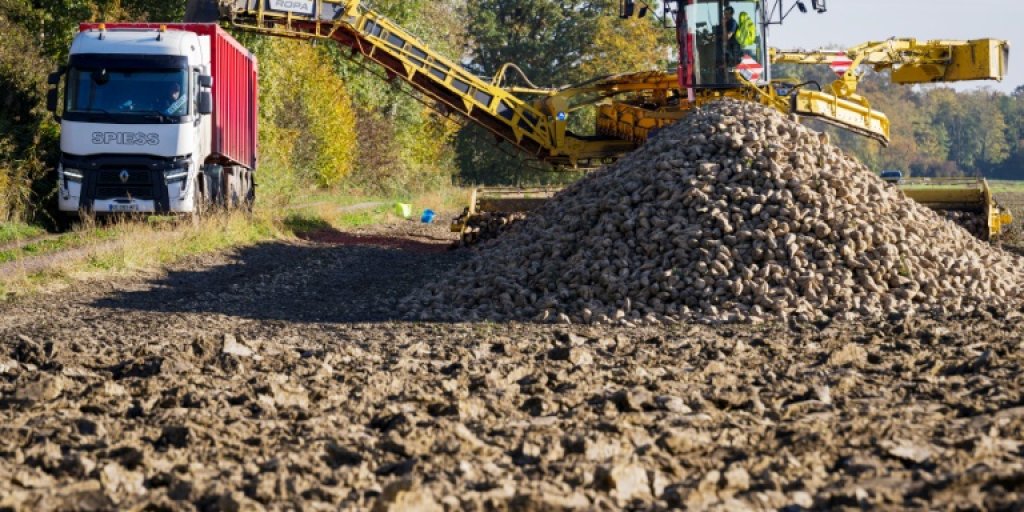
Without prejudging the project’s success, Guillot said that “the real brake” on organic beet sugar today is not insecticides or herbicides but demand, notably because of its higher price compared with conventional sugar. He also pointed to the significant yield gap between organic and conventionally grown beets, roughly 50 tonnes per hectare versus 80, while beet growers’ margins are “reduced to almost nothing today.”
Lemoine acknowledges that his refinery is “a small project,” which would do in one year what the Tereos plant in Escaudoeuvres did “in two days.” But with organic sugar, he said, “I am convinced we are on the right path.”