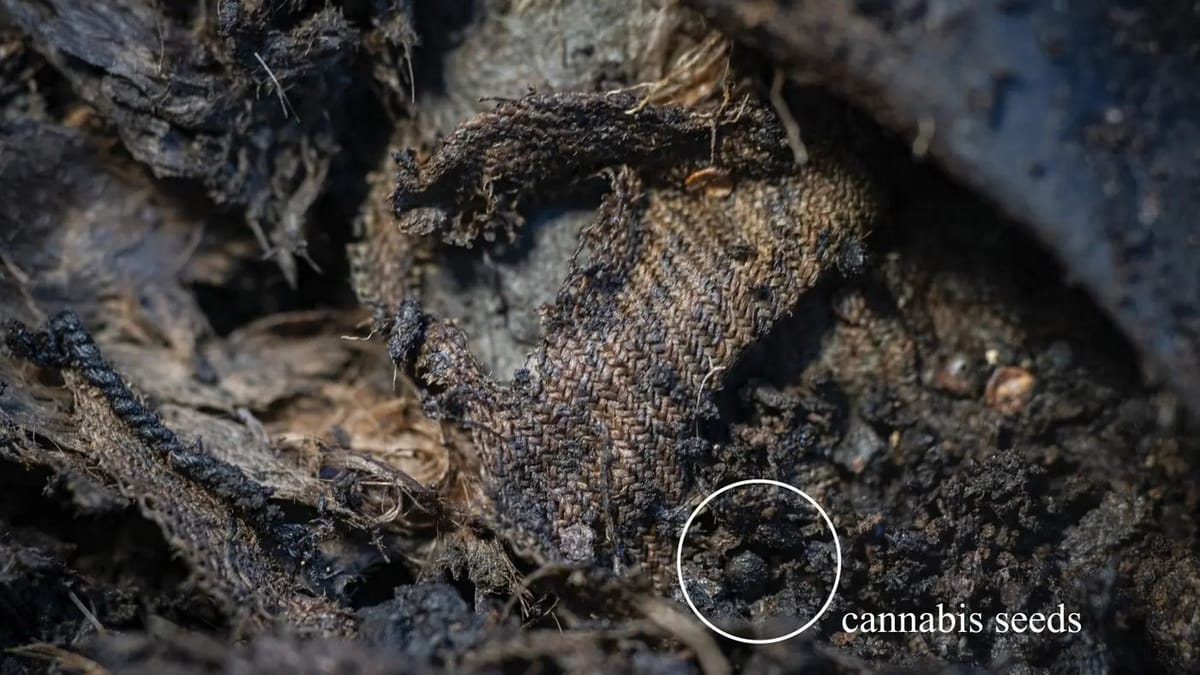
Ancient Scythian cannabis use discovery in Siberia, Digi Mart USA News (Siberia): Archaeologists have found evidence of the earliest known use of cannabis for psychoactive purposes worldwide. An international research team led by the University of Bern and the Max Planck Institute for Geoanthropology discovered cannabis seeds and molecular traces of cannabis active compounds in human hair inside a royal burial in Siberia.
According to a study published in the journal Science, the remains are about 2,800 years old. The burial appears to hold a high-ranking member of the Scythians, a horse-riding people who lived in the Eurasian steppe.
The researchers recovered roughly 1,000 cannabis seeds from the site.
Radiocarbon dating, which measures the amount of radioactive carbon-14 remaining in the remains, dated the seeds to the eighth century B.C. Study leader Gino Caspari told CNN that plant remains nearly 3,000 years old are extremely rare and are usually poorly preserved.
Finding them alongside human soft tissue such as hair, he said, made it possible to conduct what amounts to a drug test on a person who has been dead for three millennia.
Analysis of the hair samples confirmed that the people not only grew cannabis but also consumed it. The scientists detected cannabinol in the hair samples.
This cannabinoid forms when tetrahydrocannabinol (THC), the main psychoactive ingredient in cannabis, oxidizes.
The researchers could not determine how much the Scythians consumed or whether they inhaled or ate the plant. Later archaeological sites in Central Asia clearly point to inhalation, where chemical residues of cannabinoids were found in vessels and on heated stones.
The team suspects the cannabis finds are connected to ritual burials. On the burial mound, scientists found dozens of horse remains as well as human bones.
Caspari believes the cannabis “could also have served to sedate the victims before something terrible happened to them,” but said his team cannot prove this.
Caspari noted that surprisingly little is known about the cultural history of the cannabis plant. “We do not even know exactly what truly wild cannabis looks like,” the archaeologist said.
The team has begun sequencing the plant samples, which Caspari said will help researchers learn more about the domestication and spread of this crop plant.