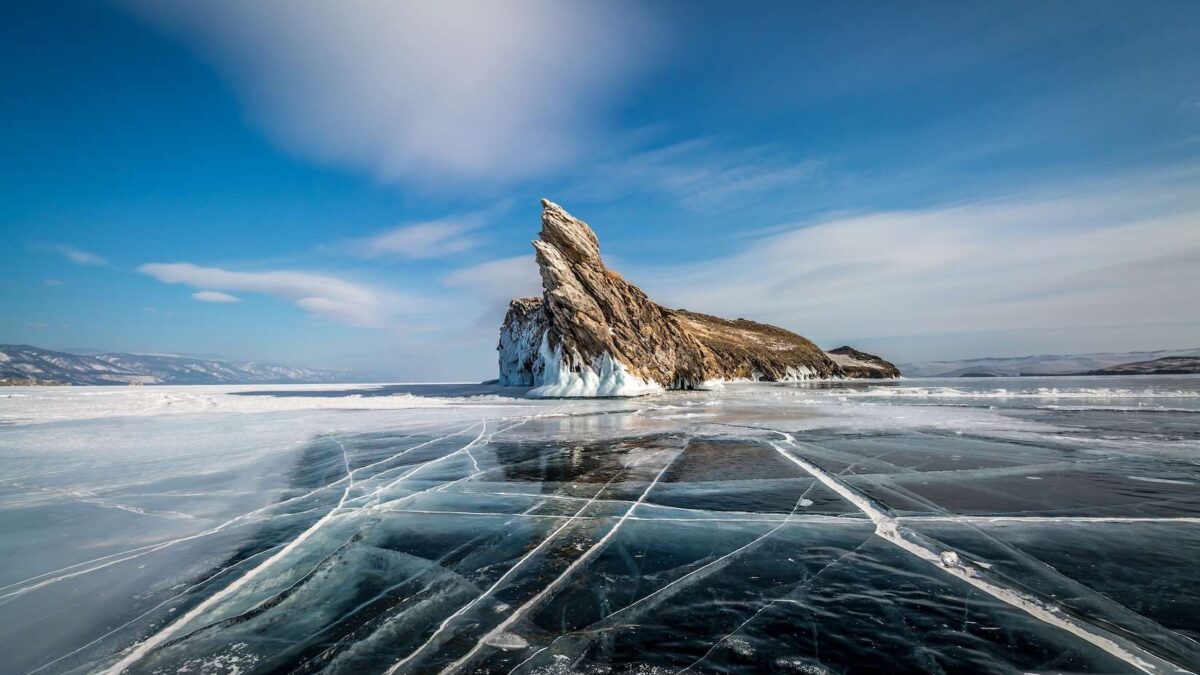
Lake Baikal water levels, Digimart Global (Siberia, Russia): Lake Baikal, the world’s largest freshwater lake by volume and a UNESCO World Heritage site since 1996, holds about 20% of the planet’s surface freshwater. A study published in Geophysical Research Letters reports that its water supply, long weakened by aridification in East Asia, is showing signs of recovery.
Researchers led by Shijie Wang, a doctoral student at Yunnan University, examined growth rings of pine trees around the lake to reconstruct 343 years of flow in the Selenga River, which feeds Baikal. Tree-ring width reflects moisture and drought conditions.
The reconstruction shows that during the most critical episodes of the 20th century, river flow fell by as much as 90%, and nearly half of the extreme drought years in the record occurred after 1900.
A recent rebound in river flow
The situation appears to be changing. Since 2017, the researchers observed river flow running 145% above its long-term average.
The increase has been accompanied by rising lake levels and more vigorous vegetation in the region.
The authors caution against reading this as a lasting reversal. High-flow episodes tend to be sudden and brief, while declines build gradually and can last for years.
According to the study, flow variations are mainly linked to precipitation, soil moisture, snowmelt and the water balance of the catchment basin, and are also correlated with cooler surface waters and greater sea ice cover in the North Pacific and the Arctic, which may help bring moisture to the region.
The authors describe a regional slowdown in Arctic warming driven by natural climate variability, not a reversal of global warming. They say the respite does not guarantee lasting improvement.
To prepare for future droughts and intense rainfall, they recommend better water storage, protection of aquifers, and restoration of wetlands in the Selenga delta, which can retain water and release it gradually.