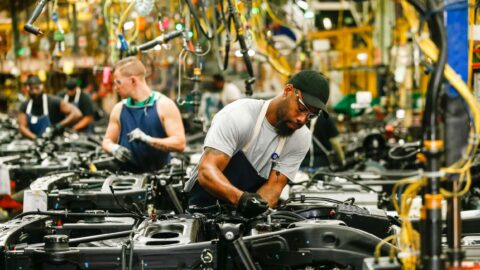
Nearshoring energy and development in Mexico, Digi Mart USA News (Mexico): Over recent years, nearshoring has become one of the main opportunities for economic development in Mexico. The relocation of production chains toward North America opened an unprecedented window to attract investment, strengthen industry and deepen regional integration.
Today, however, the conversation needs to take a broader view.
Nearshoring has not disappeared, but it has evolved. After the initial enthusiasm, Mexico now faces a stage in which it must show that it can turn investor interest into long-term productive projects.
The opportunity remains, but talking about it is no longer enough; the conditions to realize it must be created.
The challenge for Mexico, therefore, is not attracting investment but ensuring that the conditions exist for that investment to thrive. Among those conditions, energy infrastructure holds a central place.
International experience shows that the decision to install a new plant no longer depends only on labor or logistics factors. Sufficient, competitive and reliable energy availability is now a key criterion.
Although in some regions armed conflicts or geopolitical tensions can generate uncertainty and pressure energy prices, in Mexico natural gas follows a different dynamic, due to its integration with the North American market and because its main supply comes from the United States.
In this context, natural gas plays an important role in supporting industrial growth and backing electricity generation. The Secretariat of Energy’s Natural Gas Outlook shows the scale of this relationship: in 2022, the Northeast region accounted for 31.1% of national natural gas demand, and Nuevo León stood out among the entities with the highest consumption in the region, associated with the size of its companies and infrastructure.
It is no coincidence that Nuevo León has established itself as one of the main destinations for industrial investment in the country. Its geographic position, manufacturing ecosystem and energy infrastructure have allowed it to respond quickly to the arrival of new companies and the expansion of industrial parks.
The state currently ranks third in the 2025 State Competitiveness Index of IMCO, reflecting the conditions that make it one of the country’s main centers of economic activity and investment. In this context, the availability and strengthening of energy infrastructure are part of the conditions that sustain that competitiveness and support new productive activities.
The case of Nuevo León is illustrative. Industrial growth requires not only attracting companies but permanently strengthening the infrastructure that allows those operations to function.
The lesson is relevant for all of Mexico. If the country wants to take advantage of the reconfiguration of production chains, it must move from a logic of “attracting investment” to a strategy of “making investments viable.” That means developing infrastructure before demand becomes a constraint and creating conditions so that companies find in Mexico not only a strategic location but an environment capable of supporting their operations.
Nearshoring keeps economic development opportunities open, but the next stage will be less rhetorical and far more demanding: turning investor interest into projects, projects into productive capacity, and that capacity into jobs, suppliers and economic growth.
The discussion about nearshoring should no longer focus on how many companies want to come to Mexico, but on how many the country is prepared to receive. The difference between an opportunity and a productive reality lies largely in the country’s ability to develop the infrastructure that makes growth possible.
Within that infrastructure, energy will remain one of the most important enablers of economic development.
In an environment where companies seek operational reliability, competitive costs and growth capacity, natural gas remains a strategic ally for Mexican industry. Its availability supports electricity generation, drives industrial processes and strengthens the conditions required by new investment projects.