Bibury England Forbes most beautiful village in the world, Digi Mart USA News (Cotswolds, England): Bibury, a small English village of about 600 residents, has been named the most beautiful village in the world in Forbes’ 2025 ranking. The article was published by French lifestyle site Grazia, which translated the report for its readers.
Forbes, the American business magazine, released its ranking of the 50 most beautiful villages in the world in 2025. The list was compiled with the travel agency Unforgettable Travel Company, which selected 50 destinations worldwide.
Bibury placed first, followed by Hallstatt in Austria and Reine in Norway.
Europe dominates the list, with the first eight places all held by European villages. France is represented by Eguisheim in Alsace, which ranks 15th.
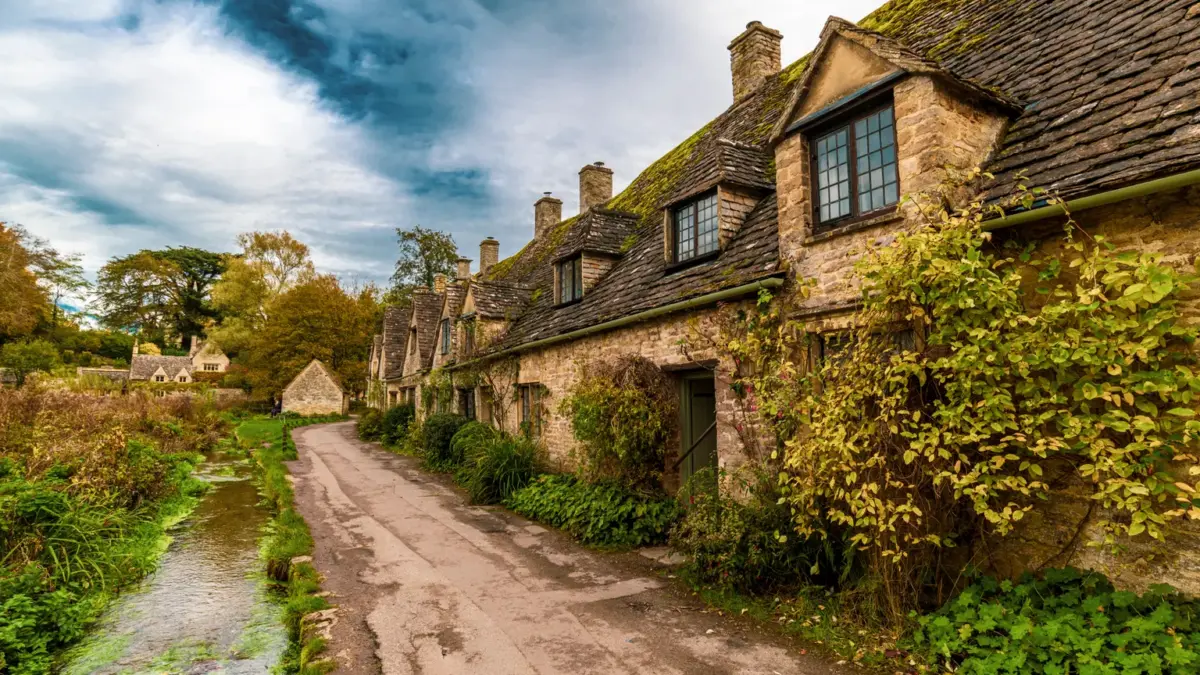
Bibury’s honors predate the Forbes ranking. In the 19th century, the British artist and Arts and Crafts movement figure William Morris described it as “the most beautiful village in England.” Its stone cottages, moss-covered roofs and surrounding countryside give it a highly picturesque appearance.
The village’s best-known street is Arlington Row, a rows of stone cottages dating to 1380. Originally used as wool stores for monks, the buildings became housing for weavers in the 17th century.
Their honey-colored facades now draw visitors from around the world, and the street once appeared on the British passport.
Visitors typically walk to the small stone bridge over the River Coln and the Bibury trout farm, where there is a riverside spot to pause. The Church of St.
Mary is also worth a visit, and the day can end with tea at The Swan hotel or a pint at The Catherine Wheel pub.
Travel from France is straightforward. From Paris, travelers can take the Eurostar to London and then drive to the Cotswolds, a trip of about two hours depending on traffic.
Those preferring public transport can take a train from London Paddington and arrange a taxi transfer to Bibury. Nearby Cotswolds attractions include Bourton-on-the-Water, nicknamed the “Venice of the Cotswolds,” and Castle Combe.