Poeta Caníbal documentary series on Mexico City murders, Digi Mart USA News (Mexico City, Mexico): José Luis Calva Zepeda died in his cell in Mexico City on December 11, 2007, just two months after he was arrested for the alleged murder and attempted cannibalization of his then-girlfriend. The case left numerous loose ends that the docuseries “Poeta Caníbal” now seeks to clarify.
Ánima Films, the documentary’s producer, sought out journalist Luis Brito, who interviewed Calva Zepeda and relatives of the man the press nicknamed the “Poeta Caníbal” in 2007. Brito said the goal was to revisit the investigation nearly 20 years later and declassify files and information that institutions had kept under wraps after the alleged killer’s suicide.
“I dare say that every word and every piece of data that appears in the documentary came from the court files (…) We managed to declassify the two criminal case files in Mexico City and the State of Mexico. It was not easy; we know institutions are opaque and love to reject any request,” Brito said.
In October 2007, police went to the home of the “Poeta Caníbal” while investigating the disappearance of his partner, Alejandra Galeana. Upon forcing entry, they discovered the mutilated body of the woman and found human remains in the refrigerator as well as meat frying in a pan.
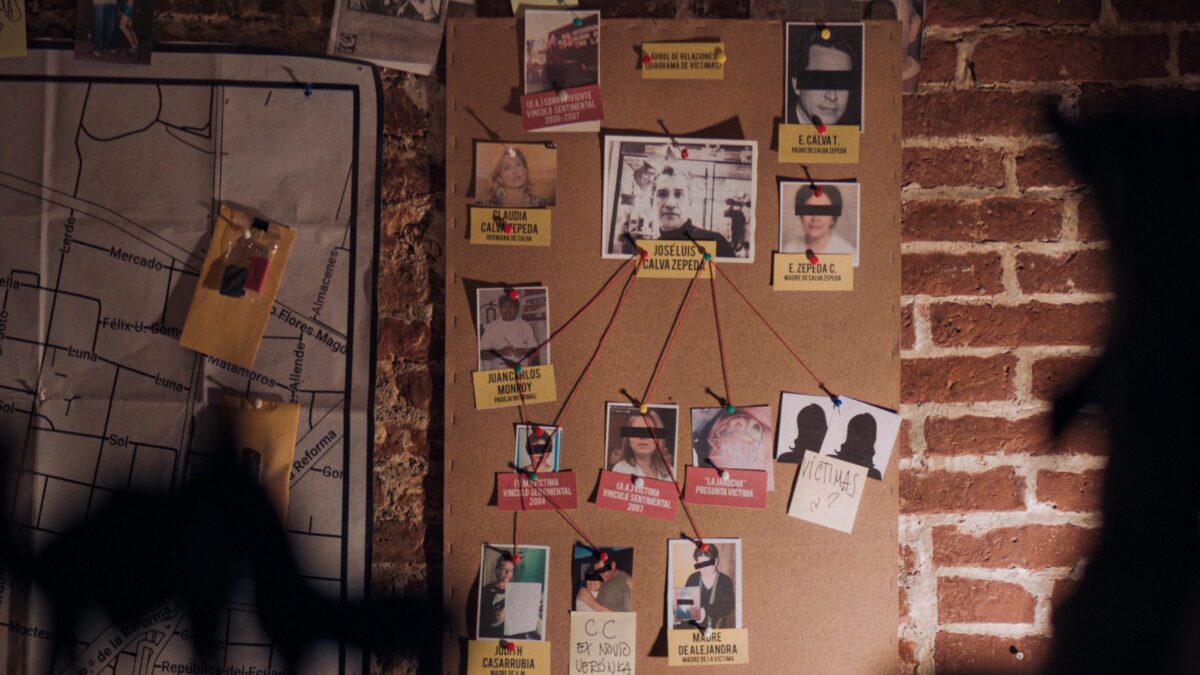
During the investigation into Galeana’s death, police found that the murder of Verónica Consuelo Martínez Casarrubias, one of his former partners, and that of a sex worker known as “La Jarocha” were committed by Calva Zepeda, who came to be considered a serial killer.
In the documentary, Brito interviews Calva Zepeda’s sister, the mother of Martínez Casarrubias, and the alleged accomplice, Juan Carlos Monroy Pérez, who had never spoken with the press and changed his account of events up to four times. “His statements surprised me quite a bit, but that is part of the complexity of the criminal justice system in Mexico, in which in the end there will always be a doubt,” Brito said.
Another goal of the three-episode docuseries, according to Esteban Vidal, HBO Max executive producer, is to serve as a warning to society about signs that can go unnoticed and the institutional omissions that allow such cases to develop. “Calva Zepeda did not become this figure overnight.
There were a series of warnings that were missed, and they may help people today, because this keeps happening, unfortunately,” Vidal said.
For Judith Casarrubias, the mother of the first of the “Poeta Caníbal” victims, pointing to the responsible institutions was one of the reasons she agreed to speak with Brito. “It took her more than a year to find her daughter (…) She was never unlocatable; she was in a public building, and no one went to say, ‘Hey, this woman, this young woman, has the characteristics of one who is being looked for by a family in Mexico City,'” the journalist lamented.
Both Brito and Vidal are aware that the question most of the public asks is whether Calva Zepeda ever ingested any of his victims’ remains. They say “Poeta Caníbal” provides an answer in its final episode.
“It is an answer I think many people would not expect, but there is a testimony,” Brito said, in a country where an average of 10 women are murdered each day.