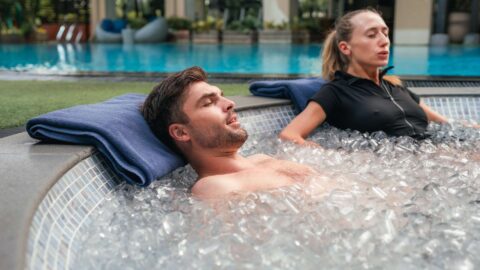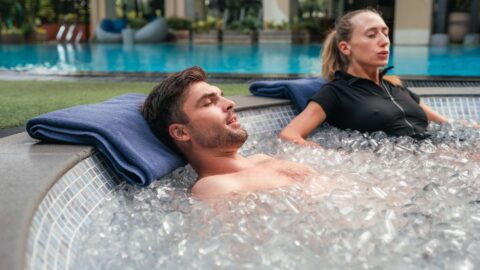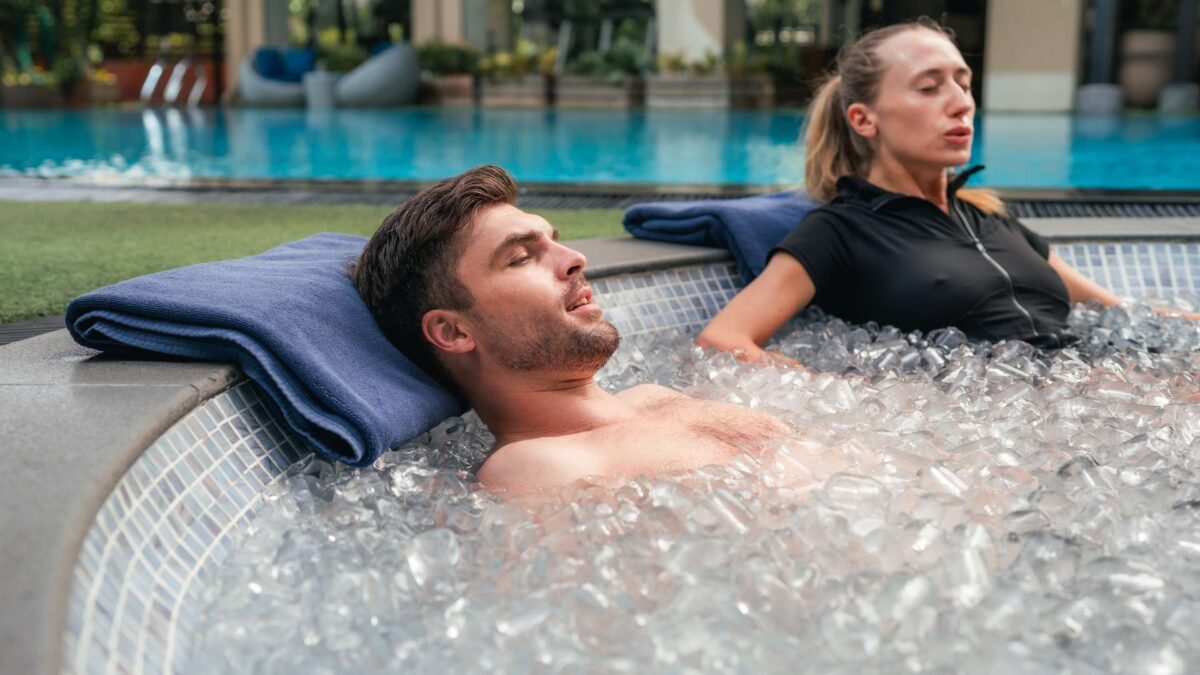
Ice baths muscle recovery, Digimart Global: Cold-water immersion is a widely used recovery method among athletes and amateur sportspeople, and a large review published in the journal Sports Medicine – Open suggests it offers real benefits alongside notable drawbacks. The researchers examined 15 reviews and meta-analyses covering 161 individual studies and 3,210 participants.
According to the review, ice baths can relieve delayed-onset muscle soreness for up to four days after exercise, with the greatest benefit following intense effort. Soreness is a mild muscle pain linked to micro-damage to muscle fibres followed by a repair-related inflammatory response.
The analysis also found that cold water reduces blood levels of creatine kinase, an enzyme used as a marker of muscle damage. This reduction appears between 24 and 72 hours after immersion.
The findings further indicate that cold immersion helps the nervous system return more quickly to its resting state after effort, and improves heart rate variability.
Performance effects depend on timing
The effects on athletic performance are less clear-cut and depend largely on when immersion takes place. The researchers reported that endurance appeared to improve temporarily, but only when athletes trained within about an hour after immersion, with the benefit generally fading afterwards.
Erfan Berjisian, lead author and exercise scientist at Edith Cowan University in Australia, said cold immersion seemed particularly useful when recovery time is limited, such as during tournaments, intensive competitions or repeated high-intensity training.
A more lasting benefit, observed 24 to 72 hours after effort, was seen in muscle power and jump performance, suggesting ice baths may help athletes recover between demanding training sessions.
Drawbacks for explosive power and muscle growth
The review found explosive performance appeared to decline in the first hours after cold immersion. Co-author Kristina Kendall, also an exercise scientist at Edith Cowan University, said cold immersion can be counterproductive if athletes must perform rapid or explosive movements shortly after cooling, unless they warm up sufficiently.
The researchers attribute this to cold temporarily reducing the muscles’ capacity to generate force.
The most significant concern involves athletes seeking to build muscle mass. Several studies included in the review suggest ice baths after resistance training may blunt hypertrophy, the increase in muscle volume, which could lead to smaller gains in muscle size and strength over time.
The authors wrote that cold-water immersion attenuates gains in maximal strength, muscular endurance and ballistic performance when repeated after strength training.
The authors recommend that athletes tailor cold-water immersion to their individual needs at a given time, noting that benefits depend heavily on the athlete’s goals, the type of exercise performed and the timing of the next training session.