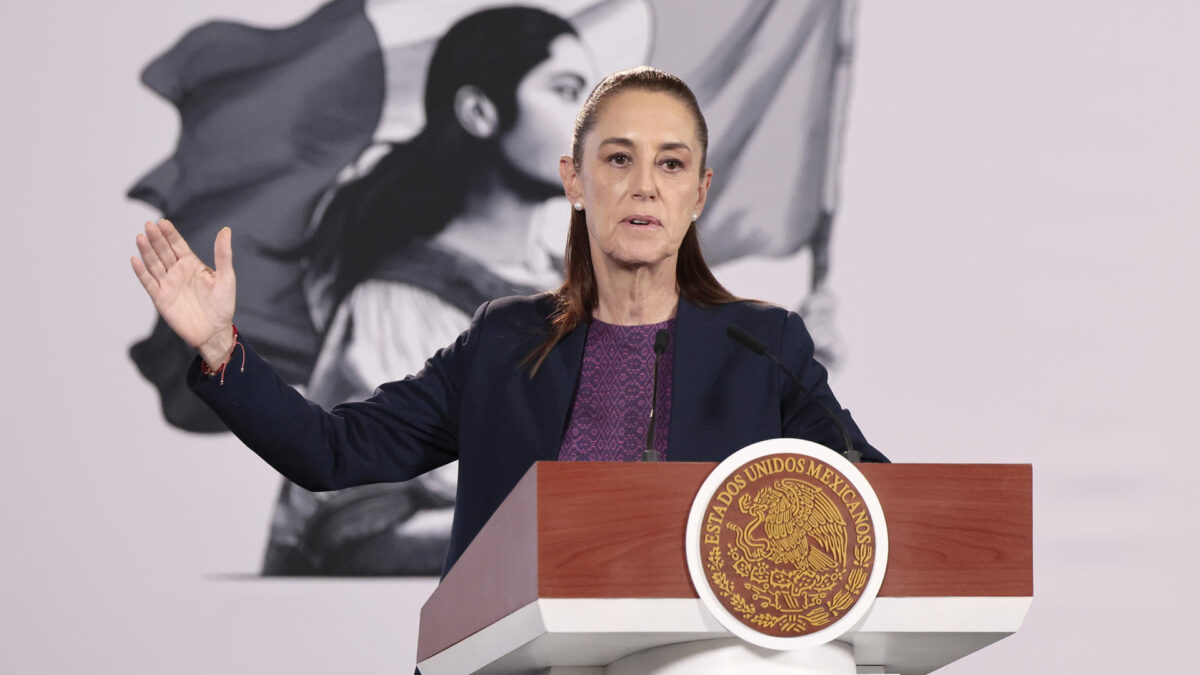
Mexico Texas dispute over Rio Grande border islands, Digi Mart USA News (Mexico City): Mexican President Claudia Sheinbaum on Tuesday attributed to electoral interests the decision by Texas authorities to claim nine islands in the Rio Grande, on the border with the United States, as their own. She rejected the idea that a state government can unilaterally determine the sovereignty of those territories.
Speaking at her morning press conference, Sheinbaum referred to the U.S. midterm elections being held that day.
“They are in elections and declaratively intend to say these islands are already part of Texas. But no,” she said.
Asked whether she believed the claim was driven by electoral motives, she answered, “Yes, from my point of view, yes.”
Sheinbaum said the delimitation of these territories falls to the International Boundary and Water Commission (CILA), the bilateral body responsible for applying border treaties between Mexico and the United States. “First, the Government of Texas does not decide.
All of that is decided through a commission,” she stressed.
She noted that islands can form through natural movements of the Rio Grande’s channel and that the CILA is responsible for determining on which side of the border each one lies.
Her remarks follow an announcement last week by Texas Land Commissioner Dawn Buckingham that nine islands in the Rio Grande, with a combined area of about 27 hectares, had been identified as property of the state. Buckingham said the measure would allow state and federal security forces to access the territories to strengthen border surveillance and combat possible illicit activity.
On October 30, Mexico’s Foreign Ministry rejected any unilateral modification of the border by Texas and recalled that the 1970 Boundary Treaty establishes that the international division follows the center of the Rio Grande’s normal channel. The ministry said only the CILA has authority to determine on which side of the international boundary each island lies and that Mexico will monitor any action in the area.
The dispute arises amid U.S. midterm congressional elections on Tuesday and migration tensions between the two countries, which have intensified since Donald Trump returned to the White House in January 2025.