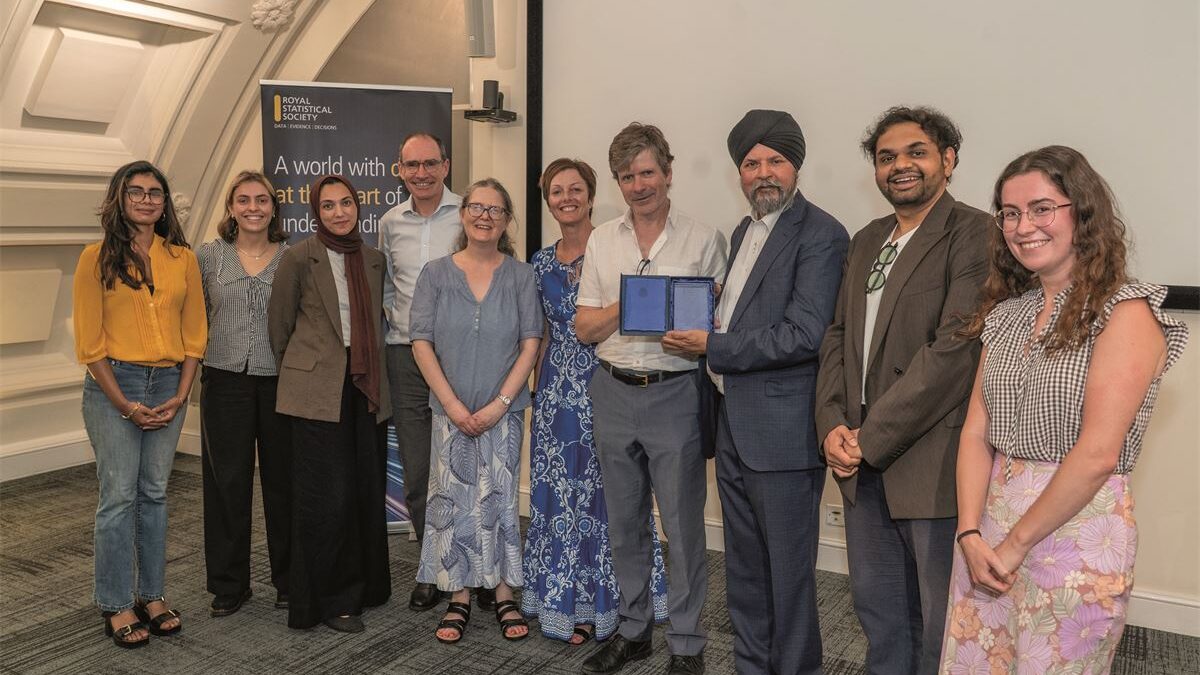
benefits undercounting survey, Digimart Global: Four teams at the Department for Work and Pensions have received the Royal Statistical Society’s 2026 Campion Award for Excellence in Official Statistics for work to correct long-standing undercounting of benefit recipients in household surveys. The Family Resources Survey team, the FRS Transformation team, the Households Below Average Income team and the Pensioners’ Incomes team were recognised for the project, presented in partnership with the UK Statistics Authority and Civil Service World, according to the publisher’s report.
The Royal Statistical Society said the project, which integrated administrative data into the Family Resources Survey and related outputs, was an important contribution to the evidence base used by policymakers, researchers and academics. The survey, which has run since 1995 to inform decisions on benefit payments and eligibility, has been carried out in the same way throughout that period.
Why the undercount mattered
The survey’s grossed estimates of benefit recipients were on average 20% lower than the actual administrative caseload. Donncha Burke, FRS transformation project lead, said this meant income was being missed for respondents at the lower end of the income distribution, affecting estimates of income distribution and the number of adults and children classified as in poverty.
Burke said the underrepresentation of benefit recipients was not previously understood and was not being corrected by the existing weighting process. Causes included interviewer error and respondents who were unsure or wrong about the benefits they received, with some reporting benefits they could not be on or two incompatible benefits.
Linking data to reduce the gap
Work to address the problem began about 10 years ago, when Burke and Joanna Littlechild, DWP’s head of surveys, sought to link what respondents told interviewers with their personal data. At the time about 80% of consenting respondents could be linked.
A randomised trial helped allay concerns from the Office for National Statistics and the National Centre for Social Research that participation would fall if people knew their responses would be linked to personal data.
A statistician, Jacob Hamblin-Pyke, developed a linking methodology that raised the match rate from about 80% to 95% or more, according to Burke. Emma Ringshaw, a DWP operational researcher, later refined the approach and developed the quality assurance process, and contractor Alice Ndikumagenge made further contributions.
The Institute for Fiscal Studies, the Joseph Rowntree Foundation and the Resolution Foundation also provided support and input.
Outcome and next steps
The approach reduced the undercount by between half and a third, to between 6% and 10%. Further measures are planned to correct continuing sample bias and reduce the figure further.
The first research paper was published in March 2024, and the FRS integrated the policy in March this year. Burke advised other civil servants facing data linkage challenges to be patient, noting that other departments may be wary of sharing data and that understanding the data takes time.