Château de la Bâtie d’Urfé Renaissance heritage site, Digi Mart USA News (Saint-Étienne-le-Molard, Loire, France): The Renaissance château of La Bâtie d’Urfé in Saint-Étienne-le-Molard, in the Loire department, is known for its architecture inspired by Rome. Its spectacular rock grotto, sumptuous chapel and humanist garden make it a site of exceptional interest, conceived in the 16th century by Claude d’Urfé.
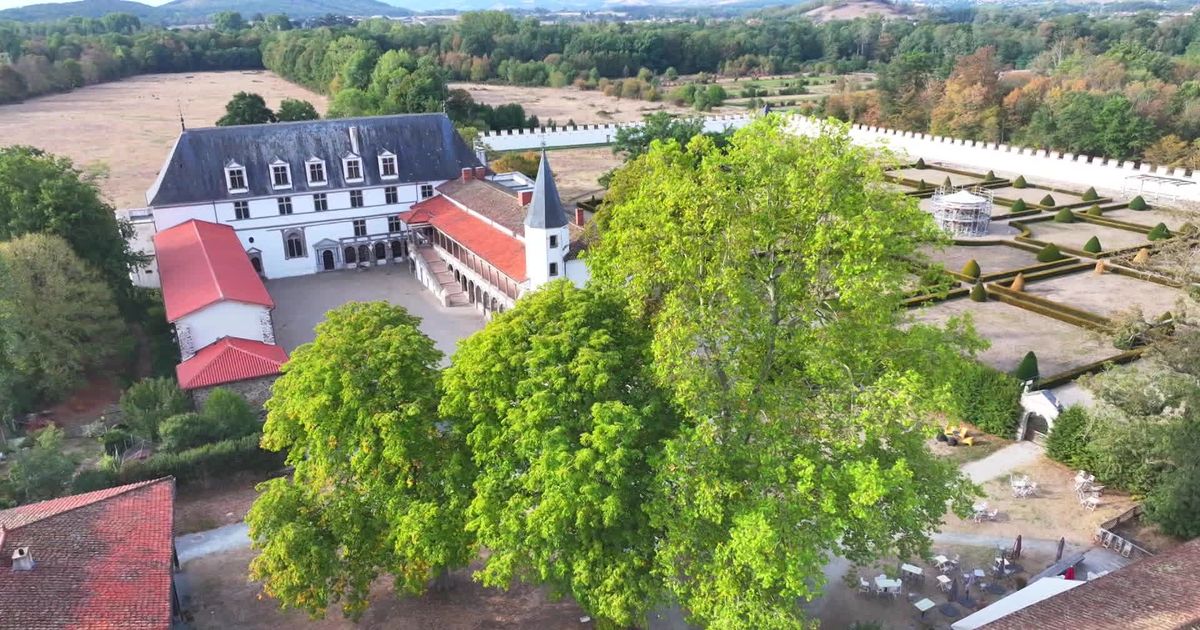
In the heart of the Forez plain, a gleaming château resembling a Roman palace draws the eye. It was imagined by its owner in the 16th century, Claude d’Urfé, a diplomat and French ambassador to Italy under Francis I.
Drawing on his many travels, he transformed an old family fortified house into this Renaissance gem.
Claire Galy, responsible for cultural mediation, comments on the visit: the double gallery with arcades and pillars on the ground floor is complemented by a loggia, a typically Italian balcony, on the upper floor. She notes that the most emblematic Italian inspiration may be the riding ramp, which leads to the building.
At the foot of the ramp, a sphinx guards the entrance, symbolizing knowledge and wisdom. Inside, visitors discover the world of a learned man devoted to literature.
On the upper floor, the library once held more than 4,000 volumes. Richly decorated apartments, painted ceilings and tapestries show that Claude d’Urfé spared no expense.
The visit continues into the rock grotto, described as an extremely surprising room. Stones and shells were glued one by one to its walls with great precision, including granite, schist, limestone and basalt.
Five years of work brought the mythological figures and fantasies of Claude d’Urfé to life, drawing on Greek and Italian culture, and visitors were impressed.
The visit then moves to the chapel, reflecting the Christian world, where the décor is equally sumptuous. Major Italian artists painted the works, and the most precious materials were used, such as a Carrara marble altar.
Dedicated to his wife, who died prematurely, Claude d’Urfé united profane love and the divine there.
The château is extended by its Renaissance-inspired garden, a plant-based nod to its owner’s travels. Two hectares of boxwood and yew lay out a space designed in the 16th century, where humans dominate nature through pruning and shaping.
Gardener Christian Lyonnet, who has cared for the site for 28 years, explains that a large garden signaled power and that Claude d’Urfé wanted to show his importance as bailiff of Forez.
A century later, the palace and its landscapes inspired his grandson, Honoré d’Urfé, who used them as the backdrop for L’Astrée, the first great novel of French literature.