
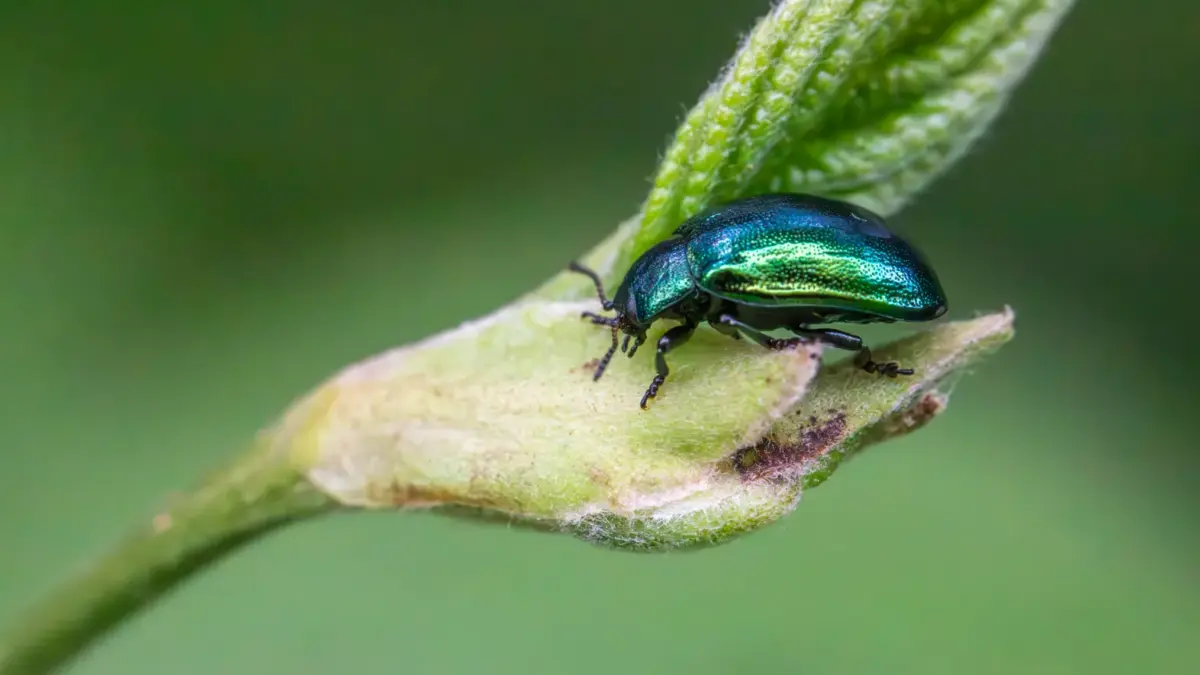
Short-Necked Oil Beetle, USA News (Castlemartin Range, Pembrokeshire): Conservationists have confirmed that the Short-Necked Oil Beetle has been found breeding in Wales for the first time in nearly six decades, following a determined three-year search at Castlemartin Range in Pembrokeshire. Natural Resources Wales announced that this year’s survey found larvae of the nationally rare insect across a small part of the site, suggesting that hatchlings from a larger group of immature beetles survived. The breakthrough comes after significant concern for the species’ future in Wales. Surveys in 2022 and 2025 found only dead adult specimens, leaving researchers worried about whether the beetle could maintain a viable presence at the site.
Castlemartin Range remains the sole site in Wales where the species has been recorded, according to Natural Resources Wales. The beetle owes its common name to its compact body shape and a remarkable defence mechanism. When threatened, adults release an oily yellow-orange fluid from their knee joints. Its life cycle is closely tied to solitary bees. Newly hatched larvae possess hook-like feet, which they use to latch onto passing bees and hitch a ride back to their nests. Once inside, the young beetles live off pollen stores until they are ready to emerge as fully formed adults. Survival odds are extraordinarily slim, with roughly one in every 10,000 larvae reaching maturity. Adults typically grow to around 24mm in length and live for about one year, generally appearing between March and June and being most active in warm, sunny conditions.
The beetle’s exacting habitat needs include bare ground for laying eggs, dense vegetation for protection, and abundant wildflower cover for reproduction, meaning only a handful of locations across the UK can support it. Natural Resources Wales classifies the species as nationally rare in Great Britain, and it is listed as vulnerable on the IUCN Red List. Before its Welsh rediscovery, the Short-Necked Oil Beetle went unreported anywhere in Britain for almost six decades after 1948, until it turned up in Devon in 2006. Researchers later identified populations on the Isle of Coll in Scotland in 2009, with further colonies on Tiree, Islay, Barra and Uist in the Hebrides. Additional beetles have also been recorded on Salisbury Plain.
Anna Hobbs, project delivery officer at the Bumblebee Conservation Trust, described the discovery as a significant moment. She said it was very exciting to find this species and evidence of its breeding again, especially considering it will be the last survey for the species for their project. She noted that the Short-Necked Oil Beetle depends on both a very specific habitat and the presence of solitary bees, meaning conservation work must consider multiple species. She also expressed gratitude to partners and volunteers who persevered through two fruitless years without larval sightings. The project forms part of Natur am Byth, Wales’s flagship species recovery programme, which also targets the shrill carder bee, goldilocks aster and pale dog violet.










