Burnham EU food deal prices, Digimart Global (United Kingdom): Andy Burnham’s reset deal with the European Union will not guarantee cheaper supermarket prices, First Secretary of State Louise Haigh has admitted. The agreement, reached on Friday, commits Britain to align with the bloc’s food and drink safety rules as part of a broader package.
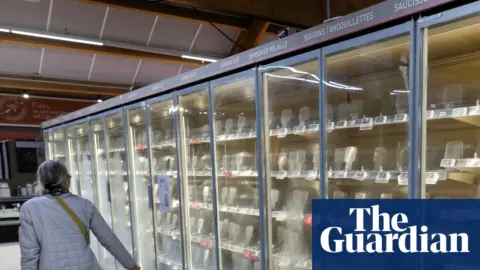
Speaking to BBC Breakfast on Monday, Ms Haigh said the Government expected supermarket chains to pass savings on to consumers. However, she declined to list individual products or promise explicit price reductions, saying that external factors, such as the war in the Middle East, were continuing to push up costs.
What the wider deal includes
Burnham said the agreement would cut costs for business, help with the cost of the weekly shop and create opportunities for young people. The deal also grants 100,000 Europeans aged 18 to 31 the right to live, work and study in the UK for three years, with the same rights extended to UK nationals in the EU.
The UK will additionally link emissions-trading standards with the bloc under a new Sanitary and Phytosanitary (SPS) agreement.
The Treasury has published analysis suggesting the new agreement will add 0.5 per cent of GDP to the UK economy, roughly equivalent to £17bn. Critics, however, argue that aligning with EU rules makes the UK an EU rule-taker, changing its laws without a real say in how they are drafted.
Retail industry response
The British Retail Consortium, which represents supermarkets, said the deal would make trade easier but was unlikely to have any impact on prices in the near future. It added that food trade with the EU represents only a fraction of final shelf prices.
Tuition fees dispute and next steps
The deal nearly collapsed after the two sides clashed over tuition fees. Brussels had demanded that European students studying in Britain pay the domestic rate of £9,970 per year, rather than £38,000, with EU capitals threatening to delay signing off the deal if no compromise was found.
A six-month deadline has been set to reach an agreement on the remaining issues.
The Prime Minister also told the EU he was ready to discuss rejoining the bloc over the next year. Antonio Costa, leader of the European Council, said the EU remained open to the closest possible relationship but warned that Britain could not pick and choose the terms of membership.
Burnham acknowledged that incremental steps would only go so far. Former prime ministers Sir Tony Blair and Baroness May have cautioned against rejoining, with Blair saying his support would be conditional on looser EU regulation of artificial intelligence.