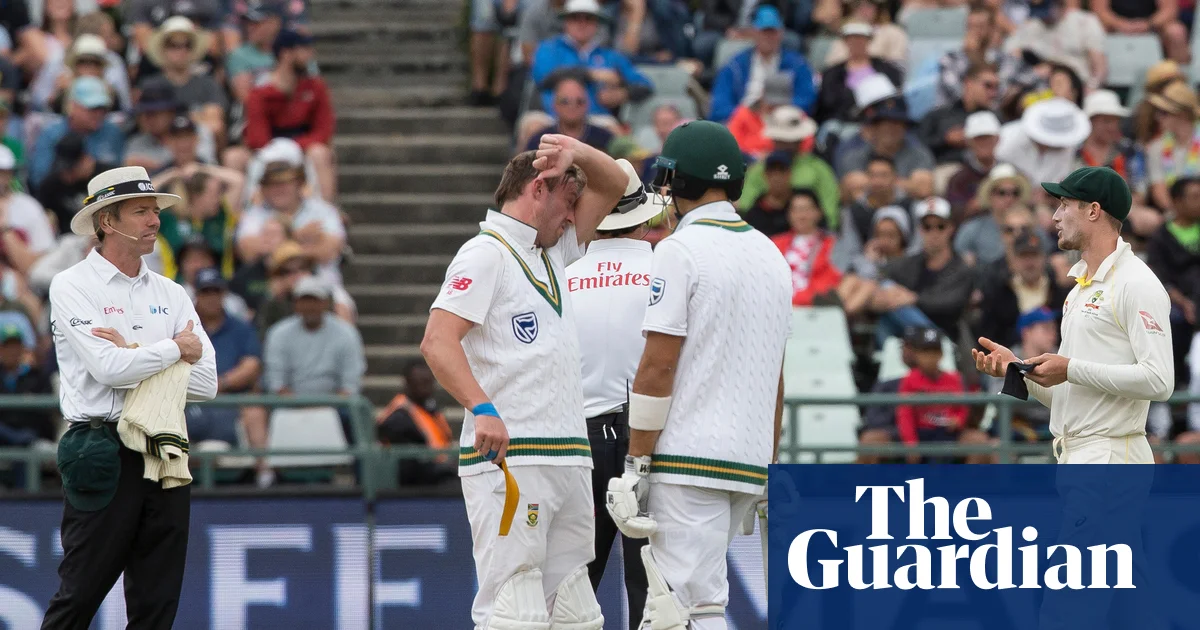
AB de Villiers Says Australia’s Ball-Tampering Began Before Cape Town, Digimart Global (South Africa): Former South Africa batter AB de Villiers has claimed he is certain Australia tampered with the ball as far back as the first Test of their 2018 series in South Africa. He made the claim on his YouTube channel on Monday, saying the cheating did not begin in the infamous third Test at Newlands in Cape Town.
De Villiers was batting in the middle when Cameron Bancroft was caught by TV cameras using sandpaper in that Cape Town Test. Bancroft, Usman Khawaja and Chadd Sayers have all alleged that sandpaper was used to tamper with the ball in the second Test at Gqerberha, formerly Port Elizabeth, where De Villiers scored an unbeaten first-innings century to help South Africa win by six wickets and level the series 1-1.
Claim that the tampering started in Durban
De Villiers said the first Test in Durban was lost with the ball reversing at an unusually early stage. He said it was too early for a ball to reverse at Kingsmead, adding that he had played a lot of cricket there.
He said he did not care whether sandpaper or nails were used, arguing that the key point was that Australia were caught and everyone knew.
Khawaja, in his memoir Sabr, wrote that all players were aware of Australia’s ball tampering in Cape Town. His account has been supported by Bancroft, Sayers and David Warner.
Current captain Pat Cummins rejected that version as “nonsense”, and Josh Hazlewood backed him. In 2021 the bowling group from the Cape Town Test issued a joint statement denying any prior knowledge that sandpaper had been taken onto the field.
Criticism of Cricket Australia’s response
De Villiers said it was implausible that Australia’s bowlers were unaware and questioned why attention focused on the object used rather than the premeditated decision to act illegally on the field. His sharpest criticism was directed at Cricket Australia, which he said should have taken collective responsibility rather than leaving Warner, Bancroft and then captain Steve Smith to take the blame.
He described their suspensions as excessive and said the issue became political when then prime minister Malcolm Turnbull became involved.
He also pointed to ball-tampering cases from the 1990s involving England’s Michael Atherton and South Africa’s Hansie Cronje as examples he felt were handled better, and noted that Faf du Plessis was fined rather than suspended after ICC findings in 2013 and 2016. De Villiers admitted he had pushed the boundaries himself but said he only used legal methods to achieve reverse swing.
Cricket Australia declined to comment when contacted by Guardian Australia. These are De Villiers’ personal claims and have not been independently verified.