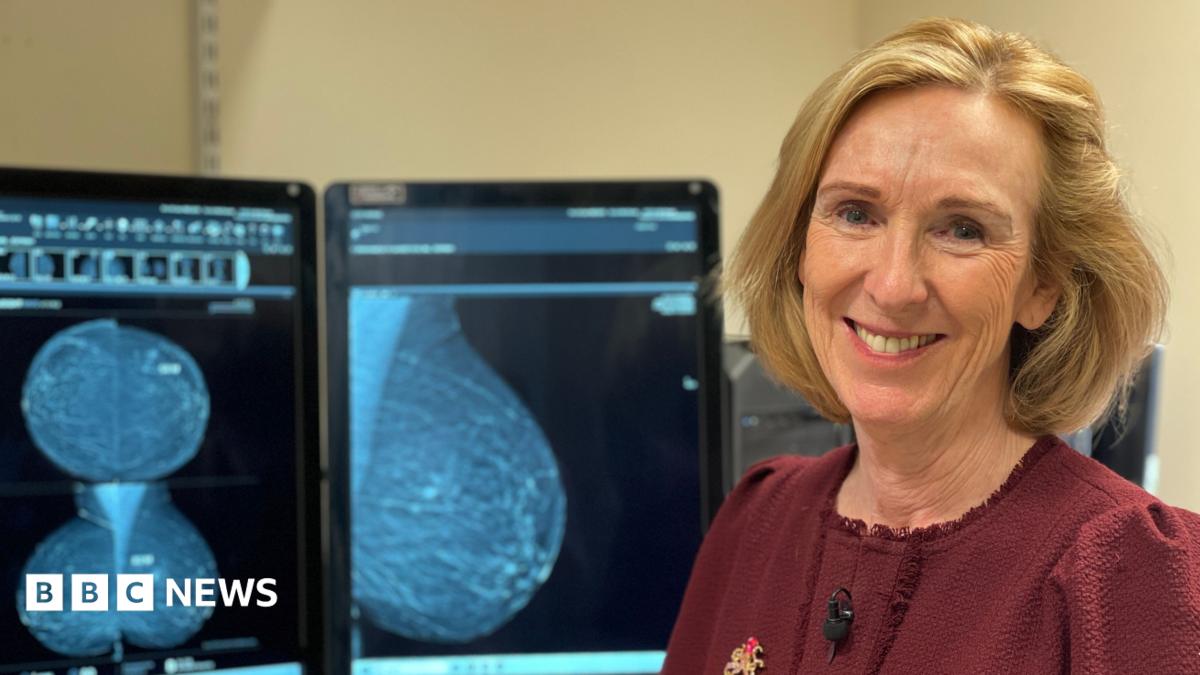
AI breast cancer screening, Digimart Global (United Kingdom): Nearly 700,000 women across the UK are to be invited to take part in what is described as the world’s largest trial of how artificial intelligence can help in breast cancer screening. The EDITH trial aims to assess whether AI can improve early detection of the disease while also easing the workload of clinical staff.
Women aged 50 to 71 are invited for routine breast screening every three years in the UK, and more than two million attend each year. At present, two NHS experts review each mammogram, which is an X-ray of the breast.
In the trial, one of these human readers will be replaced by AI. Recruitment has already begun at Cambridge University Hospitals, the first of 30 sites across the UK.
Researchers say several smaller studies have already suggested AI can improve breast cancer detection rates. However, the trial team says it needs to be sure the technology will not cause harm, including by leading to women being recalled unnecessarily for further tests.
Co-chief investigator Sian Taylor-Phillips, professor of population health at the University of Warwick, said the aim is to improve early detection while avoiding the overdiagnosis of milder disease that would never have caused symptoms.
Breast cancer is the most common cancer among women in the UK, with around 59,000 cases diagnosed each year. About a third of these are picked up by routine mammograms, usually at an early stage when they are more easily treated.
The screening programme is estimated to help prevent around 1,300 deaths a year.
Co-chief investigator Professor Fiona Gilbert, of the University of Cambridge, said millions of women have a mammogram each year and only a small number, less than 1%, will have cancer. She said technology could make reviewing images more efficient, freeing specialist breast radiologists to spend more time caring for patients with cancer.
She told the BBC there was a “huge shortfall” in radiologists and that the number of imaging examinations is rising by 8% a year.
The trial will not change what happens during a screening appointment. Women will be told about the study when they receive a routine invitation but will not be obliged to take part.
In one arm, an AI programme will grade images before they are sent to NHS experts; in another, it will review them afterwards. Researchers say machine-learning software can be trained on millions of previous images to detect patterns that might be missed by the human eye.
The £11m trial is funded by the National Institute for Health and Care Research (NIHR) and led by the University of Warwick, the University of Cambridge and Cambridge University Hospitals NHS Foundation Trust, working with NHS England. Four AI companies are involved, and the trial is expected to last around three years.
Health Secretary Yvette Cooper said AI has huge potential to improve treatment, which is why trials are needed to ensure it is used effectively with proper safeguards. NHS England’s national clinical director for cancer, Prof Peter Johnson, said every scan will still be seen by a specialist and that, if proven effective, the approach could help women get a diagnosis and treatment sooner.