
Physically consistent AI models, Digimart Global: Machine learning models used to simulate complex, chaotic processes such as weather, climate and turbulent flows in aviation or ocean currents have advanced considerably. However, such models can still drift over time into physically impossible predictions, according to a publisher report of new research.
Researchers at MIT’s Laboratory for Information and Decision Systems (LIDS) say they have found a way to add physics-based restrictions to machine learning models so that their outputs stay within what is actually possible in the real world. The findings are published in the Proceedings of the National Academy of Sciences (PNAS) in a paper by MIT graduate student Sunbochen Tang and MIT professors Navid Azizan and Themistoklis Sapsis.
Why long-range predictions drift
Small errors in a model can accumulate over a long simulation until the output grows without limit. The researchers note that chaotic systems are highly sensitive to starting conditions, which makes long-term prediction difficult, yet these systems are still bounded by physical constraints.
Simply capping outputs, for example at an arbitrary temperature limit, could prevent unrealistic values but may also stop a model from learning complex features that should come from the data.
An energy-based approach
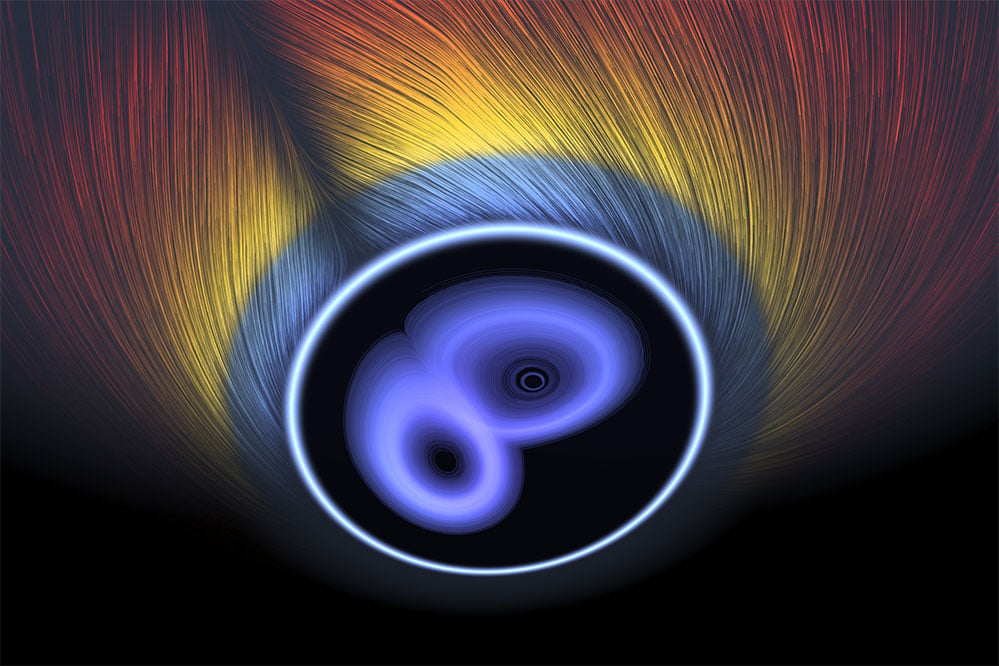
According to the report, the team’s method has the model learn an energy-like function along with a boundary within which its chaotic behaviour should be confined. A projection layer then enforces energy dissipation as a hard constraint, so that outside the boundary the energy-like quantity must decrease and pull simulated trajectories back toward the bounded region.
The researchers say this provides theoretical guarantees that predictions remain bounded over arbitrarily long forecast windows.
Earlier efforts often relied on penalties or incentives applied only during training, which the researchers say cannot guarantee that constraints hold when a model encounters new inputs at the time of use.
Testing and next steps
The team tested the approach on a range of well-known physical systems, from simple textbook cases to highly complex multidimensional ones. According to the report, the method closely matched true outcomes, while conventional approaches soon produced impossible predictions.
The projection layer is described as model-agnostic and compatible with different neural network architectures. The researchers plan to test it on larger systems, including data-driven models of realistic weather systems.
The paper and open-source code are available through PNAS.
A follow-up study by members of the team was presented at the Learning for Dynamics and Control conference, where it won the conference’s Best Paper Award.