
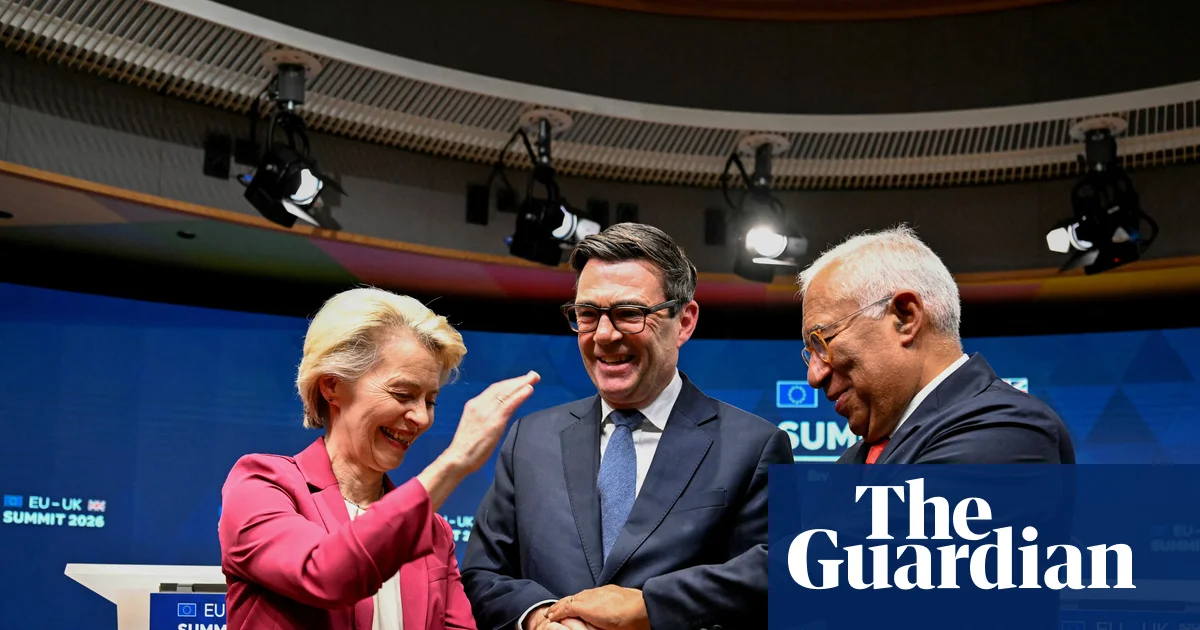
UK EU trade deal, Digimart Global (Brussels): Prime Minister Andy Burnham has agreed three deals with the European Union, covering food and drink, emissions trading and a youth mobility scheme, in what he described as the biggest step towards deeper ties since Brexit. The agreements were announced at a major summit in Brussels on Friday.
The youth mobility scheme will allow 100,000 young Britons to live, work, study and travel in the EU, with reciprocal access for Europeans in the UK. The food and drink and emissions trading deals require the UK to align with EU rules, and British experts will be invited to relevant EU meetings, although Britain will not have voting rights.
Student fees threaten the agreements
The deals could be derailed within six months. The EU has stated in a confidential declaration that the three agreements will not come into force without equal treatment on tuition fees for EU students at British universities, meaning they would have to pay domestic-level fees.
Burnham rejected suggestions of confusion over the deals, saying the legislation would enter parliament next week.
European Commission president Ursula von der Leyen played down the disagreement, saying she was “confident we are going to find a solution”. Nigel Farage, who was in Brussels for a press conference, said Burnham had been naive and that the EU had used the moment to pressure the UK over tuition fee cuts.
Economic claims and wider cooperation
Burnham said the deals would add 0.5% to British GDP, a £17bn boost to the economy, and argued they would help address the cost of living, weak economic growth, illegal immigration and challenges facing young people. These economic figures are the prime minister’s own claims as reported in the source article.
The two sides also agreed a “partnership for economic resilience” and to set up “a common prosperity and economic security space”, addressing concerns about cheap Chinese goods. Burnham said he would “brainstorm” future ties with the EU, but stressed that nothing beyond this deal would happen in the current parliament, with discussions intended to inform the next parliament.