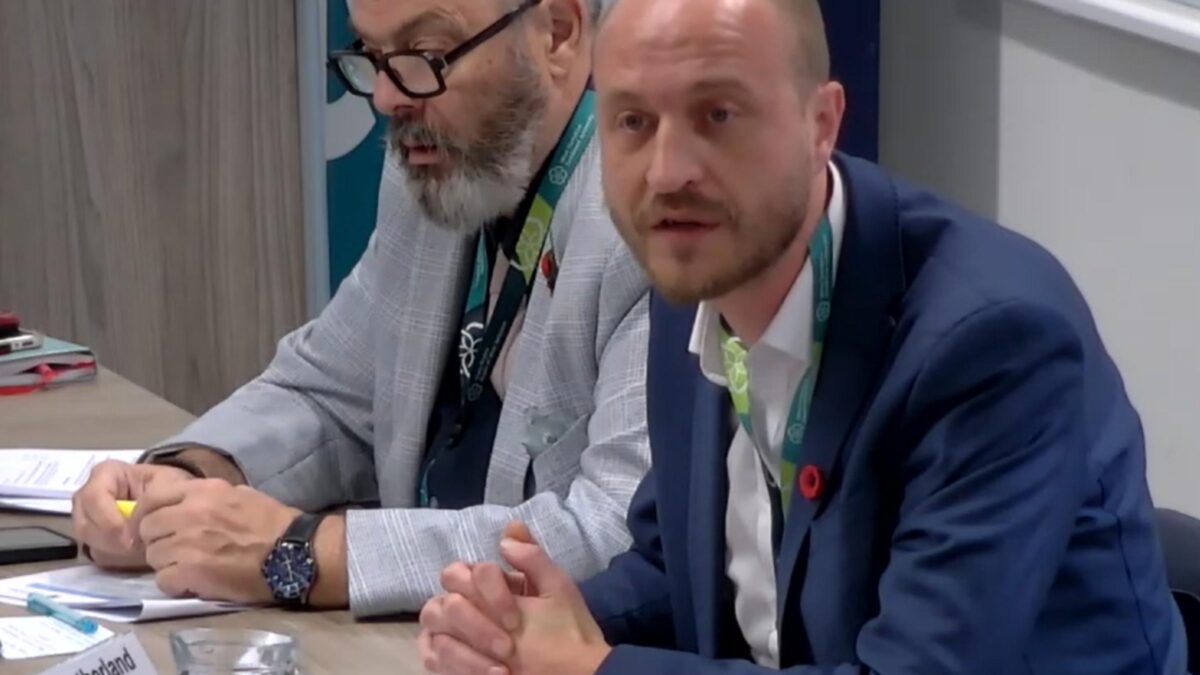
Calderdale Council leader, USA News (West Yorkshire): The leader of Calderdale Council has called for regional powers on welfare as a way to address his claim that millions of workers would be better off on benefits. Yesterday, the West Yorkshire Combined Authority (WYCA) Board heard that work is currently underway to transfer the delivery of employment support from the Department for Work and Pensions (DWP) to the WYCA in early 2028.
Employment support encompasses job coaching, skills training, assistance with CVs and interviews, support for individuals with health conditions, and specialized programmes for people not in education, employment, or training (NEETs). Officials noted these devolution plans are separate from the Employment and Support Allowance (ESA), though an overlap exists between ESA recipients and those receiving general employment support.
Addressing the WYCA Board, Cllr Dan Sutherland (Reform, Illingworth and Mixenden) suggested that empowering local government to set policy around unemployment benefits would effectively target the core issue. Outlining his perspective, he asserted that millions of people nationally, and many within the region, diligently go to work every day despite potentially being financially better off on benefits.
Cllr Sutherland noted that current proposals focus on devolving associated funding rather than actual policy, prompting him to ask whether authorities could work with the DWP to devolve policy regarding employment support and unemployment benefits. His remarks followed a recent report by the Centre for Social Justice estimating that over six million full-time workers take home less than a combined benefit package totaling £27,400 a year.
The think tank’s estimate factors in housing support, Universal Credit, and fully enhanced Personal Independence Payments. In response, the DWP stated that the £27,400 figure reflects a severely disabled Universal Credit claimant with high housing costs rather than a typical recipient.
Felix Kumi-Ampofo, WYCA Director of Inclusive Economy, Skills, and Culture, responded that the authority is pushing for greater control than what the DWP has initially offered, describing the current starting position as decentralisation rather than genuine devolution. Mr Kumi-Ampofo stated that the desired end state is a single, integrated system that incentivizes work while providing consistent support across the region.
Current arrangements between the WYCA and the DWP are scheduled to stop taking referrals in mid-2027 as officials work to remove duplication and streamline services. Recent regional data indicates West Yorkshire’s employment rate stands at 72.6 per cent, with 338,500 working-age residents economically inactive, including 105,000 citing long-term sickness, alongside a claimant rate of five per cent.