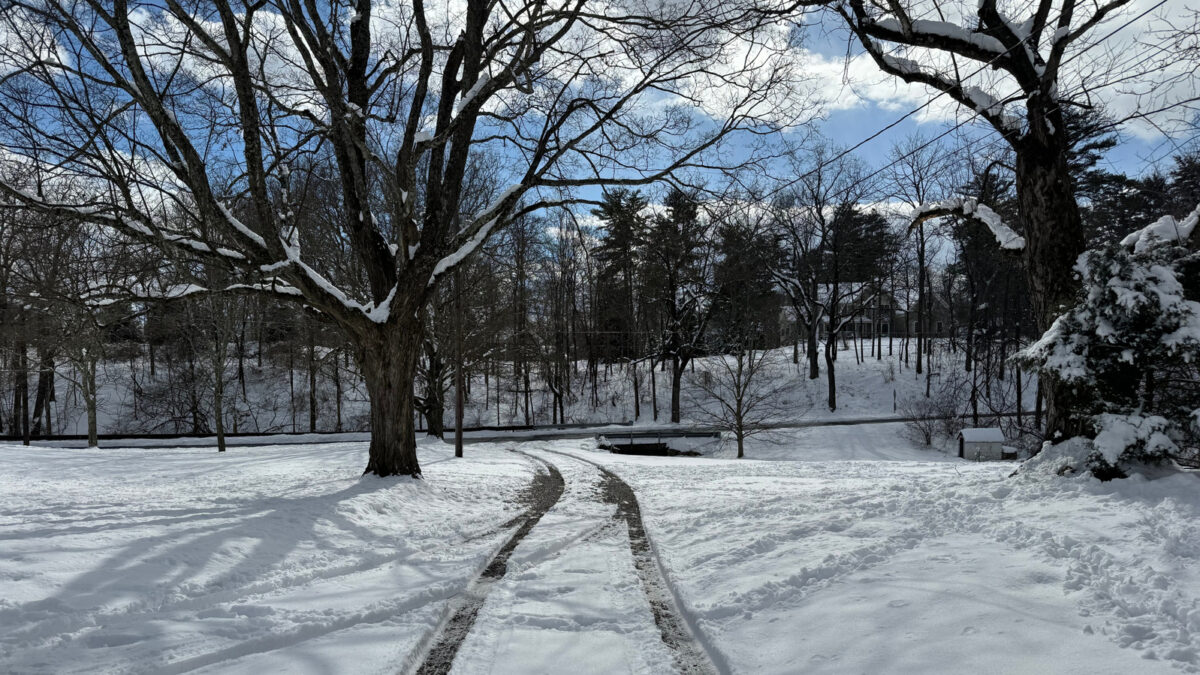
Gravel driveway crown for melting snow drainage, Digi Mart USA News: As the days grow colder and poor weather becomes more frequent, many homeowners are preparing their properties for winter. Beyond landscaping, one important task for a gravel driveway is preparing drainage for melting snow.
Adding a crown can help protect the driveway from major damage. A crown is a raised centerline that runs the length of the driveway and gently tapers to either side.
Those small slopes can make a significant difference in winter.
Meltwater may seem likely to soak into the gravel and soil, but the ground rises and sinks with each freeze and thaw cycle. Over time this can create ruts and puddles, standing water, and an uneven surface that is difficult and potentially hazardous for vehicles and people on foot.
Puddles on the driveway are warning signs that should not be ignored, as they can lead to soil washout that requires professional repair.
The gravel itself also matters. Crushed stone locks together in winter, while rounded gravel rolls under tires and scatters, reducing traction and eroding the surface.
A crown can make snow removal easier and may extend the driveway’s life. If an existing driveway already has a crown, its condition should still be checked, and it may need to be rebuilt.
To rebuild a crown, ideally just after some rain and before the coldest days, break up the surface and loosen the packed gravel with a skid steer or tractor grader with adjustable cutting depth. Without those machines, a mattock can be used by hand.
Pull gravel from both sides toward the center to form a ridge, aiming for a slope of about ¼ inch high per foot of driveway width. Adding more gravel to an existing driveway alone will not solve drainage problems.
Once the crown is shaped, fill thinning areas with fresh gravel to create a stable foundation, focusing on high-traffic spots prone to puddling. Compact the gravel with a compactor or hand tamper to lock the crown in place, and level any gravel piled at either end of the driveway.
Several mistakes should be avoided. The centerline should not be so steep that gravel washes to the sides, so the crown should be subtle.
Water will erode any divots, so blade angles should be used to keep the crown as even as possible. Finally, adjacent culverts and ditches should be cleared so water does not run back onto the driveway.
With these steps, the driveway can offer a smoother ride as winter snow melts.