Knowles Fire entrapment federal report, Digi Mart USA News (western Colorado): A federal investigation into the Knowles Fire entrapment that killed four wildland firefighters describes a combination of extreme fire behavior, communication problems and gaps in situational awareness that led to the tragedy.
Five members of the Rifle Helitack crew deployed fire shelters on June 27, 2026, at a helispot between the small Knowles and Gore fires in western Colorado. A separate, larger fire overtook their location.
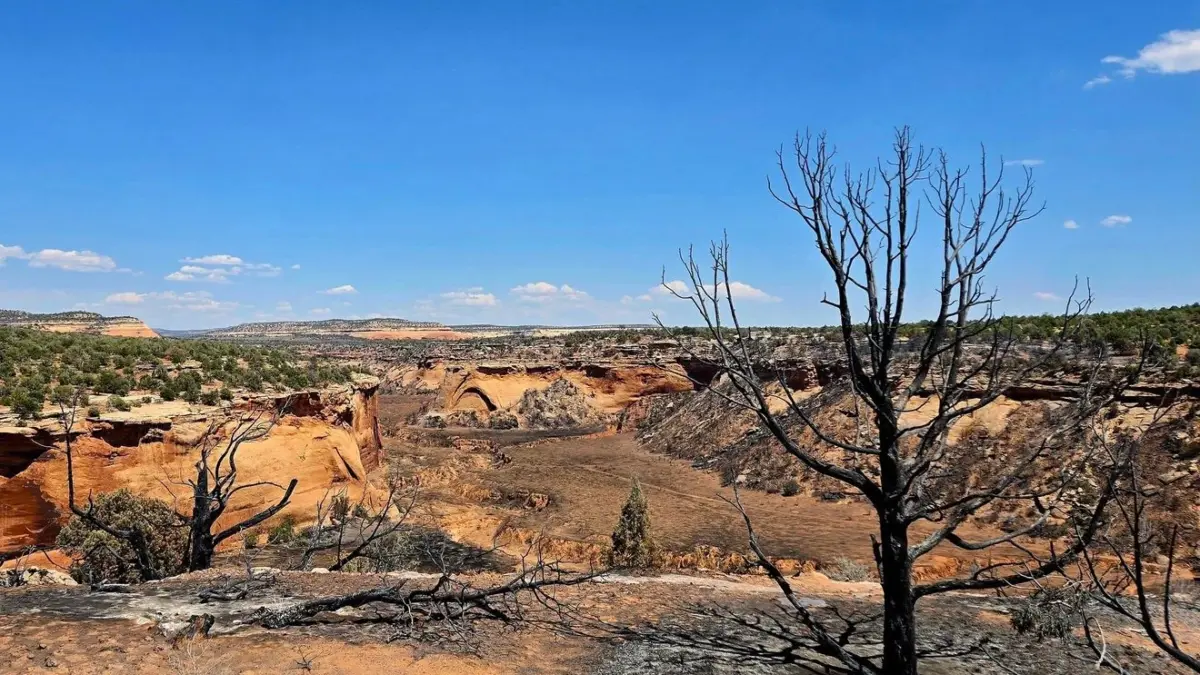
The fire ran just under 7 1/2 miles across mesa and canyon terrain in about 2 hours and 43 minutes, according to the report. Interviewees described its progression as “shocking” and “unfathomable.”
Emily Barker, Nick Hutcherson and Sydney Watson died from their injuries. Nathan Matthews died on July 24. One crew member continues to recover.
“No single decision or system failure fully explains the outcome,” investigators wrote in the report’s conclusion.
The report said the tragedy resulted from the combined effects of extreme fire behavior, strained communications, jurisdictional complexity and incomplete awareness of the broader fire situation. Crews on nearby fires did not know the location of the Knowles and Gore firefighters in relation to the advancing Snyder and Jones fires.
Investigators also found a gap in Air Attack coverage over the Snyder and Jones fires from 2:30 to 4:30 p.m. A helicopter crew mistakenly believed Air Attack was overhead, when it was working on another fire about 30 miles away.
Communication systems were another concern. Investigators found aging radio infrastructure, network congestion and a vacant telecommunications position contributed to unreliable coverage and missed weather broadcasts.
Dispatchers also faced staffing shortages and difficulties coordinating across state and agency systems.
The report says dispatch positions in Grand Junction were staffed mainly by trainees on the morning of the incident, while dispatch functions for initial attack and aircraft were physically separated. Utah dispatchers had to move between separate radio and resource-tracking systems, effectively doubling their workload.
Investigators found the crew had been inserted into remote fires with an expectation that a helicopter would extract them. They recommend training crews to account for delays caused by wind, smoke, mechanical problems or reassignment, and to compare helicopter extraction with options such as hiking out or finding a safety zone.
Other recommendations include issuing tracking devices to helitack personnel, improving access to real-time fire information, establishing ground lookouts independent of aircraft, and updating fire shelter training to emphasize site selection and distance from heavy fuels.
The report also found that several people used protective clothing that was not certified to the applicable National Fire Protection Association standard for wildland firefighting. Investigators recommended stronger oversight of equipment purchasing and use.
The investigation team said the report is intended to help the wildland fire community understand how the conditions and systems interacted and identify ways to prevent similar accidents.