Avedon documentary on Richard Avedon, Digi Mart USA News: Richard Avedon, whose career began in the early 1940s and ended with his death following a cerebral hemorrhage in 2004, was one of the greatest fashion photographers of his era. Even viewers who do not care about fashion have likely been awed by his 1955 Dovima With Elephants, in which the supermodel Dovima, draped in a two-tone Dior gown, stands regally between two pachyderms with her arms outstretched.
The photograph is compositionally perfect, linking human creativity and beauty with the grandeur of the animal kingdom. It is fashion photography as spiritual meditation.
Being a great fashion photographer would have been enough. But as Ron Howard’s gracefully constructed documentary Avedon shows, Richard Avedon’s way of looking at the human face and body informed everything he achieved in his roughly 50-year career.
His subjects ranged from public figures such as Malcolm X, Ronald and Nancy Reagan, and Henry Kissinger, to Marilyn Monroe in a moment when she seems lost in a private world.
As Avedon’s son, John, says in the film, “He exalts the individual. His work is very much about trying to discover himself in other people’s faces, in other people’s lives.”
Avedon makes a fine introduction to both the man and the artist. Though he loved the theatricality of fashion photography, he also made pictures that functioned as social protest.
In 1939, African American opera singer Marian Anderson was barred from singing in Washington’s Constitution Hall by the Daughters of the American Revolution, which cited a white-performers-only policy, an outrage that long troubled Avedon.
In 1963 he had the chance to photograph members of the DAR at a convention. His images showed a group of women in dowdy gowns, smug with self-certainty, and one of them, caught off guard, has her back to the camera.
It is not the kind of portrait any of them were hoping for.
Through juxtaposition of images and voice-over recordings from Avedon himself, the film offers insight into his working methods. He preferred to capture subjects against a plain white background.
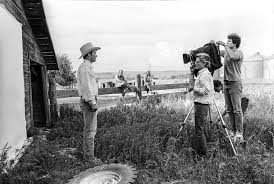
Around the time of his project In the American West, completed in 1984, he explained, “One cowboy against a white background represents all cowboys. Whereas if he’s leaning against a fence post, he’s just a cowboy.”
Avedon grew up in Manhattan, the son of an emotionally withholding father. He had siblings, including a younger sister, Louise, whom he adored and who struggled for most of her life with mental illness.
As a child he loved photographing her, and at age 9 he took a photographic negative of one of those pictures, taped it to his shoulder, and spent the day in the sun. By evening, his sister’s image had been recorded on his skin.
It is a strange, touching story, especially given that Louise became more withdrawn over the years and was eventually diagnosed with schizophrenia. Avedon left many images behind, from joyful pictures of models who became longtime friends, such as Lauren Hutton and Isabella Rossellini, to striking portraits of stars such as Picasso and Ella Fitzgerald, and older figures such as Buster Keaton.
The film serves as a road map through his career and a lifetime of looking at faces and striving to capture the life that animates them.