Social Security benefit reform and payroll tax debate, Digi Mart USA News: The financial outlook for Social Security is growing more apparent each year, with automatic benefit cuts due in 2032, when the program’s reserves are set to be depleted. Without structural reforms, the program looks even more unsustainable from 2032 onward, as lower fertility rates and longer life expectancies further disrupt the balance of the $1.6 trillion program.
Leaders on both the left and right have failed to offer realistic solutions. Sen.
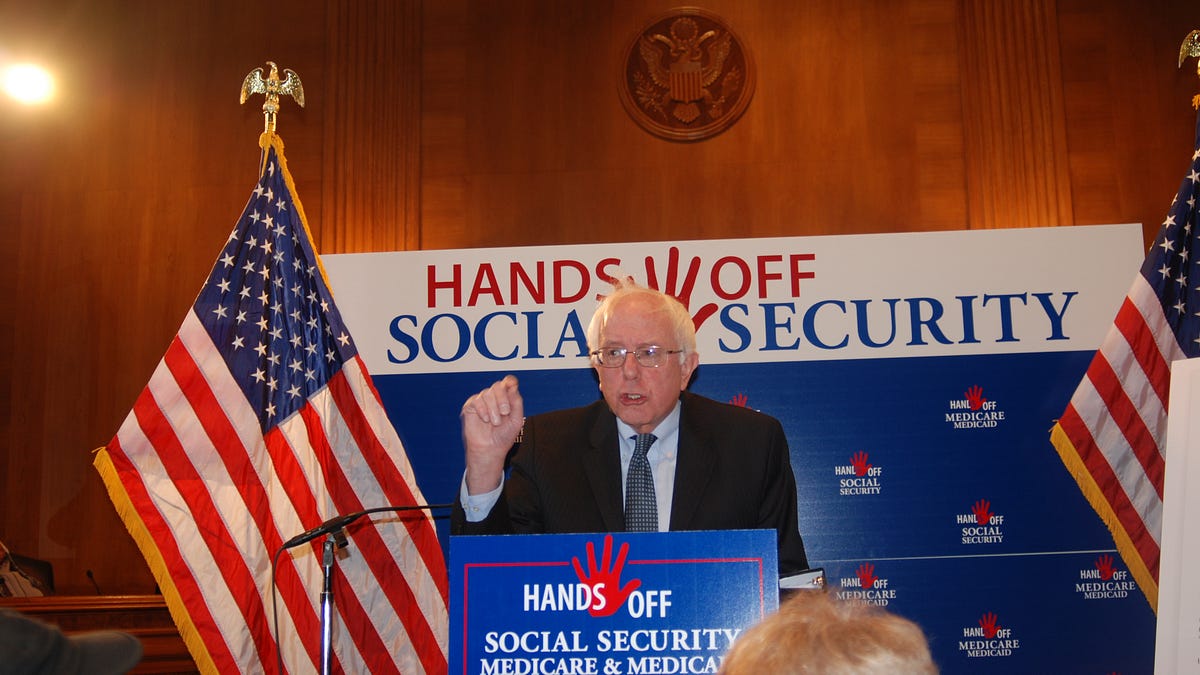
Bernie Sanders (I-VT) has proposed expanding benefits by uncapping payroll taxes for high earners, an approach the source argues will not slow the program’s decline.
The author argues that Congress should instead increase the eligibility age to align benefits with longer life expectancies, expand legal immigration for young workers to ease demographic challenges, reduce excessive benefits for wealthy retirees, and return more control over retirement savings to individuals.
Social Security is a pay-as-you-go system. The current 12.4 percent payroll tax applies to earnings of up to $184,500, and income taxes on current recipients’ benefits also help fund payments each year.
Since 2010, the program has paid out more in benefits than it has received through payroll taxes and benefit taxation. That cash deficit is projected to be $308 billion this year, including interest costs, and to rise to $680 billion annually by 2032, for a total debt contribution of $3.42 trillion over that period.
The program holds $2.6 trillion in reserves from earlier surpluses, but that cash has already been used to purchase special-issue Treasury bonds, allowing the government to spend the surplus elsewhere. Redeeming those bonds to cover deficits would require the government to borrow more, raise taxes or cut spending from other programs, in addition to mounting interest costs.
Proposals by Sanders and other lawmakers to uncap taxable earnings so that income above $184,500 also contributes would, according to the author, reduce economic growth and investment while addressing only 30 percent of the long-term cash-flow shortfall. Raising the payroll tax rate for everyone alone would require an increase from 12.4 percent to 16.95 percent, according to the Congressional Budget Office and the Social Security Administration.
For the median U.S. worker, with a salary of $61,583, the annual payroll tax would rise 37 percent, from $7,636 to $10,438.
The author argues that lawmakers could begin by reducing excessive benefits for wealthy retirees. The current maximum benefit for a dual-earner retired couple exceeds $124,000, far above the modest “measure of protection” President Franklin D.
Roosevelt envisioned in 1935. This could be done by changing the earnings-related benefit formula or by moving to a flat benefit system, as many other countries have done.
The author also says the demographic shift must be addressed. Fertility rates are falling, and policies aimed at reversing this trend have been largely ineffective in other countries.
Expanding legal immigration is presented as the most straightforward way to reduce the imbalance between workers paying into the system and retirees drawing from it.
A larger overhaul is also proposed, allowing individuals to make their own saving and investing decisions while reducing the government’s role in retirement planning. Voluntary, tax-advantaged universal savings accounts are cited as one way Americans could build their own financial security.
The author concludes that simply raising taxes will not solve Social Security’s problems. Lawmakers should instead reduce excessive benefits, increase the eligibility age, expand immigration and allow individuals to plan their own retirements through universal savings accounts or similar tax-advantaged accounts.
The source article notes that it was updated to reflect the latest available Social Security data, including revised projections of trust fund depletion, program spending and cash-flow deficits, and clarifies that the program is financed through both payroll taxes and income taxes on benefits. The article was originally published in the Fall 2024 issue of the Cato Institute’s Free Society magazine.
This report is based on a single publisher article and has not been independently verified.