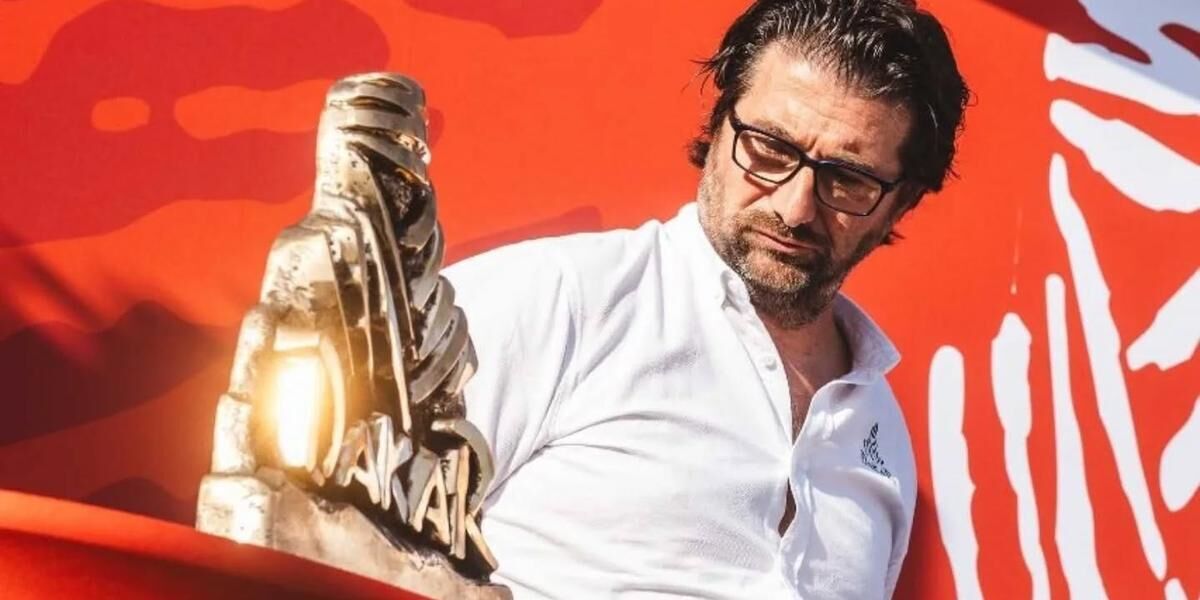
Dakar 2027 Morocco David Castera, Digi Mart USA News: David Castera, director of the Dakar Rally, said he had two and a half months to rebuild the entire event after Saudi Arabia withdrew. Speaking to Radio Mars on the program Mars Attack, he described how the nearly impossible challenge became a Moroccan project.
The effort began with a phone call to Portugal one evening at 8 p.m. An hour later, the Portuguese Automobile Club agreed to host the start.
The next morning, Castera made the decision: “Now, it’s Morocco.” He knows the country well, having organized the Rallye du Maroc for seven years. “Here, we don’t say no, we fight and we try to make it happen,” he said.
Companies, local authorities and government bodies responded, and as a result, “Today, I sleep much better.”
Logistics, more than the route, is the real challenge of Dakar 2027. The bivouac covers 20 hectares and hosts 3,200 people each day, including competitors, support teams and 500 to 600 organizers.
Medical services, showers, catering and offices must all be set up and taken down daily. Nine helicopters will provide security, and three more will be dedicated to television, which produces a 52-minute daily program broadcast in 190 countries.
The organization has chosen to work primarily with Moroccan service providers.
For enthusiasts wondering about costs, a car entry is roughly 200,000 euros including assistance. For motorcycles, the budget is between 50,000 and 60,000 euros.
Some companies now offer complete packages: “You arrive with your bag, your car is ready and you have support.”
For those dreaming of the start line, Castera offers clear advice: do not start with the Dakar. “Starting with the Dakar is a mistake.” He recommends first competing in four- to five-day rallies in Morocco, learning to read a roadbook and working as a team with a co-driver.
The Royal Automobile Club of Morocco (RACM) responded “the same day” to the organizers’ request, with the ambition of making the event a national celebration. Three priorities were set.
First, field Moroccan drivers at the start; at least three are already planned, including two selected motorcyclists. Second, launch a large national road safety campaign in partnership with NARSA and the Moroccan Federation of Insurance.
Third, turn the national road south into a genuine Moroccan “Route 66,” both legendary and touristic.
For the RACM, the Dakar’s return should revive motorsport in Morocco and encourage young people to get involved.
The start will be given on January 9, 2027 in the Algarve, Portugal, followed by a ferry crossing to Nador. Competitors will then head to Bouarfa in the Oriental region for the start of the 11 Moroccan stages.
The route includes the dunes of Merzouga, Zagora, the Smara region, then the Grand Sud as far as the area around Dakhla.
The big dunes arrive in the first week. The second week will be faster, with stages of more than 500 km.
A highlight is a marathon stage along the ocean, where riders will sleep on the ground with only a basic survival ration.
“What is beautiful is that we cross all of Morocco,” Castera summed up. “The Dakar has evolved, but we want to keep its roots.” The bold bet is made, and Morocco is ready.