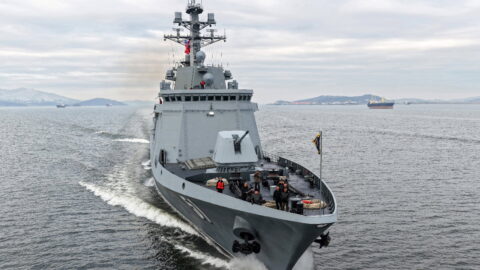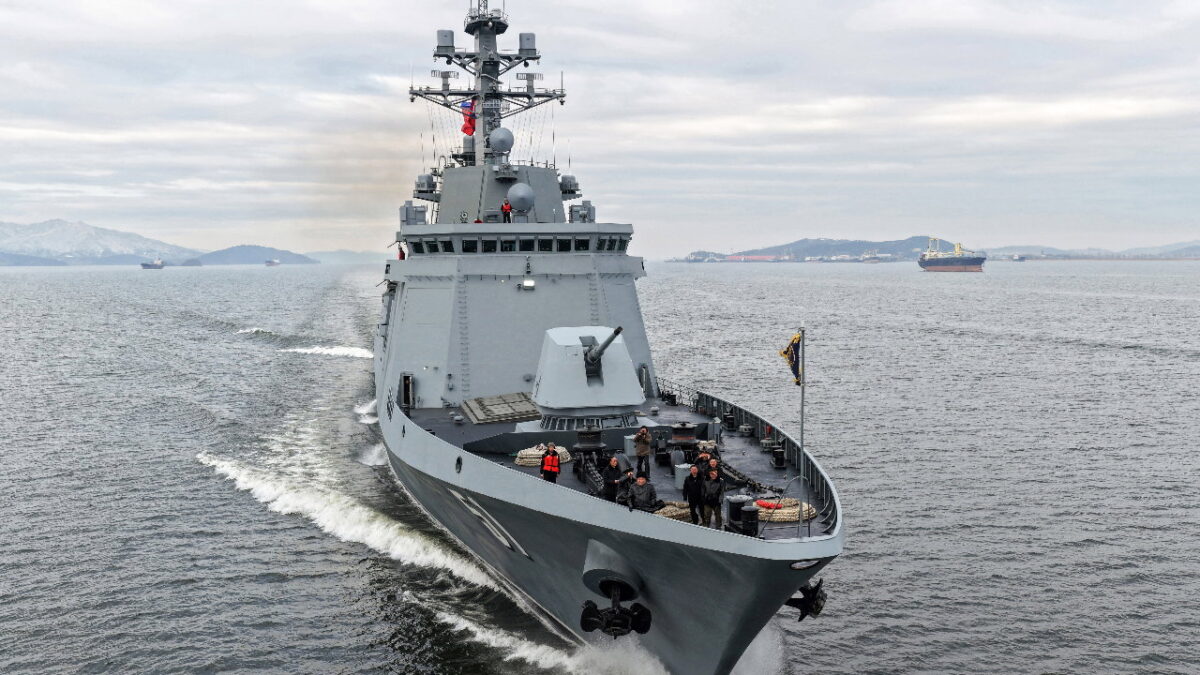
North Korea destroyer construction at three shipyards, Digi Mart USA News: North Korea is expanding its maritime ambitions rapidly and now uses three different shipyards to build destroyers. Recent satellite data from October indicates that the Rajin shipyard on the northeastern coast is now part of these efforts and receives large ship components from the Chongjin facility.
This logistical step, in which a transport of more than 70 kilometers along the coast is carried out by cargo vessel, points to a strategic division of labor. Chongjin reportedly manufactures structural modules, while Rajin focuses on final assembly and launch.
The size of the new components, with a width between 18 and 20 meters, suggests the emergence of a new, heavier class of warships. This follows the launch in mid-2025 of the 5,000-ton Choe Hyon-class destroyers.
These first destroyers have surprised military analysts by demonstrating advanced capabilities comparable to those of the United States, Japan, South Korea and China, and by surpassing current production from Russian and European naval sectors.
During an inspection of the Kang Kon, a ship of the Choe Hyon class, Kim Jong Un announced the development of 10,000-ton destroyers. Because the smaller 5,000-ton ships already carry a high concentration of 74 missile cells, the larger vessels are expected to hold more than 150 cells.
Such a configuration would make them among the most heavily armed destroyers in the world.
With Nampho, Chongjin and Rajin all now operational, North Korea has more destroyer production facilities than the United States, which relies on two primary shipyards for the Arleigh Burke class.
Official reports point to a goal of launching two destroyers per year over five years. This pace exceeds the current American average of 1.6 ships per year, although it falls short of China’s massive output.
The Nampho shipyard remains the main center for these projects. During a visit by Kim Jong Un in November 2026, attention was drawn to a hull under construction that analysts say matches the target displacement of 10,000 tons.
Compared with the American Arleigh Burke class, which uses 96 launch cells for a 9,600-ton hull, North Korean ships appear designed for greater firepower. The two countries, however, prioritize different roles.
American ships specialize in long-range land attack and advanced, multilayered ballistic missile defense using SM-series missiles and Tomahawks.
North Korean ships will likely use maritime versions of the Pyongae-6 system, which is less specialized in missile defense but superior in anti-ship operations thanks to hypersonic cruise missiles. Both countries are among the few expected to deploy nuclear-capable cruise missiles on their destroyers by the 2030s.