Energy superpower rivalry between the United States and China and its impact on UK energy bills, Digi Mart USA News (United Kingdom): A gas rig in the North Sea, an oil field in Texas and a solar panel factory in China may seem far apart, but they all affect what households pay for energy. According to the latest forecasts from major suppliers British Gas, EDF and E.ON, the typical UK household bill could rise by more than a quarter in January, an increase of around £460 a year.
This is the second time in four years that a war far away has reached British bills. Since US and Israeli strikes on Iran in February effectively closed the Strait of Hormuz, oil and gas prices have risen sharply.
Winter demand is expected to push prices higher still, as Europe’s winter gas stores are at their lowest level since records began in 2011.
Cutting carbon emissions is essential to limit future warming, but keeping bills down while cutting emissions is proving difficult, not just in the UK. As world leaders gather in Antalya, Turkey, for COP31, the UN climate summit, the same tension is playing out globally.
Energy and climate policy has become a contest between the world’s two energy superpowers, leaving other countries caught in between.
The United States is betting on fossil fuels, pumping record volumes of oil and gas and urging its allies to buy them. China is betting on renewable technology, flooding the world with solar panels, batteries and electric cars that can replace those fuels.
The outcome will shape not only what the world pays for energy but how quickly it can cut the emissions heating the planet.
The UK already buys nearly a quarter of its imported gas from America and much of its clean energy equipment from China. In March, after US lawmakers urged the UK to block a £1.5bn wind turbine factory by Chinese maker Ming Yang at Whiteness Head on the Moray Firth, ministers did so, citing national security.
Last month, they approved the new North Sea gas field Jackdaw.
Few countries are more exposed to the energy shock than the UK, since gas heats most homes and often sets the wholesale price of electricity. The previous shock, after Russia’s invasion of Ukraine, cost households an extra £63bn, around £2,200 each, according to the Energy and Climate Intelligence Unit and E3G.
Less than half of the UK’s gas now comes from its own North Sea fields.
Energy Secretary Miatta Fahnbulleh said tackling climate change remains a priority after Britain’s hottest summer on record. When asked whether bills or climate mattered most, she said: “With the cost of living biting, affordability is my overriding objective, without a doubt.” She added: “We are far too exposed to global markets we have no control over.
What’s the solution to that? Homegrown clean energy.”
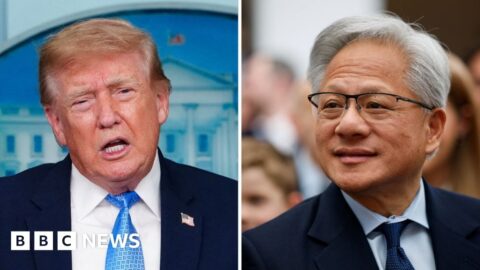
Two routes to more homegrown energy are drilling for more or building more. US President Donald Trump, who has opposed wind turbines since 2006, urged the UK to go “FULL BLAST” on drilling after the Jackdaw approval.
The government now faces a harder decision on Rosebank, west of Shetland, the UK’s largest undeveloped oil field, which reportedly has split the cabinet, with a decision expected within weeks.
Conservative leader Kemi Badenoch urged the prime minister to approve drilling, calling it “the only way we can protect families from rising bills.” Reform UK’s Richard Tice said using British gas would bring bills down. Fahnbulleh disagreed, saying: “No, it doesn’t.
In the end, the oil and gas is sold on global markets.” Critics including Tessa Khan of the campaign group Uplift argue Rosebank would not improve energy security and would send a dangerous signal on climate.
The North Sea is in long-term decline, with output down more than two-thirds since its 1999 peak. The Office for Budget Responsibility expects output to keep falling by around 10% a year, even with Rosebank.
Jackdaw’s reserves amount to only a few months of UK gas demand, while Rosebank contains less than a year’s worth of UK oil consumption. Last week the government introduced a bill to write a ban on new exploration licences into law, though Rosebank, which is already licensed, is not covered.
The Climate Change Committee estimates that a future price shock like 2022’s would raise household energy bills by 59% if Britain stayed on a high-carbon path, but only 4% if it focused on renewables. The cost of new solar power fell 90% between 2010 and 2024, and onshore wind fell 70%, according to the International Renewable Energy Agency.
However, recent inflation has pushed initial costs back up, and Danish developer Ørsted scrapped plans for Hornsea 4 citing soaring supply chain costs.
Higher interest rates have added to the problem, since developers must borrow heavily before generating power. Britain also needs costly new grid networks to carry renewable power to where it is needed, and gas-fired stations still often set wholesale power prices.
As a result, building more renewables does not automatically mean lower household bills.
China produces the vast majority of the world’s solar panels and batteries and around two-thirds of its electric cars. In March, its exports of solar panels, batteries and electric cars hit a record, up 70% on a year earlier, according to the think tank Ember.
Asked whether Britain was swapping dependence on petrostates for dependence on Beijing, Fahnbulleh said: “Well, look, we are,” adding that the UK has a diversified global market. She said she wants more turbines made in Britain.
Fahnbulleh said national security was the reason for blocking Ming Yang, though the government has never publicly explained the risk. Two days before Jackdaw’s approval, Japan’s Sumitomo Electric opened Britain’s first HVDC subsea cable factory at Nigg, creating up to 250 jobs.
Meanwhile, the US formally left the Paris climate agreement earlier this year, and national pledges now add up to a global emissions cut of just 6% by 2035, a tenth of what scientists say is needed to limit warming to 1.5C.
China is increasingly filling that gap. Li Shuo of the Asia Society Policy Institute describes a “role reversal”, noting China now sees pushing the global climate agenda as serving its national interest.
China aims to get 35% of its energy from electricity, five years ahead of one of COP31’s flagship goals. Li Shuo said the transition is increasingly driven by Chinese companies rather than government promises.
For the UK, these are hard choices, made while household budgets are already stretched.