Southern Bavaria groundwater record lows, Digi Mart USA News (Fürstenfeldbruck district, Bavaria, Germany): Streams in the Fürstenfeldbruck district have been dry for months, and new record lows are being recorded at several groundwater monitoring sites. The situation is described by an expert as extraordinary.
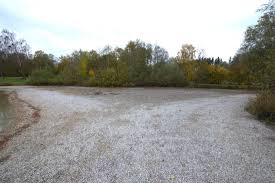
In the town of Germering, the bay on the north side of the local lake lies completely dry, with the former shoreline now nearly 50 meters from the water’s edge. The gravel bottom is partly covered with silt and leaves, and the water level has dropped noticeably at all other points of the lake.
The Holzbach, which once flowed directly past Lake Germering and fed the Gröbenbach, has been dry for months, and the Gröbenbach itself is also completely dry. The village well no longer flows, and a beaver that had created a small habitat in a renaturalized area has left.
The Starzelbach, further west, is also affected, and no water has flowed through Alling for months, nor through large parts of Eichenau.
Surface streams are only the most visible sign of the problem, because most of the district’s water is stored underground. According to the Low Water Information Service Bavaria at the State Office for the Environment, groundwater levels at Schöngeising, Alling and Germering have reached new lows, meaning less groundwater has been measured there than at any time since measurements began.
The latest situation report states that 80 percent of monitoring sites in the upper groundwater layer currently show low-water conditions, with 43 percent classified as “very low.” It notes a notable number of sites recording new lows, concentrated in Southern Bavaria, currently at more than one in every six monitoring sites. The report attributes this to a dry 2025, followed by a dry winter half-year from November 2025 to April 2026 and a dry summer half-year from May to October.
Deeper groundwater layers are also declining. Stefan Homilius, head of the Munich Water Management Office responsible for the district, explained that deep groundwater often responds to precipitation with a delay of years or even decades.
Homilius described the current situation as “extraordinary” and said, “For Southern Bavaria, this is a completely new situation.” He attributed the increasing extremes to climate change, saying what is needed now is a wet winter with plenty of rain and snow, while longer term the region must prepare for less water overall.