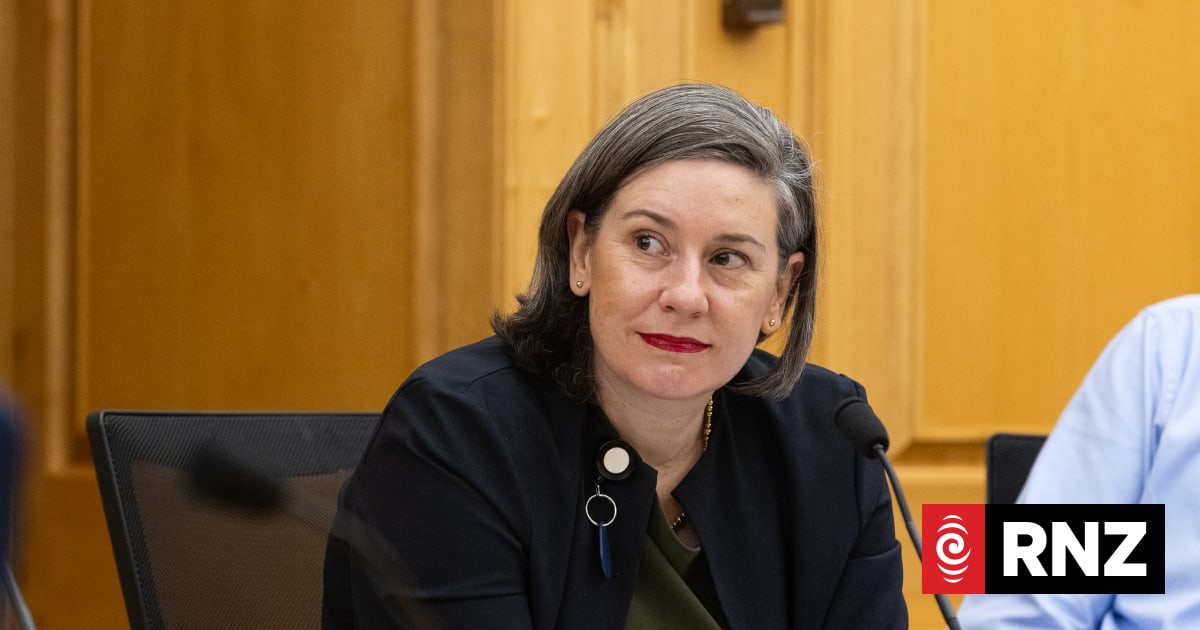
Outgoing National MP Vanessa Weenink warns party pulled too far to the right, Digi Mart USA News (Banks Peninsula, New Zealand): Outgoing Banks Peninsula MP Vanessa Weenink says she is worried National will be pulled “too far to the right” as she reveals that many of her constituents told her they hated National in the lead-up to the election.
The former National MP called herself a “squishy centrist” and said she would worry for the party because it does not have enough squishy centrists or woke liberals like Chris Bishop. “The risk is that the party might be pulled too far to the right.
The risk is that they’ll feel like they really have to consolidate with their base,” she said.
Heading into Parliament for her final caucus, Weenink told media she was “gutted” to lose her seat. She said people in her electorate told her they literally hated National, while others said the party had lost its way and was listening too much to its coalition partners.
Asked whether she agreed with those comments, Weenink said she would not publicly agree with them but would not necessarily disagree with everything they said. She maintained that Christopher Luxon was the right person to lead the party and was strong enough to stop the pull to the right.
Asked why National’s party vote was so low, Weenink said New Zealanders are fed up with what seems to be bickering and fighting and want to focus on real issues. Asked whether National was to blame, she said “oh yeah, absolutely,” adding that there would be a review after the election.
She would not say whether National had been too negative during the campaign.
Weenink also revealed that Opportunity had approached her to stand as a candidate in Banks Peninsula, which she called “ridiculous.” She said an Opportunity candidate could have split the vote and potentially led to her victory. She described the electorate as very divided and close, with only a 2 percent difference in the party vote between National and Labour.
Senior National MP Mark Mitchell said New Zealanders had not rejected the party after it received only 29 percent of the vote. “They haven’t rejected us because we’re back in Parliament as the biggest party after what was a very difficult period of governance over those three years,” he said.
Mitchell said Luxon retained the support of New Zealanders, the caucus and the Cabinet, and that he did not need to resign.
Mitchell said he would not say whether National’s campaign had been negative, describing it as a “funny campaign” with strategic voting and other issues that made it “a bit untidy.” On the deputy leader role, he said the party was not discussing it and was focused on farewelling outgoing MPs, including outgoing finance minister Nicola Willis. He said the new finance minister would be decided by the Prime Minister, and he declined to speculate on David Seymour taking the role.
Mitchell rejected the suggestion that National would have done better under a Mitchell and Erica Stanford leadership ticket, saying Luxon was “without a doubt the right person to lead us into the election.” Asked whether Bishop would have been a better campaign chair than Simeon Brown, Mitchell declined to speculate, praising Brown and the campaign team.
Mitchell said the party campaigned as hard as it could on the party vote and that voters’ decision must be respected. On the overhang, he said “it’s MMP.” He rejected the notion that Luxon had lied about working with Opportunity, saying the party had ruled them out clearly during the campaign, and that National did not need Opportunity to form a government.
Mitchell said Luxon had pledged after the election to “do politics differently” and work with other parties on issues of common interest. Pressed on why Luxon did not take that position earlier, Mitchell laughed and said they were in an election campaign.