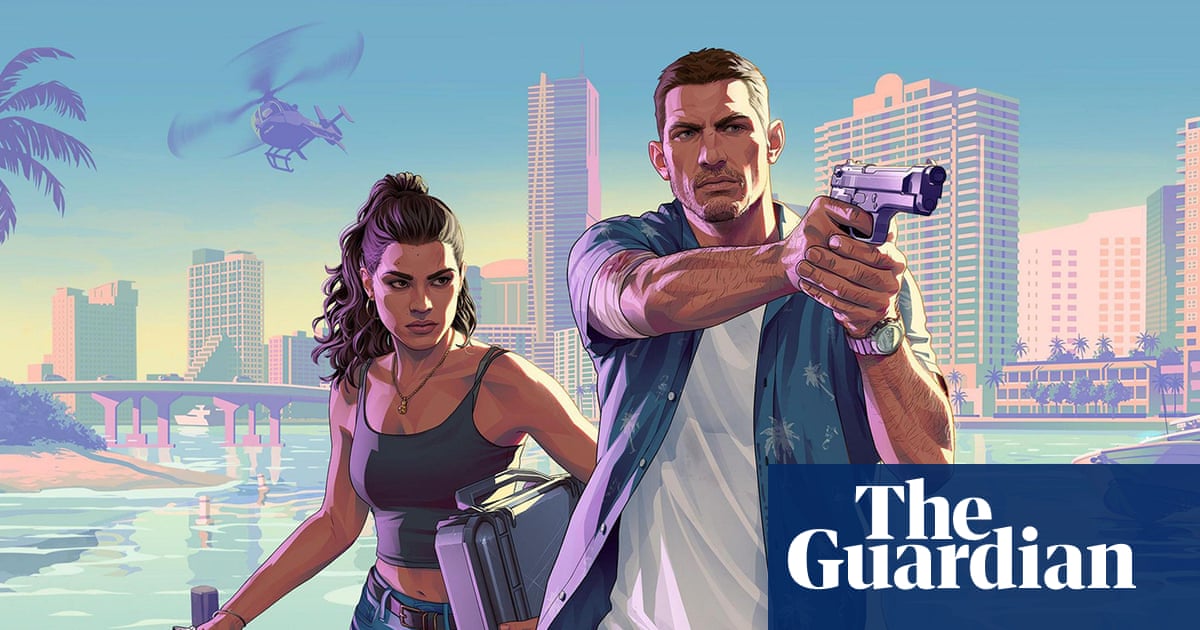
Grand Theft Auto VI cultural influence, Digi Mart USA News: Ever since it crashed onto PC and consoles in the late 1990s, Grand Theft Auto has been tearing up the game-making rulebook. Its cultural references, rebel spirit and sprawling sense of freedom have helped make it a definitive work of art, according to a feature published by The Guardian.
In the 2000s, video game writers visiting the London office of developer Rockstar Games were shown new projects through clips from classic films. The presentations suggested that the studio saw its work as belonging alongside those cinematic influences, a stance that was already being stretched by the ambitions of its games, such as Red Dead Redemption, which drew on everything from spaghetti westerns to Western novels and paintings.
Rockstar has since grown considerably in stature. Its newest game, Grand Theft Auto VI, received its first in-depth reveal in a Netflix special, and it is scheduled for release on 19 November.
The article says Grand Theft Auto V, launched in 2013, has sold more than 230 million copies, and that GTA VI is said to have cost more than $1 billion to make.
The original Grand Theft Auto was made by the Scottish developer DMA Design in 1997. Players raced around fictional US cities, stealing cars and colliding with pedestrians from a top-down perspective.
Designer Paul Farley told The Guardian in 2015 that the team had no budget for a fact-finding trip to the United States and had only one PC with internet access in the studio.
Grand Theft Auto III, released in 2001, introduced a 3D open world, including a version of New York called Liberty City. The game drew on films such as Goodfellas, and critic Christopher Byrd described its urban landscape as unlike anything he had seen rendered in a game.
Later entries in the series, including Vice City, San Andreas, Grand Theft Auto IV and Grand Theft Auto V, expanded the series’ cinematic references, simulation systems and themes.
Rockstar’s approach has repeatedly centered on the appeal of crime and violence as everyday life in a richly simulated world. Former Rockstar Edinburgh head Leslie Benzies said the team did not set out to make the most violent game possible, but was drawn to worlds where violence is part of daily life.
Commentators quoted in the article argue that the series’ detailed cities, downtime and contradictions help explain its enduring appeal.
The article also notes that GTA VI combines satire, a crime story, and a love story centered on its two protagonists, Lucia and Jason. Critics quoted in the piece argue that the series’ density of detail and internal contradictions, including its critique of consumerism by a company that has profited enormously from its games, are central to its cultural significance.