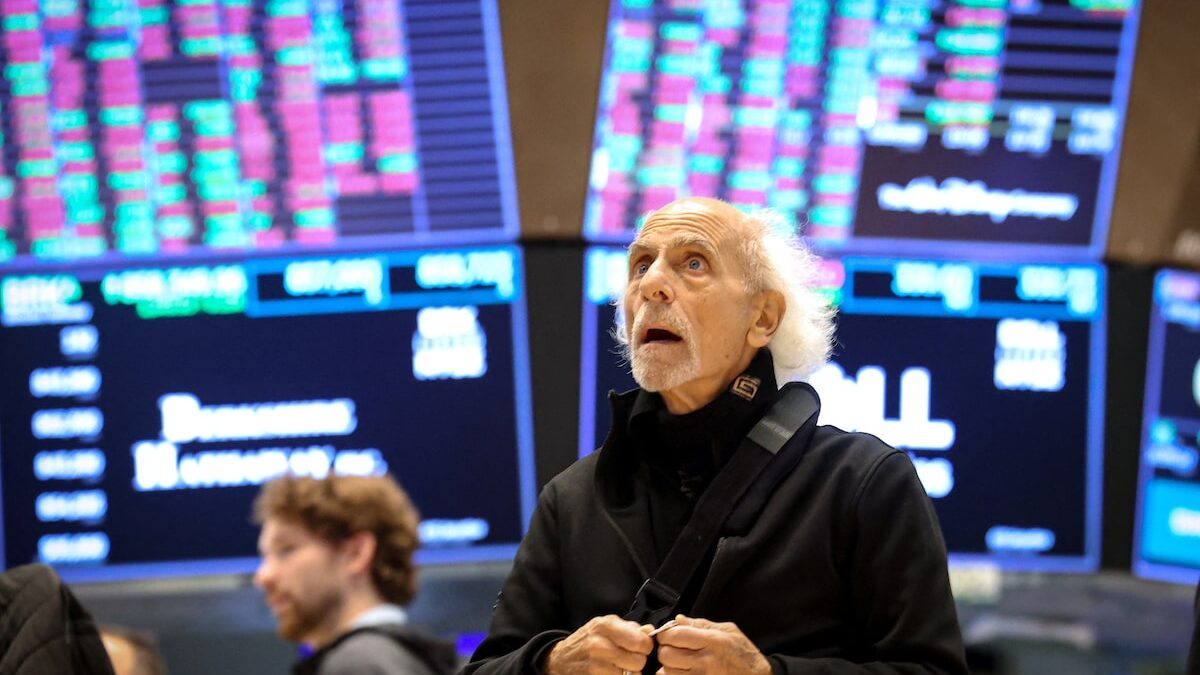
Global stock markets Nvidia shares oil prices premarket, Digi Mart USA News: World stock markets nudged up from six-month lows on Monday, but the mood was fragile as a fall in Nvidia shares added to the unease hanging over artificial intelligence following last week’s global rout in tech shares.
Nvidia shares fell just over 4 per cent in pre-market trading after an internal investigation into whether CEO Jensen Huang had been targeted by a foreign intelligence effort put his future at the AI chipmaker under scrutiny.
As European trade got under way, Nasdaq stock futures were flat, having traded negative earlier. European shares eked out modest gains as shares in Asia rallied and Japan’s blue-chip Nikkei rose over 2 per cent, with a fall in oil prices offering some comfort to world markets.
Global stocks have been under pressure in recent weeks with the AI trade crumbling amid rising interest rates, and sweeping Democratic wins in the U.S. midterm elections deepening worries about increased regulation of AI and data centres.
Analysts said the outlook remained cautious, with the selloff in Nvidia shares the latest test of investor sentiment.
“For now, the repercussions across the wider chip industry look relatively limited although the scandal could disrupt the tech rebound,” said Susannah Streeter, chief investment strategist at investment platform the Wealth Club.
MSCI’s broadest index of Asia-Pacific shares outside Japan rose 1.25 per cent after sliding 4.6 per cent last week. Taiwan’s benchmark rose almost 5 per cent after notching its steepest weekly drop in two decades last week.
All this left MSCI’s World Stock Index up 0.4 per cent, holding above six-month lows hit last week.
Earnings reports due this week from tech companies including CoreWeave, Applied Materials and Cisco Systems are set to put the profitability of AI ambitions to the test amid the massive costs of the build-out. CoreWeave has become a barometer of investor anxiety over AI, and the cost of insuring its debt has spiked into distressed territory recently.
“The only fundamental this week that matters is price,” said Chris Weston, head of research at brokerage Pepperstone in Melbourne. “You could easily see a lot of people going, ‘You know what, now’s the time to buy — blood on the streets.
It’s not as bad as everyone thinks,’ he said. ‘It will be driven by flow, and fundamentals will mean very little.'”
Brent crude fell 2 per cent to US$96.29 per barrel after U.S. President Donald Trump said on Sunday he was highly unlikely to order fresh attacks on Iran as long as talks to end the conflict progress.
Still, elevated oil prices continued to hang over the world economy.
China’s factory-gate inflation accelerated to its fastest pace in more than four years, while consumer inflation cooled in October, reflecting persistent cost pressures from higher oil prices despite weak domestic demand.
Market attention turned to U.S. CPI numbers on Tuesday, with bets for a December Federal Reserve rate hike rising after Friday’s blowout jobs report showed U.S.
employers added 165,000 jobs last month. Money markets priced in a roughly 80 per cent chance of a quarter-point Fed rate hike in December, a figure that had briefly pulled back last week as the slide in tech shares raised economic growth worries.
The dollar was broadly soft after Friday’s strong gains. The dollar index, which tracks the greenback against a basket of currencies of other major trading partners, was 0.3 per cent lower at 101.88, having notched its biggest one-day gain since June on Friday.
The euro rose 0.4 per cent to US$1.11, holding above its lowest level in roughly 1-1/2 years, which it hit last month.
In cryptocurrencies, bitcoin rose 0.5 per cent to US$74,397, after touching its lowest levels in over two months as investors fretted that a Democratic-controlled U.S. Congress would toughen regulation on digital assets.
Elsewhere, several Chinese banks are sharply lifting dollar deposit rates, in some cases above U.S. benchmarks, in unusually swift moves that bankers say are attracting cash and could temper gains for China’s yuan, according to a Reuters report.