ANC internal collapse and the 2029 election, Digi Mart USA News (South Africa): The African National Congress is facing a time crunch. The party increasingly appears incapable of confronting the political culture that is responsible for its own decline, according to a commentary published by IOL Sunday Independent.
The November 2026 municipal elections delivered a devastating verdict. The ANC secured just 30.89% of the national municipal vote, compared with approximately 45.6% in 2021, and achieved outright control in only 51 municipalities.
This followed its decline from 57.5% in the 2019 national elections to 40.2% in 2024, when it lost its parliamentary majority.
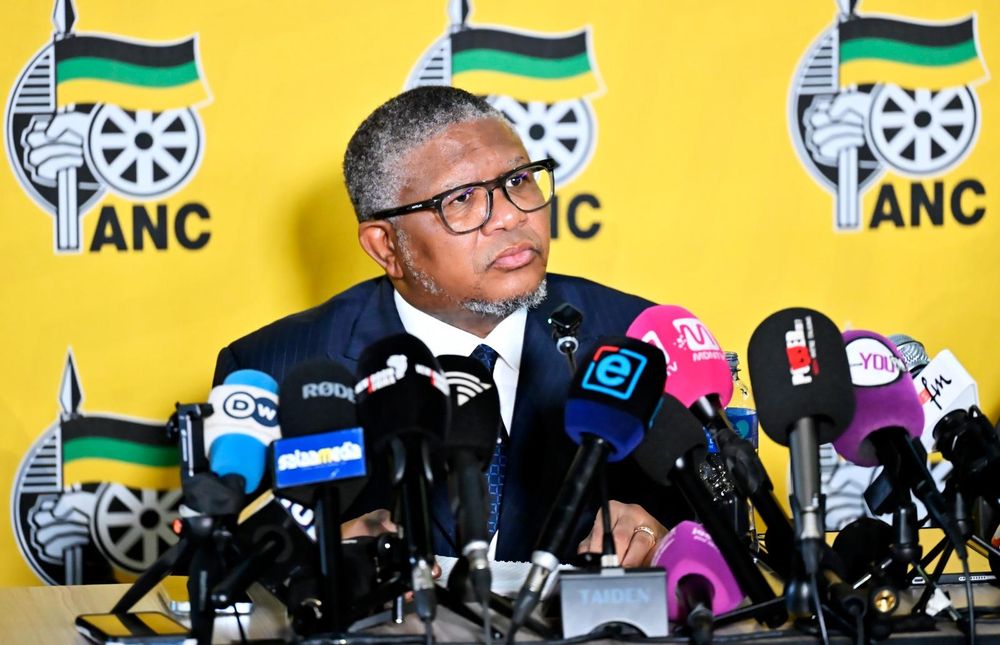
ANC secretary general Fikile Mbalula described the latest outcome as catastrophic. The commentary argues that acknowledging catastrophe is not the same as confronting its causes, and asks how many electoral warnings the party must receive before it accepts that the problem may lie within the organisation itself.
The author attributes much of the damage to factional battles, corruption scandals, leadership instability, weak accountability and deteriorating municipal services. It argues that the party’s problem is less a communication failure than a governance failure, and that voters are increasingly questioning the party’s contemporary relevance rather than rejecting its historical contributions.
The commentary also examines what it calls governance theatre, describing a pattern in which conferences, resolutions and disciplinary processes are announced without producing measurable improvements in accountability, candidate selection or municipal performance. The author argues that renewal without measurable consequences is not renewal at all.
Looking ahead, the article identifies the party’s next national elective conference, scheduled for December 2027, as a critical juncture. It argues that succession debates must move beyond personalities to address the leadership model, the reforms required and measurable obligations for the next leadership collective.
The commentary further addresses coalition politics, arguing that negotiated government is legitimate where voters deny outright majorities, but that holding public office does not equal restoring electoral legitimacy. It recommends an independent assessment of electoral failures, enforceable leadership standards, practical economic interventions and a coherent strategy for 2029 supported by measurable improvements.
The author warns that electoral decline can become self-reinforcing as public confidence, organisational morale and internal cohesion deteriorate together. The article concludes that the party must choose between protecting entrenched interests and undertaking difficult reforms, and that voters will by 2029 want evidence of what has changed.
The author, Qwesha, is a governance, risk and business professional, author and public commentator. The article is an opinion piece and its claims are presented as the author’s analysis rather than as independently verified findings.