Cathie Wood AI stocks Nasdaq correction bull market, Digi Mart USA News: As U.S. stocks’ artificial intelligence sector suffered a sharp selloff this week and the Nasdaq Composite officially slid into correction territory, ARK Invest chief Cathie Wood chose to go against the grain.
In a CNBC interview on November 6, she said investors’ widespread anxiety has not shaken her confidence but has instead strengthened her conviction that the bull market will continue.
“The more the market worries, the more optimistic I get, because that often means the bull market is more durable. I don’t think this bull market has gone off the rails,” Wood said in the interview.
She also disclosed that ARK Invest has spent roughly the past week concentrating its positions in high-conviction names, including adding to its stake in SpaceX.
The Spark for the Selloff and Deeper Pressures
U.S. stocks fell sharply on Thursday, reversing an initial rally that followed the midterm elections.
AI-related stocks led the decline, with the immediate trigger being market fears that data center construction could slow after the Democratic Party took control of Congress. Tech stocks staged a modest rebound on Friday, but sentiment remained fragile.
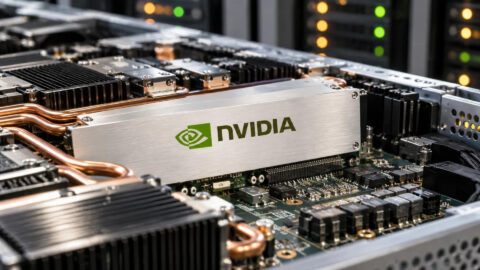
Wood noted that unease about AI has run through most of this year. Investors have persistently questioned the scale of tech companies’ capital spending in AI, the pace at which they are burning cash, and the shift by hyperscalers from strongly positive free cash flow to negative free cash flow.
“This has made the market uneasy for quite a while,” she said.
Meanwhile, pressure at the macro level has also been building. The U.S.-Iran War has pushed up global inflation, U.S.
interest rates and bond yields have climbed sharply this year, and corporate bond yields have risen in tandem. “Part of the reason for this correction is what’s happening in the bond market,” Wood said.
She has repeatedly cited rising funding costs as a risk factor that could constrain the growth of the AI industry.
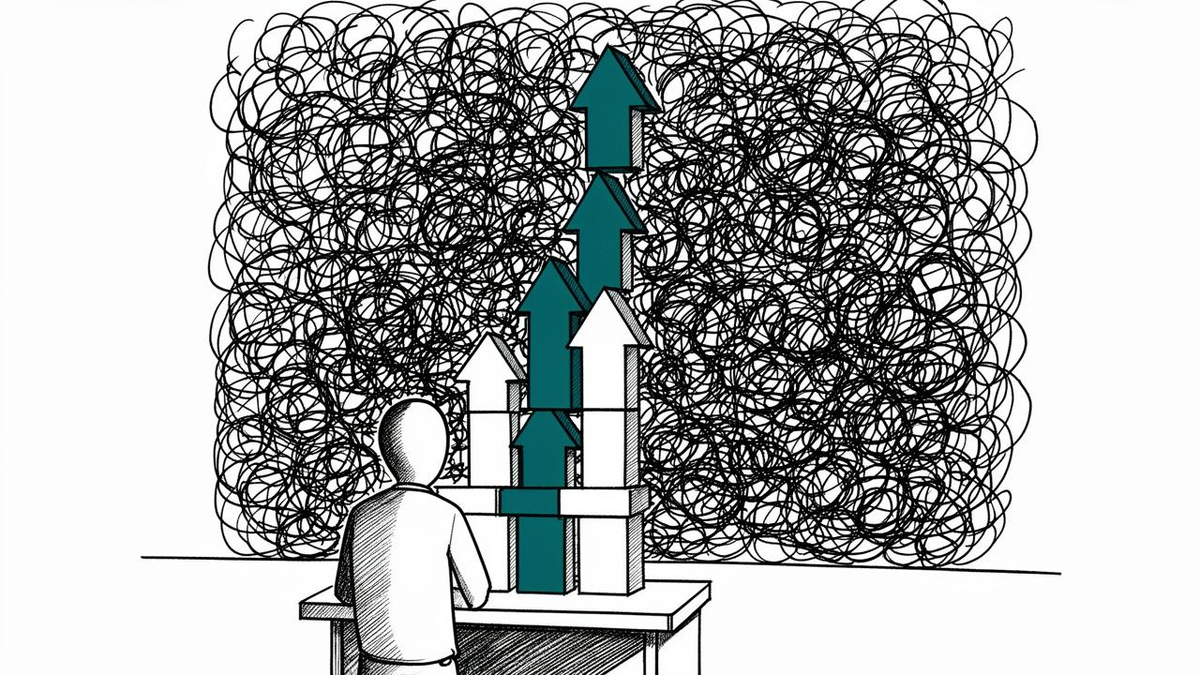
Wood describes the pessimism pervading the market as a “wall of worry,” but her interpretation differs from most people’s. Drawing on her own experience, she contrasted the current environment with the past: “I lived through the tech and telecom bubble, and back then almost no one was worried.
That was the ’80s and ’90s, it was a bull market, and people just took it for granted that stocks would keep going up to the sky. But the AI trade is not evolving that way at all.”
In her view, it is precisely this “wall of worry” that makes the current bull market healthier. She named the wall’s “builders”: “This wall of worry was built by the senior leaders of the financial world — they were young during the bubble.
It’s the veterans of the industry who keep this wall standing, and that’s not a bad thing. Now bond investors have joined in too.”
Wood explained that bond investors previously did not need to understand the tech industry in depth, because back then it was software — low fixed costs, viral apps, extremely high margins. But AI carries high fixed costs, so bond investors are now on a journey into a tech world that is quite unfamiliar to them.
Faced with the pressure of rising rates, Wood believes AI hyperscalers have their own unique buffer. “If a company believes that taking on debt can accelerate its own momentum, that is, raise its growth rate, then it almost doesn’t matter to these companies how rates move.”
Asked whether the bull market is nearing its end, Wood’s answer was brief and direct: “I don’t think so.” She said the world is in the middle of a technological revolution, citing developments such as robotaxis and AI agents as evidence.
Wood is not just optimistic in words. ARK Invest has already acted amid the recent volatility, and she disclosed that over roughly the past week the team has continued to concentrate positions in its highest-conviction names.
“We’ve added to our SpaceX position. If anything, the debate over data centers here on Earth has created a bigger opportunity for data centers in space.”
For ordinary investors, Wood offered a framework: when you see a rebound in a volatile environment, take some profits; when you see a decline, if you have already taken profits, you have the psychological confidence to re-enter. “That’s what we do.
In times like these, we concentrate in our highest-conviction holdings.”
Looking ahead to 2027, Wood maintained her optimistic view. “It’s a two-steps-forward, one-step-back rhythm.
The revolution will become clearer and clearer, and I think the market will do well.”
Wood’s remarks came at a sensitive moment of sharp swings in the U.S. AI trade.
The Nasdaq Composite’s slide into correction territory means the tech-led selloff has reached the threshold of a technical pullback, and doubts about the sustainability of AI capital spending are being repriced by the market.
Regarding fund flows, ARK Invest’s decision to add to core positions such as SpaceX during the decline reflects that some active fund managers are still willing to take on risk amid volatility. Wood’s inclusion of bond investors on the list of “wall of worry” builders also suggests that the high fixed-cost nature of the AI industry is changing traditional creditors’ framework for assessing risk at tech companies.
The direction of interest rates and credit spreads will be a key variable in judging the depth of this correction.
For investors, the “trim on rebounds, add on declines” framework Wood outlined is essentially a volatility-management strategy whose effectiveness depends on judgments about conviction in individual stocks. At a stage when the AI narrative has yet to be disproven but cash-flow pressure is gradually emerging, market disagreements are unlikely to narrow in the near term.