Russian nuclear weapon in space, Digimart Global: A report from the German media outlet WDR, based on information from German intelligence services (BND), claims Russia intends to launch a satellite called Sputnik-S that could carry a nuclear weapon. The source article is from Futura Sciences, which relays these claims and notes they have not been independently verified.
The reported scenario comes shortly after the United States said it had weapons in space, a statement that drew reactions from Russia and China. The Futura article notes that the Sputnik-S project may be linked to earlier suspicions, reported in 2024, about a Russian orbital weapon.
Why a nuclear device in orbit would be different
According to the source, a nuclear weapon placed in orbit would not offer clear military advantages for striking targets on Earth, since intercontinental ballistic missiles already fill that role. An orbital weapon would also have a more predictable trajectory.
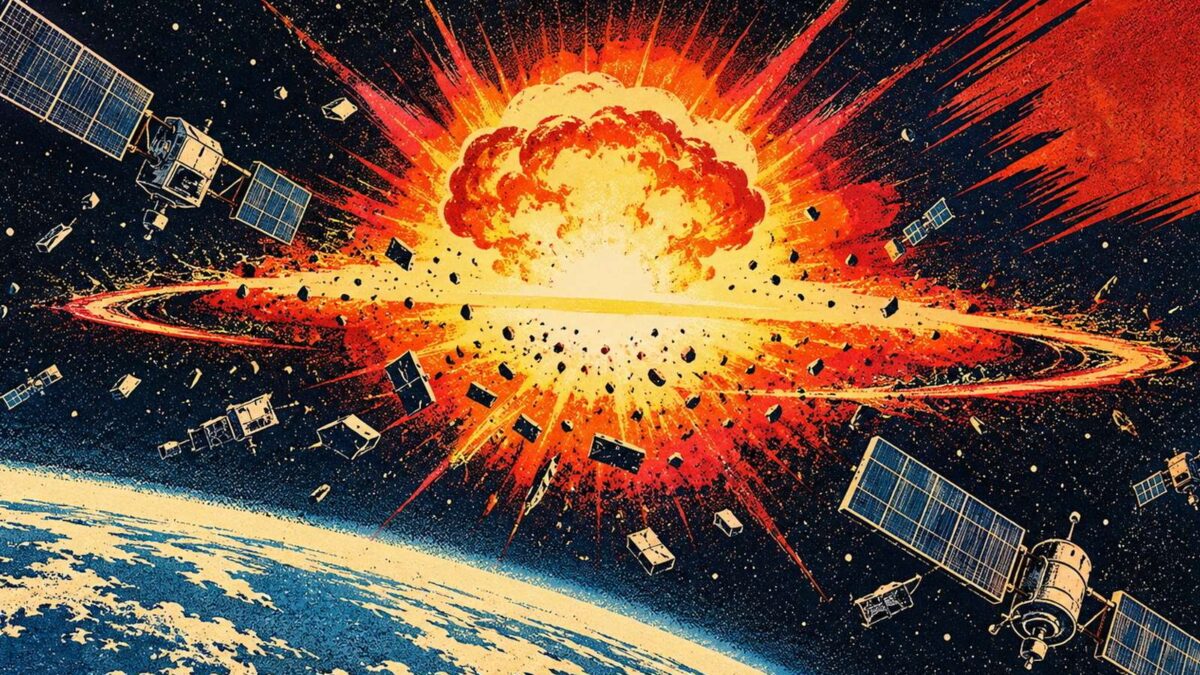
The greater concern is that a nuclear explosion in space could damage satellite infrastructure that supports communications, navigation and military systems.
The article recalls the 1962 Starfish Prime test, in which a 1.4-megaton nuclear device detonated at about 400 kilometres altitude. That test destroyed some satellites and damaged others through radiation, and caused electromagnetic pulse effects that disrupted ground-based telecommunications.
Legal and strategic implications
If the German report is confirmed, the source says a nuclear weapon in orbit would violate the 1967 Outer Space Treaty, which prohibits placing weapons of mass destruction in orbit. The article also estimates that about 130 million pieces of debris currently orbit Earth, and says a single explosion would add to that hazard.
It cites a simulation based on the 1962 test, which suggests a detonation in low Earth orbit could destroy much of the Starlink constellation within days.
The article adds that a space detonation could also affect Russia’s own satellites and those of allies such as China. The report remains unconfirmed, and the source does not provide an official Russian response.