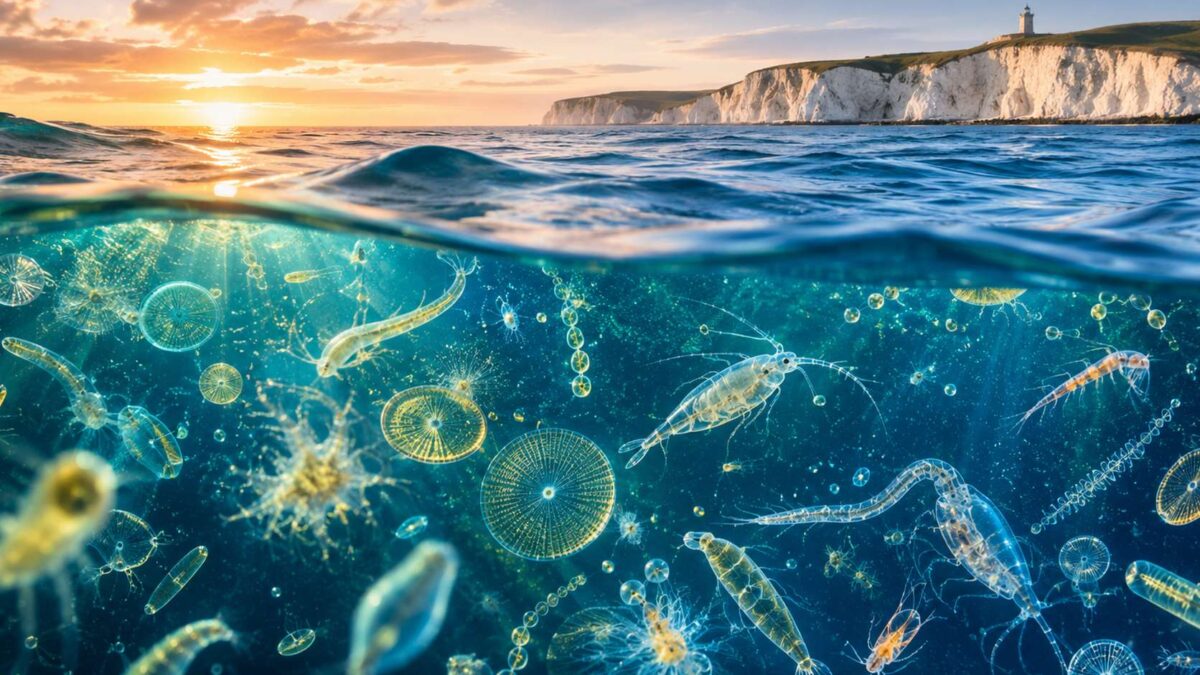
English Channel ecosystem changes, Digimart Global (English Channel, United Kingdom): The English Channel may look much as it did decades ago, but a new study suggests its marine food chain has been quietly reorganising over the past 35 years. Researchers at the Plymouth Marine Laboratory compared long-term microscope analyses with the evolution of environmental DNA, such as traces of cells, faecal matter and remains of organisms, according to the source report.
The study found that groups of crustaceans, including copepods that form a basic food source for many marine animals, have clearly declined. Some species are disappearing, while others are thriving unusually.
Larvae of animals that live on the seabed, including polychaete worms, bryozoans and echinoderms such as sea urchins and starfish, have become increasingly abundant.
The report links these shifts to warming waters. Warmer temperatures can affect nutrient availability and water stratification, the separation of water into layers based on density.
Citing the Normandy regional climate panel, the source says the Channel’s temperature rose by 1 °C in just 15 years, between 2004 and 2019. It also cites Météo-France for 55 days of abnormal heat in the Channel in 2025, compared with an average of 2 days a year between 1961 and 1990.
Changes at the microscopic level can ripple upward. Zooplankton forms the base of the diet for larger marine species, so shifts in its diversity may favour some fish species over others, and in turn affect marine mammals and the seafood available to people.
The source also notes that plankton helps regulate atmospheric carbon dioxide, so changes in phytoplankton could affect how much carbon is stored in deep water. The article is based on a single publisher report and has not been independently verified.