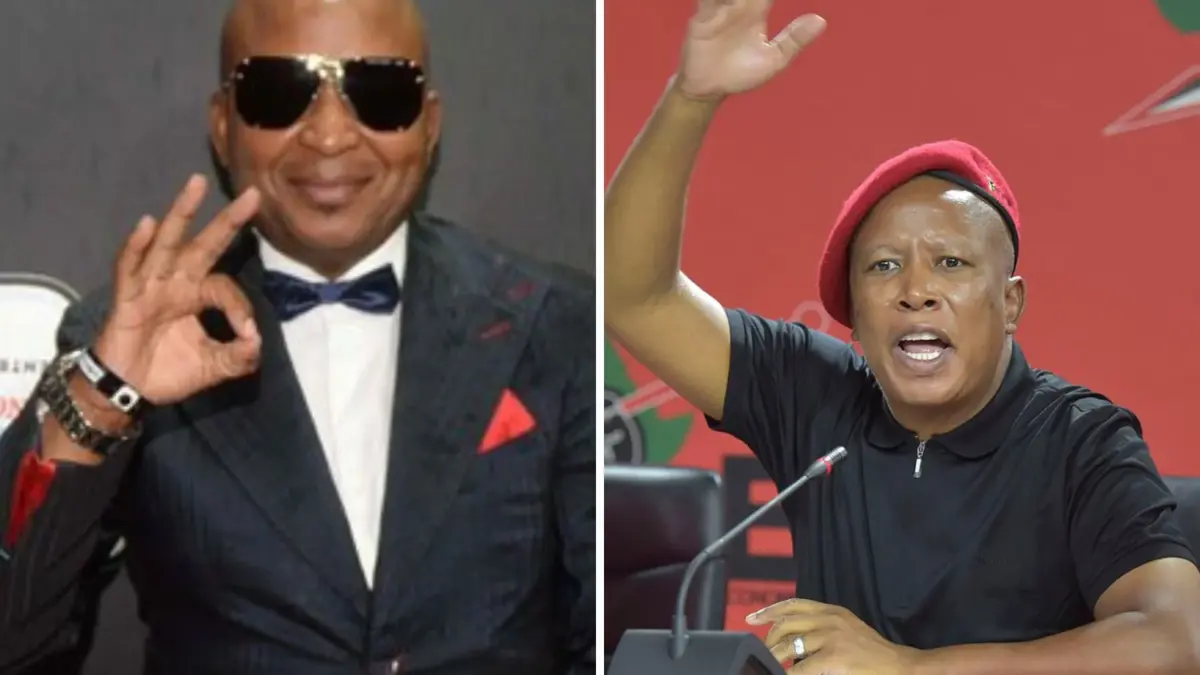
Malema defamation case Kunene, Digimart Global (Johannesburg, South Africa): The High Court in Johannesburg has ruled that Julius Malema’s defamation claim against Kenny Kunene cannot be decided on affidavits alone and must go to trial. Judge WJ du Plessis made the finding on Wednesday, 25 November 2026, according to the judgment reported by The Citizen.
The dispute centres on two statements made at a Patriotic Alliance rally at Athlone Stadium in Cape Town on 11 May 2024, shortly before the national and provincial elections. Central News later published an extract of the speech on X.
Malema, who is leader of the EFF and an MP, argued that the remarks falsely accused him of criminal and improper conduct.
Kunene, the Patriotic Alliance’s deputy president, told the court that the words were political rhetoric based on information already in the public domain. The judgment quotes him as saying at the rally that Malema works for and sells illegal cigarettes for Mazzotti, and it records an allegation that he also said Nigerians give Malema cocaine.
Malema asked the court only to declare the statements unlawful and defamatory and to award costs.
Why the case was sent to trial
Judge du Plessis explained that final relief of this kind can be granted on motion only in rare cases, and not where the respondent has laid a factual foundation for a recognised defence. He found that Kunene had put forward enough facts to support his defences, including a contribution towards the registration of the EFF, a loan, and the use of Mazzotti’s property by members of Malema’s family, as well as reports of events at a Sandton apartment.
The judge noted that Kunene accepted his sources did not support the reference to Nigerians, but still found a foundation for the defences. He held that Kunene had laid a factual basis for fair comment on the first statement and for a lack of intent to injure on both.
Because Malema’s claim for damages involved factual issues requiring oral evidence, the entire application was sent to trial.
What the ruling does and does not decide
The judge stressed that the ruling is not a finding on the truth of the allegations and did not decide whether the earlier publications were true or untrue. “Nothing in this judgment finds that Mr Malema sells illegal cigarettes, receives cocaine or uses cocaine,” he stated.
The onus of proving the defences remains with Kunene at trial, and finding a factual foundation does not mean a defence will succeed.
The court also granted Kunene condonation for filing his answering affidavit about six months late, although the judge said he was not fully satisfied with the explanation for the delay. Kunene was ordered to pay the wasted costs caused by the late delivery of a supplementary affidavit, and the remaining costs were reserved for the trial court.
Under the order, Malema’s notice of motion will stand as a simple summons, and Malema must deliver his declaration within 20 days.