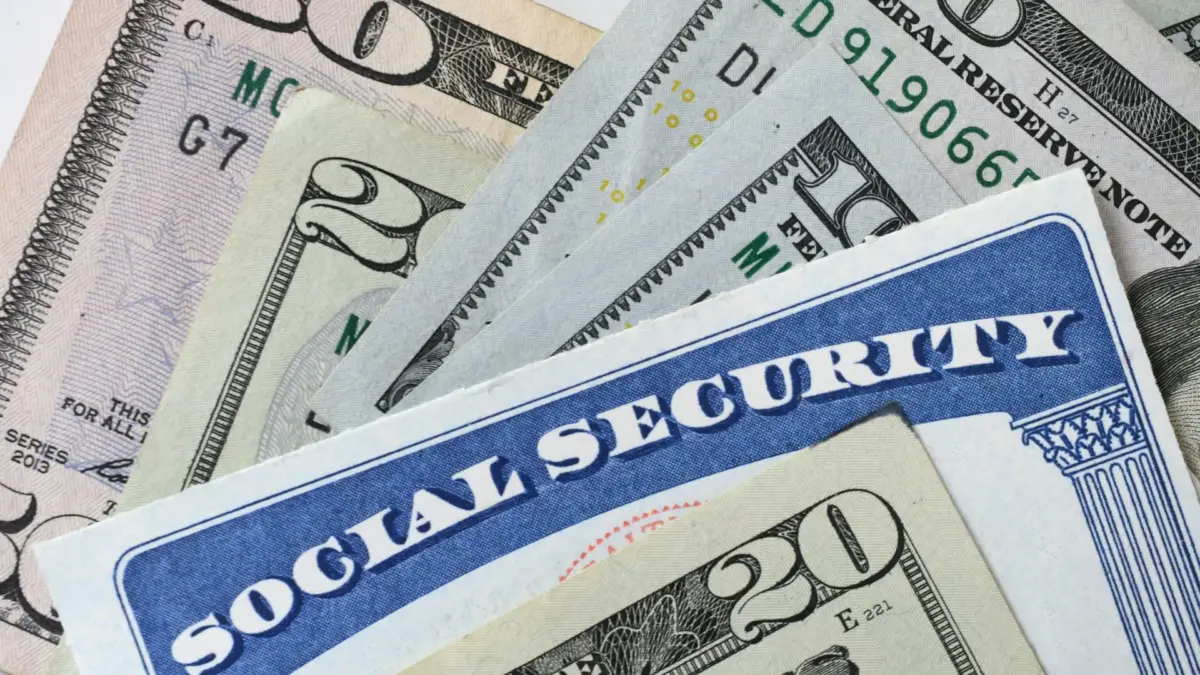
Early Social Security claims, Digimart Global (United States): Losing a job in your 60s can upset even a carefully planned retirement. Alan Turner, a museum exhibit designer from New Castle, Delaware, faced that choice after a layoff, deciding between claiming Social Security earlier than planned or relying on dwindling savings.
Turner lost his job in 2022 and struggled to find another. He said, “I haphazardly looked for work, but my prospects weren’t very good.” His unemployment payments and savings were not enough to support his plan to wait until 66½, his full retirement age, so he began collecting benefits at 64. As a result, his annual retirement income is roughly $5,000 lower, according to KFF Health News, which reported his account.
How early claiming reduces monthly payments
Benefits are available starting at age 62, but claiming before full retirement age generally results in smaller monthly payments for life. According to KFF Health News, full retirement age is 67 for Americans born in 1960 or later.
Beyond full retirement age, benefits increase by 8% annually until age 70, when payments reach their maximum.
Another example in the same report involves Nancy Mansson, a nuclear medicine technologist from West Hebron, New York, who left her job because of burnout. She now works one hospital shift a week to offset the roughly $300 a month she lost by claiming benefits early.
A surge in claims and what followed
Jack Smalligan, an Urban Institute senior policy fellow, told KFF Health News that from October 2024 through April 2025, new retirement claims exceeded the previous year’s total by 267,000, a 13% increase, while typical fluctuations were closer to 2% or 3%. He said, “It was really a reaction to the turmoil at Social Security during that period.” KFF Health News reported that after Donald Trump began his second term as president in January 2025, the administration cut thousands of agency jobs, threatened field-office closures and spread unfounded allegations of extensive fraud.
According to Smalligan, claims then fell by 235,000 from October 2025 through April 2026, roughly reversing the increase.
Funding outlook and proposed changes
The Social Security trustees’ report projected that the retirement trust fund will run out by late 2032 without congressional action. Under the law, benefits would continue, but payments could fall by as much as 22%, according to KFF Health News.
Massachusetts Democratic Sen. Elizabeth Warren and Ohio Republican Sen.
Bernie Moreno are reportedly preparing bipartisan legislation that would end the payroll-tax exemption for wages above $184,500. According to the trustees, eliminating that cap would bring the system an additional $3 trillion over a decade.
Options for workers deciding whether to wait
Suspending payments is another option for people who have reached full retirement age but are not yet 70; it allows recipients to restart later at a higher amount, according to KFF Health News. Waiting can also raise the survivor benefits a spouse eventually receives.
Smalligan said, “It’s an inflation-protected annuity the private sector can’t compete with. If you’re healthy and can afford it, it’s the smartest choice.”