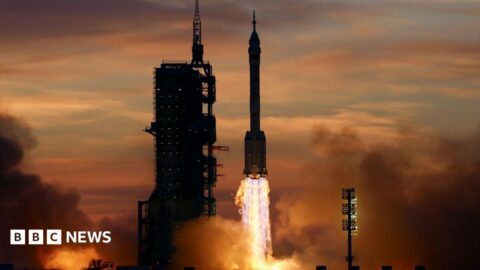
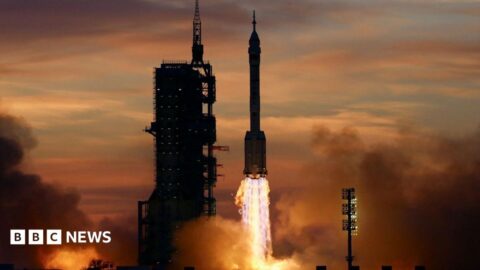
Dimorphos asteroid images, Digimart Global: Scientists are preparing to release the first closeup images of the aftermath of Nasa’s Double Asteroid Redirection Test (DART), four years after the spacecraft was deliberately crashed into the asteroid Dimorphos. The images are being captured by the European Space Agency’s (ESA) Hera spacecraft, according to The Guardian’s report.
Dimorphos is roughly 160 metres wide and orbits a larger asteroid called Didymos. On 26 September 2022, the roughly half-tonne DART spacecraft struck Dimorphos at more than 13,000mph, blasting a large cloud of rocky debris into space.
Telescope observations on Earth showed the impact shortened the time Dimorphos took to orbit Didymos by about 33 minutes, well beyond the 73-second change NASA officials had said would count as success.
Key questions remain about how much of the asteroid was displaced and how it responded to the collision. Computer simulations published in 2024 suggested DART may have reshaped the entire asteroid rather than excavating a large crater.
Dr Ian Whittaker, a senior lecturer in physics at Nottingham Trent University, said the new images should show whether any part of the DART spacecraft remains on the surface or whether mostly debris was thrown off.
ESA launched Hera on 7 October 2024. After a two-year journey, the car-sized spacecraft has reached the asteroid pair and is surveying them from a distance of 15–18 miles (25–30km). Over the coming months, Hera will move progressively closer and deploy two shoebox-sized satellites, one of which will use radar to examine the interior of Dimorphos.
Whittaker said the findings could help turn asteroid deflection from a one-off experiment into a more reliable planetary defence method. He noted that the momentum transferred by a spacecraft should alter an asteroid’s motion, but the outcome also depends on how the asteroid responds to impact, including how much material is blasted away.