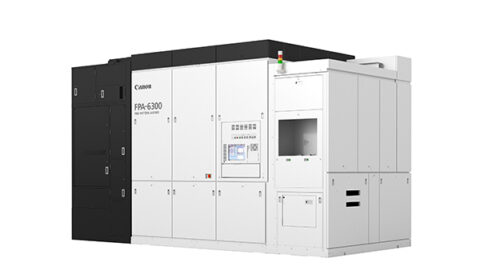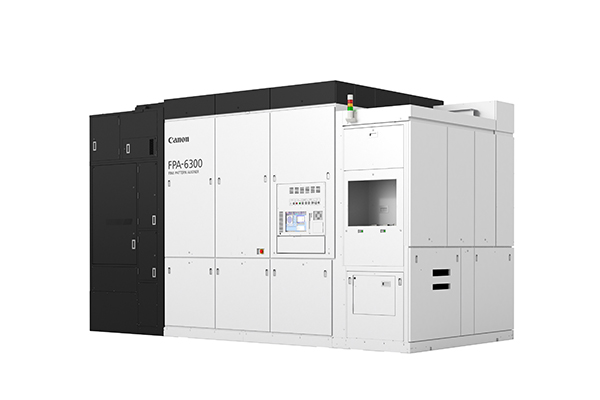
Canon ArF lithography scanner, Digimart Global: Canon has returned to the ArF dry lithography market with the FPA-6300AS6, a chipmaking scanner designed for memory, power devices, sensors and other mature-node production. According to a press release issued by Canon on November 24, the system will be available for sale from December 2026.
The company says it first released an ArF dry semiconductor lithography system in 2002 with the FPA-6000AS4, after which it stepped away from advancing this segment. The new FPA-6300AS6 marks its return to the category, as the industry shifts toward more advanced lithography.
ArF refers to argon fluoride, and these systems use a 193 nm light source to print circuit patterns onto silicon wafers. Although extreme ultraviolet (EUV) equipment receives much attention for the most advanced semiconductors, ArF dry lithography remains in high-volume use for memory, automotive power, sensors and other devices.
Design and key specifications
Canon says the scanner builds on its established FPA-6300ES6a KrF platform while adding a new projection lens, along with enhanced wafer stage and illumination systems. The company claims this combination can handle a wide range of device types, substrate materials and manufacturing requirements.
According to the source, the scanner offers a numerical aperture of 0.93, throughput of up to 235 wafers, and overlay precision of 4 nanometers. The article notes that manufacturers need both precise patterning and sufficient throughput to keep factories economically viable.
Demand for mature-node chips
The launch comes as demand grows for mature and specialty chips used in electric vehicles, industrial equipment, power management, image sensors and data centre infrastructure. These chips may not carry the headline node labels such as 3nm or 2nm, but they are described as essential to the broader semiconductor supply chain.
Canon says the move also gives chipmakers more options, as lithography equipment grows in strategic importance. With the FPA-6300AS6, the company states that its lineup now includes i-line, KrF and ArF optical lithography systems, along with nanoimprint lithography systems.
The source was not independently verified.