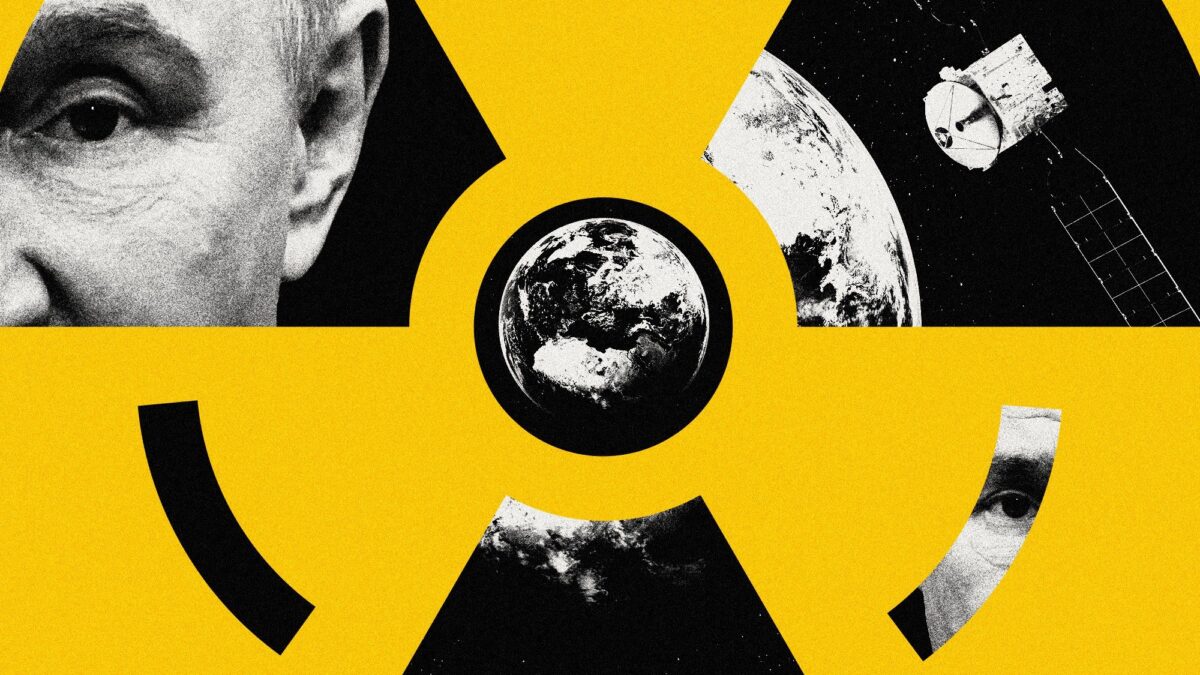
Russia nuclear space weapon, Digimart Global: Russia nuclear space weapon claims have drawn attention in Nato circles after German media reported a warning from the BND, Germany’s spy agency. According to a joint investigation by several German media outlets, Russia has assembled a nuclear-armed satellite, Sputnik-S, and could launch it within 60 days.
The claims remain unverified and are viewed sceptically by nuclear experts, although Western leaders are taking them seriously. The Telegraph, the source publication, notes that the reports underline how space could become a new frontier in the new Cold War.
Why a nuclear blast in space is so damaging
Nuclear detonations in orbit can cause widespread disruption. The source cites the 1960s US Starfish Prime test, which crippled a third of the world’s satellites and knocked out street lights in Hawaii.
A recent study by the universities of Wisconsin-Madison and Princeton also found that a nuclear blast in space could cripple most of the roughly 16,000 satellites in low Earth orbit.
Such an explosion can trigger an electromagnetic pulse that damages satellites and disrupts energy grids far from the blast. Technology relying on satellite data, including communications, GPS navigation and weather monitoring, would be affected.
Expert scepticism over the plan
Dr Bleddyn Bowen, an associate professor of astropolitics at Durham University and a nuclear weapons specialist, told The Telegraph there is little detail about what Russia plans. He said deploying nuclear weapons in space would be impractical, since such weapons would be as vulnerable as the satellites they target and could not be maintained easily.
He added that Russia could already detonate a bomb in space using its existing arsenal launched from Earth.
Dr Bowen also said that any such detonation would be indiscriminate, affecting Russian infrastructure and possibly that of China, Russia’s ally. He noted that the reported plan would breach the 1967 Outer Space Treaty and the 1963 Partial Nuclear Test Ban Treaty, both of which forbid nuclear weapons in space.
He suggested the reports could reflect Moscow’s typical sabre-rattling, while stressing that any use would carry huge systemic risks.