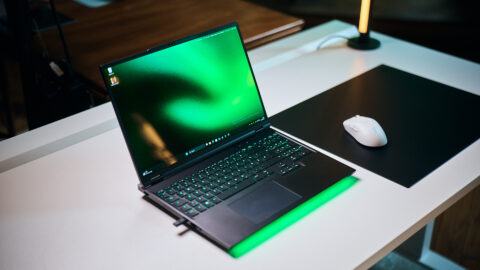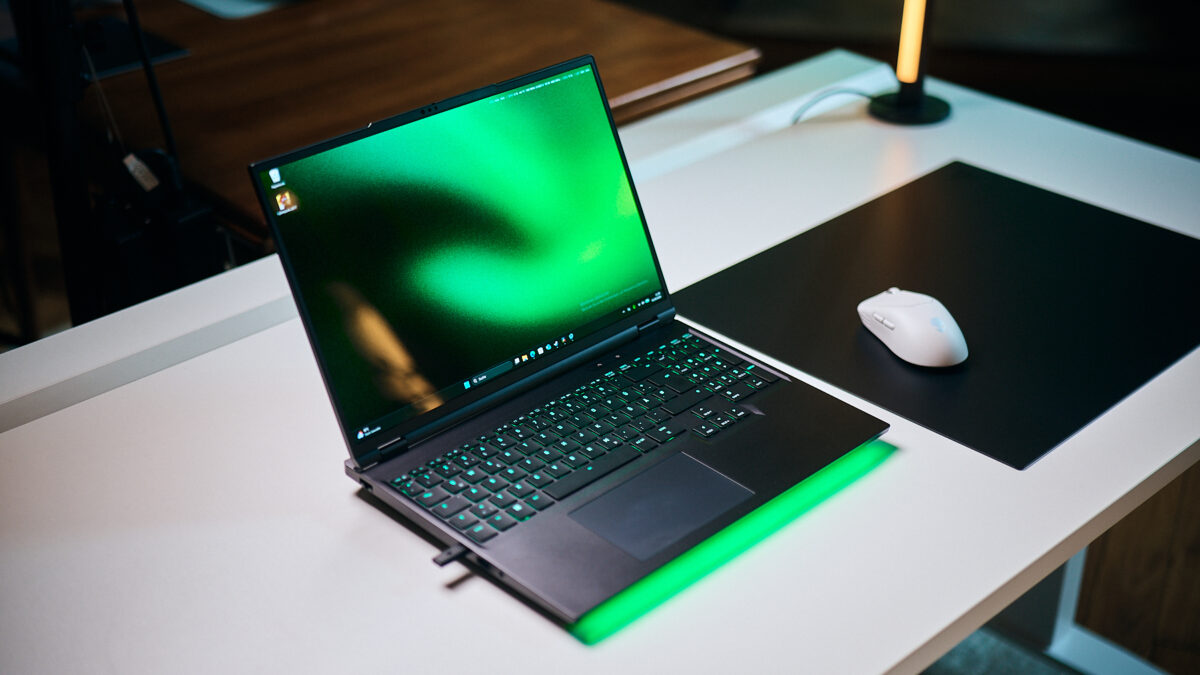
XMG Neo 16 display options, Digimart Global: The XMG Neo 16 is one of the fastest gaming laptops on the market, and for the 2026 model year buyers can choose from three display options. Alongside the standard 2.5K IPS panel with a 300 Hz refresh rate, which also appears in less expensive XMG laptops, buyers can opt for a matte Mini-LED display or, for the first time, a glossy OLED screen.
According to a Notebookcheck review, both upgrades offer noticeably better image quality than the standard IPS panel and cost the same to add. The publication tested both versions of the XMG Neo 16 (M26), analysed the panels in detail and checked how each affects battery life.
Mini-LED: brightness and G-Sync support
The matte Mini-LED panel has a 300 Hz refresh rate and supports Nvidia’s G-Sync technology, which the publication describes as a first for this option. It reaches a peak of 1,500 nits and offers fast response times, which the review says make it well suited to fast-paced shooters.
OLED: depth and response times
The new OLED panel tops out at 240 Hz and has a glossy finish that can make reflections more noticeable. According to the review, it gives the image a slightly greater sense of depth than the Mini-LED panel and offers even faster response times.
The trade-offs are that it lacks G-Sync support, although it supports VRR, and that the tested unit’s peak HDR brightness was considerably lower.
Battery life
In the Notebookcheck Wi-Fi battery test, the Mini-LED version lasted slightly longer at 150 nits, while the OLED version pulled ahead at full brightness. The publication notes that OLED screens draw more power when displaying bright content, so its Wi-Fi test using bright websites represents a worst-case scenario for OLED.
Colour accuracy for photo work
Both displays offer accurate sRGB profiles and are suitable for photo editing, according to the review. The preinstalled profiles for the wider P3 colour space are not ideal on either model, but the publication’s own calibration produced a noticeable improvement, so both can be used for P3 work as well.
Overall, the review gives the Mini-LED display a slight edge, mainly because of G-Sync support and higher brightness, while the OLED panel adds a little more depth. Notebookcheck concludes that both displays are excellent for gaming.
Detailed measurements and both calibrated colour profiles are available in the publication’s full Neo 16 M26 review.