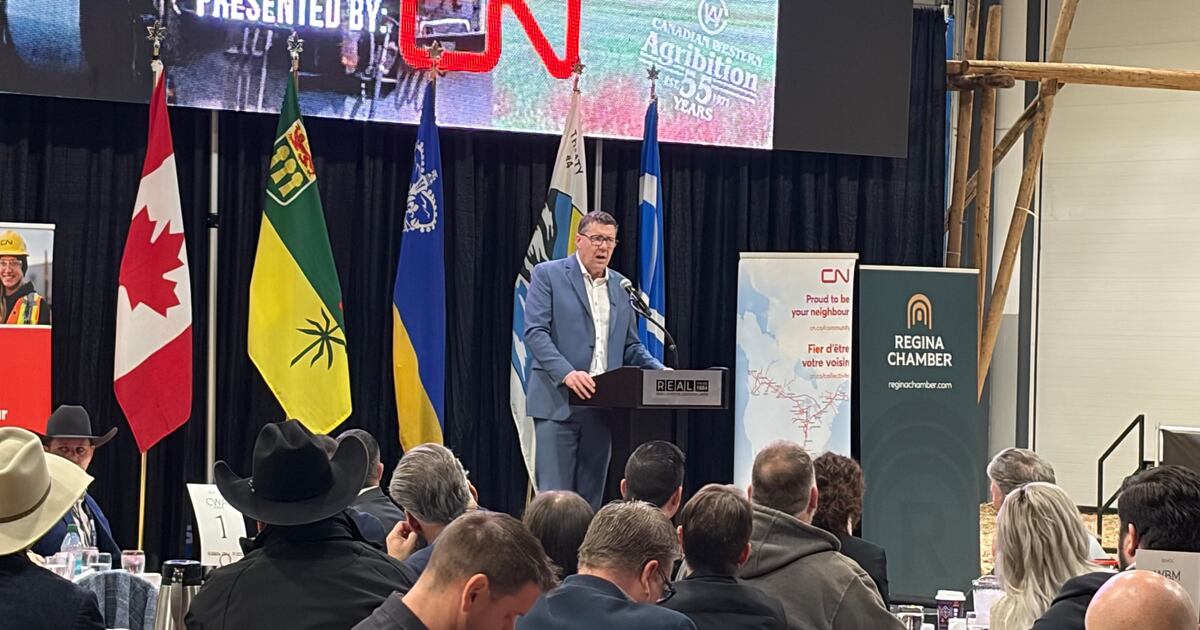
Saskatchewan agriculture exports, Digimart Global (Regina, Saskatchewan): Saskatchewan Premier Scott Moe delivered a keynote address to industry leaders during breakfast on the second day of the Canadian Western Agribition in Regina. He focused on the industry’s growth and its ability to navigate economic challenges, including tariffs and geopolitical tensions that have created uncertainty for producers and exporters.
Moe said the province has faced several significant trade disputes in recent years, including three significant tariff challenges with China, two with India and a significant one with the United States. He said these disputes are not directly affecting agricultural commodities, but are having an effect on equipment and some manufacturing exports.
Rising input costs for producers
Global pressures are also raising the cost of doing business for producers. Kristjan Hebert, president of the Hebert Group, said geopolitical developments are having an increasingly significant impact on agricultural costs, including fuel.
He said that geopolitical risk is driving the input side of both grain farming and ranching more than it has historically, citing a fuel price effect linked to the Strait of Hormuz, where diesel prices were said to have risen by 250 per cent.
Exports and the agricultural outlook
Despite trade tensions with the United States, Moe said the country remains Saskatchewan’s largest export destination, accounting for approximately 54 per cent of the province’s exports. He also pointed to growth in the value of agricultural exports, saying that about 20 years ago the province exported roughly $17 to $18 billion in total, while today it exports between $18 and $20 billion in agricultural commodities alone.
Moe said Saskatchewan agriculture remains a growing industry with opportunities ahead, and closed his remarks by urging industry leaders to invest in current and future agricultural projects in the province. The Canadian Western Agribition continues in Regina until Saturday, November 28.