Iran-linked maritime cyberattacks, Digimart Global: U.S. government intelligence suggests that up to 50 commercial shipping vessels were recently compromised by cyberattacks, and federal officials are investigating whether the activity is linked to Iran.
The information came from a U.S. official familiar with the matter who was not authorized to speak on the record, a former military cyber operator, and an industry executive briefed on the attacks.
The series of breaches was first reported by The Wall Street Journal, according to NPR’s publisher report.
If officials’ suspicions are correct, the attacks against the maritime sector may be the latest example of Iranian cyber activity targeting global critical infrastructure during the ongoing war with the United States. NPR has previously reported that cybersecurity experts and U.S.
officials believe Iranian hackers were responsible for digital attacks on U.S. water treatment systems in August, as well as attacks on refrigeration cooling systems that spoiled food at grocery stores on U.S.
military bases and across Europe as recently as early November.
Coast Guard and FBI response
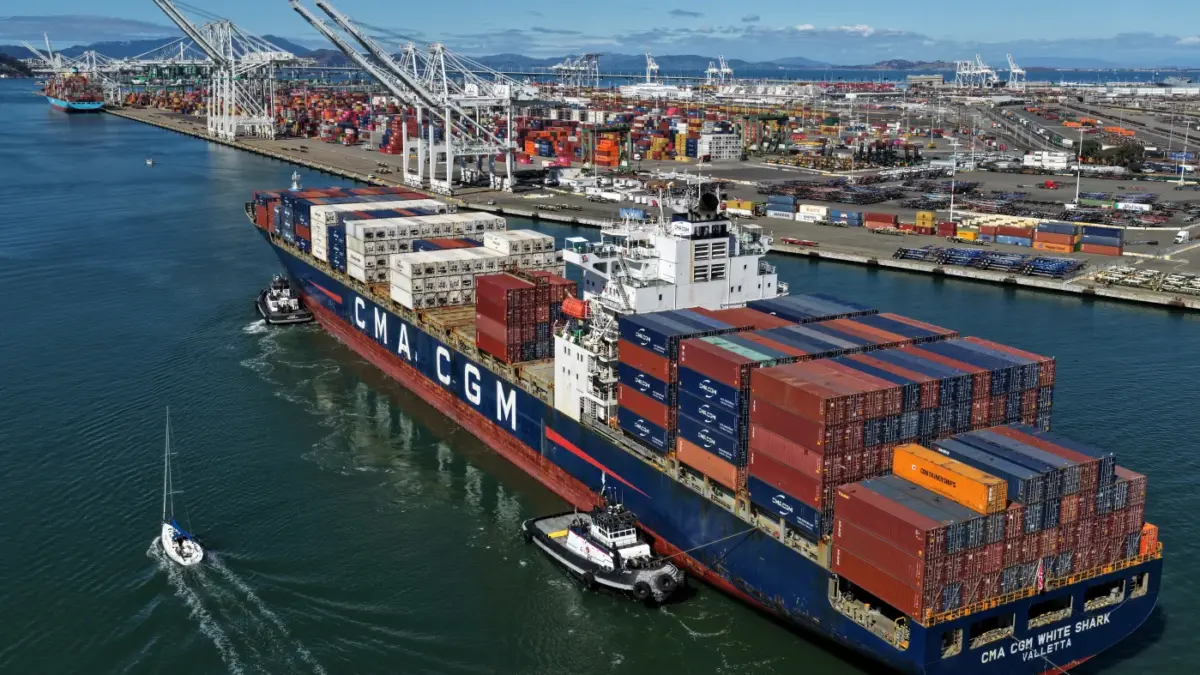
The Coast Guard and the FBI first partnered in August to send a “highly specialized team” to board two foreign commercial vessels “in the Gulf of America” that were heading to U.S. ports, according to a joint statement.
The agencies said the captain, crew and shore-side corporate staff helped ensure the threats were mitigated. The FBI and Coast Guard press offices told NPR there are no current reports of operational disruptions, vessel instability, physical danger to crews, or environmental impacts.
The U.S. official said dozens more ships in international waters are believed to have been compromised, and many others may be vulnerable to similar attacks.
The U.S. official declined to explain how the government learned the extent of the breaches across the sector.
How the vessels were reportedly breached
According to the U.S. official, hackers took advantage of known vulnerabilities in Fortinet FortiGate devices, which are frequently used in the maritime industry to manage firewalls and virtual private networks.
The Coast Guard and FBI issued a cyber bulletin in September warning the industry that attackers were breaking into these devices. In some cases, crew members noticed email disruptions, login failures or, in at least one case, an extended communications blackout.
The U.S. official said hackers were able to pivot from ships’ IT systems to operational technology networks that control physical processes.
Although no examples of such activity were shared, the official said the attackers “could have impacted the systems on board that control propulsion, steering, navigation, and cargo management.” In at least one case, an affected ship was an LNG tanker designed to transport liquefied natural gas, where maintaining systems at set temperatures is important to prevent dangerous accidents.
Broader security concerns
Commercial vessels have long faced physical security reviews when entering the United States, but digital threats are becoming increasingly important because adversaries can cause damage remotely. The Coast Guard said modern ships are highly integrated systems and that a cyberattack presents significant risks, including the potential for a collision, grounding, oil spill or explosion.
The agency regularly publishes bulletins on cyber vulnerabilities and steps vessel owners and operators can take to secure their networks.
Ahead of winter and the busy holiday shipping season, officials are preparing to investigate any ship entering U.S. ports that could be compromised.
The U.S. official said that while the attacks were not sophisticated, they exploited a known vulnerability that could be reduced with basic cyber hygiene.