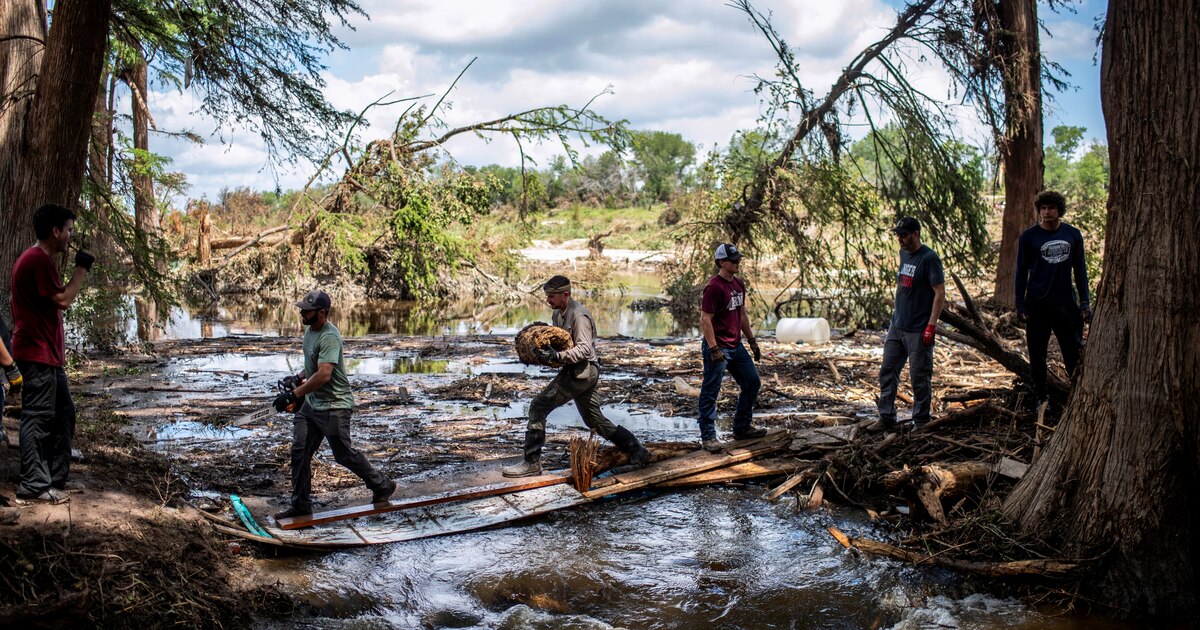
Guadalupe River cypress restoration, Digimart Global (Kerr County, Texas): The San Antonio Botanical Garden has spent months growing 50,000 native trees to replant along the Guadalupe River in Kerr County, where floods on July 4, 2025 killed more than 100 people, according to a report by The Texas Tribune. The floods destroyed homes, swept away cars and stripped the riverbanks that had shaped the region’s landscape for centuries.
Volunteers began planting the first saplings this November, and the goal is to place all 50,000 trees within two years. The project started with the collection of more than 850,000 cypress seeds from local properties, but only about one third germinated.
Twelve state nurseries then raised the seedlings for months under water and nutrient stress to make them more resilient. The plants currently stand 30 to 60 centimeters tall.
Floods erased half the vegetation along the river
The Guadalupe River lost nearly half of its vegetation along 48 kilometers (30 miles), according to an analysis by the Upper Guadalupe River Authority and the Bandera County River Authority and Groundwater District. Rescue crews used heavy machinery to search for bodies and clear debris, scraping the soil and compacting it, which also removed beneficial plant matter that remained.
A second flood struck the county in July 2026, while the community was still mourning. Cypress trees had played a central role in the ecosystem, keeping water cool for aquatic life, stabilizing banks with their roots, providing habitat for insects, birds and mammals, and slowing water so that soil could accumulate around them.
They also anchored the region’s identity, having been logged by early settlers in the 19th century for shingles.
Using local seeds to preserve the river’s genetics
Rather than buying trees raised in other states, the San Antonio Botanical Garden collected cones from properties in the region where cypress were already adapted to the Hill Country climate and limestone soils. Michael Eason, the garden’s vice president of conservation, said landmarks he relied on had simply disappeared after the floods.
The project also includes willows, black walnuts, oaks and sycamores, and the Hill Country Alliance has supported landowners with workshops and free seed distribution.
Planting and funding
The garden held its first planting day on November 5, timed to match when seeds naturally fall to the ground, and has since organized weekly planting with volunteers from Kerrville, Austin and San Antonio. The project received a $2 million donation from the Hill Country Community Foundation, which also pledged to match each additional dollar donated until April 15, up to $1 million.
Officials acknowledge that cypress trees take decades to reach full height and that the saplings face risks from deer, future droughts and invasive species. Erin Davis of the Texas A&M Forest Service said the river will recover, but that humans have an important role in guiding that restoration.