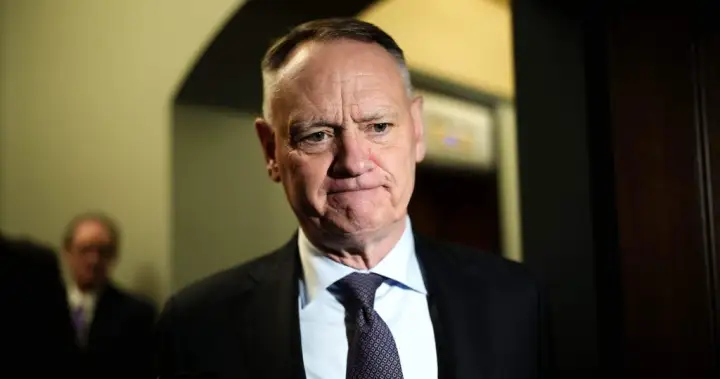
Pentagon Canada defence spending, Digimart Global (Ottawa): Defence Minister David McGuinty says he cannot explain the thinking behind recent criticism of Canada’s defence spending by the Pentagon. The Pentagon released what it called a “fact sheet” on Monday stating that Canada’s defence spending has limited the country’s ability to contribute to the protection of North America.
The criticism follows a classified memo issued last week by U.S. Defence Secretary Pete Hegseth, which imposed restrictions on military co-operation with Canada around think-tanks and socializing.
Speaking to reporters in Ottawa on Tuesday, McGuinty said he could not explain the messaging from Hegseth and the Pentagon, adding that Canada’s co-operation with the United States, whether directly or through NATO or Norad, has not changed.
Canada’s focus on defence commitments
McGuinty said the government is concentrating on executing its defence plans, including acquisitions, rebuilding 33 bases, improving recruitment and retention, and addressing cadet challenges. He said Canada will continue to execute those plans.
NATO spending targets and the four per cent plan
Prime Minister Mark Carney said last March that Canada had met for the first time the NATO requirement to spend the equivalent of two per cent of GDP on defence, a target set in 2014. At last year’s NATO meeting in The Hague, members agreed to raise defence spending to the equivalent of five per cent of GDP by 2035, including 3.5 per cent on core military and defence and 1.5 per cent on broader security and defence-adjacent investments.
Asked whether Canada would meet the five per cent commitment, McGuinty said Canada has a path to spending the equivalent of four per cent of GDP on defence by 2030. When asked how the U.S. reacted to that plan, he said, “Canada is a sovereign nation.
I’ll be very direct. We don’t report to the United States.”
What the federal budget includes
The recent federal budget set a course to meet spending targets by 2030 but did not look at spending beyond that year. The plan includes spending 2.6 per cent of GDP, or about $99 billion, on core military needs, including ammunition and soldiers’ salaries.