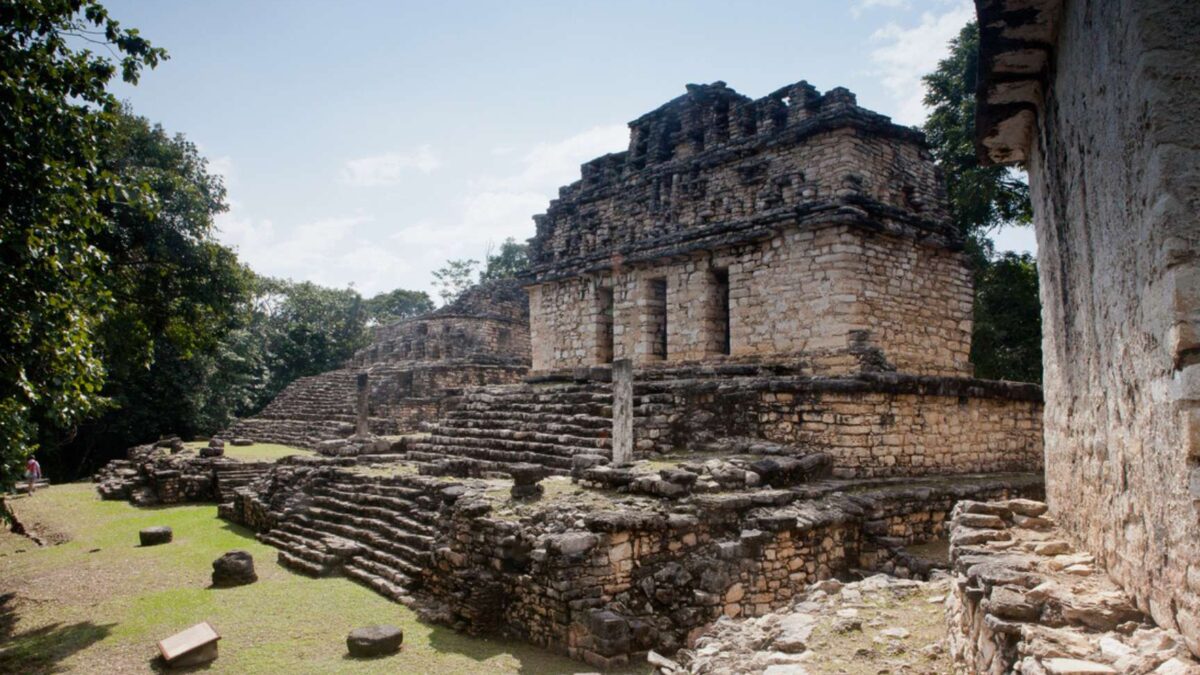
Ake Maya city residents, Digimart Global (Yucatán, Mexico): For a long time, researchers assumed the Maya city of Ake was deserted after its political collapse around 900 CE, when it had reportedly held as many as 19,000 inhabitants. According to a publisher report on research by Roberto Rosado-Ramirez of the University of Virginia, published in the journal Latin American Antiquity, excavations have instead uncovered evidence of later occupation.
The archaeologists identified 96 small structures built inside the walled centre of Ake. These lightweight buildings, with posts and thatched roofs, differ sharply from the earlier monumental architecture.
Some were placed directly over former plazas, collapsed roads and rubble, and some reused large stone blocks from ruined buildings as foundations.
Pottery found in the mounds and in a waste pit dates the occupation to roughly 1100 to 1550 CE. That span suggests a settled, daily presence lasting about four and a half centuries after the city’s political decline, rather than a temporary camp.
The finds also point to continuing cultural life. Residents appear to have cooked, woven and prayed, and ceramic animal figurines recovered from the rubble of one structure suggest a symbolic attachment to the site.
According to the report, Spanish colonial pressure later led to the removal of the inhabitants between 1567 and 1580.
The findings challenge the idea that the collapse of a Maya city meant its total disappearance. The source article notes that the research has not been independently verified, and it highlights how smaller, less visible dwellings can add to the picture given by monumental architecture.