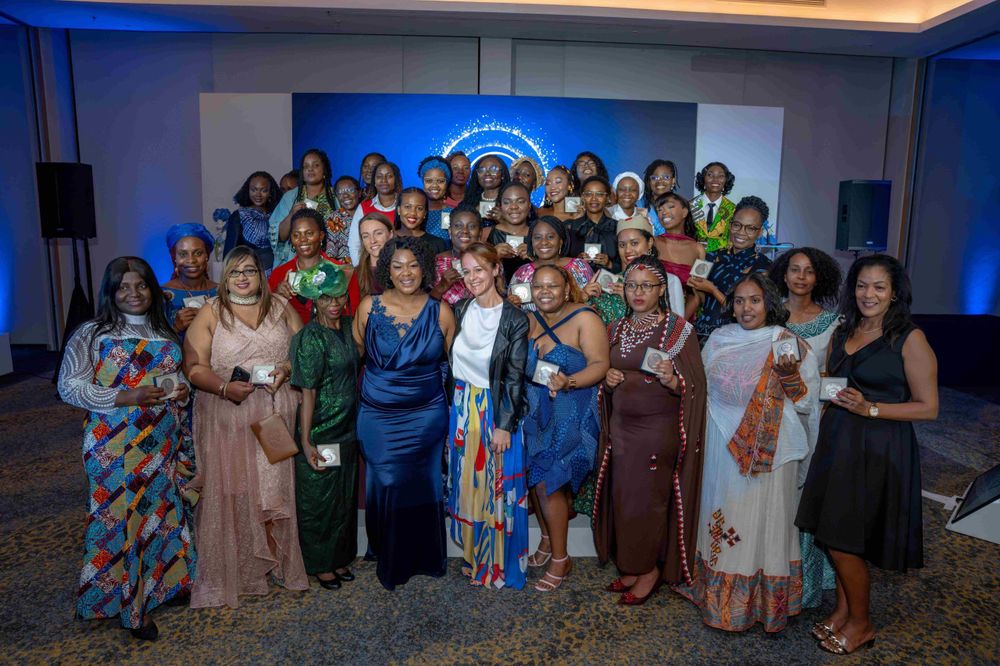
Women in science awards, Digimart Global (South Africa): Eight South African women scientists have won top regional honours at the 2026 L’Oréal-UNESCO For Women in Science Awards for Sub-Saharan Africa, according to a publisher report from IOL. The recipients beat more than 1,000 applicants across the region, with projects spanning healthcare, water, agriculture, energy and technology.
Among the winners, University of Cape Town researcher Nonjabulo Mbhele studies how municipalities manage water and sanitation infrastructure across its full life cycle, from planning and construction to operation, maintenance and renewal. She develops performance measures to pinpoint weaknesses and help authorities improve service reliability.
Fellow winner Nikita Singh is testing whether wastewater treatment systems can also recover valuable resources, examining a 240-litre airlift raceway reactor that combines duckweed and microalgae.
Research on drought, health and clean energy
Also at the University of Cape Town, Shandry Tebele investigates how certain plants survive severe drought by studying the interaction between plant roots and soil microorganisms. By comparing drought-tolerant species with agricultural crops, she aims to help breeders develop crops that withstand water scarcity.
At the University of Pretoria, Johncy Mahapane is working to extend the shelf life of Actinium-225 Substance P, an investigational radiopharmaceutical for glioblastoma, to at least five days, a window that would allow specialists to transport the treatment from central production facilities to distant hospitals.
Other health-focused projects include Roxanne Malan’s artificial intelligence-supported system, which pairs a smartphone camera with diagnostic software to detect and monitor voice disorders and aims to reach patients in underserved communities. At the Wits Donald Gordon Medical Institute, Caitlin Wheeler maps genetic patterns linked to autoimmune liver disease to build local clinical evidence.
Durban University of Technology winner Hlengiwe Nombuso Mtetwa analyses wastewater for early warning signs of tuberculosis, drug resistance and other infectious diseases.
Clean energy and wider impact
At the University of Limpopo, Lebogang Motsomone uses computer modelling to test high-entropy alloys as potential materials for hydrogen storage, examining how their composition and structure affect hydrogen absorption.
Michelle Gololo, L’Oréal Sub-Saharan Africa corporate affairs and engagement lead, said raising the visibility of women’s research helps correct the persistent gender imbalance in science across the continent. Since 1998, Fondation L’Oréal and UNESCO have run the For Women in Science programme, supporting more than 5,000 researchers across more than 140 countries.