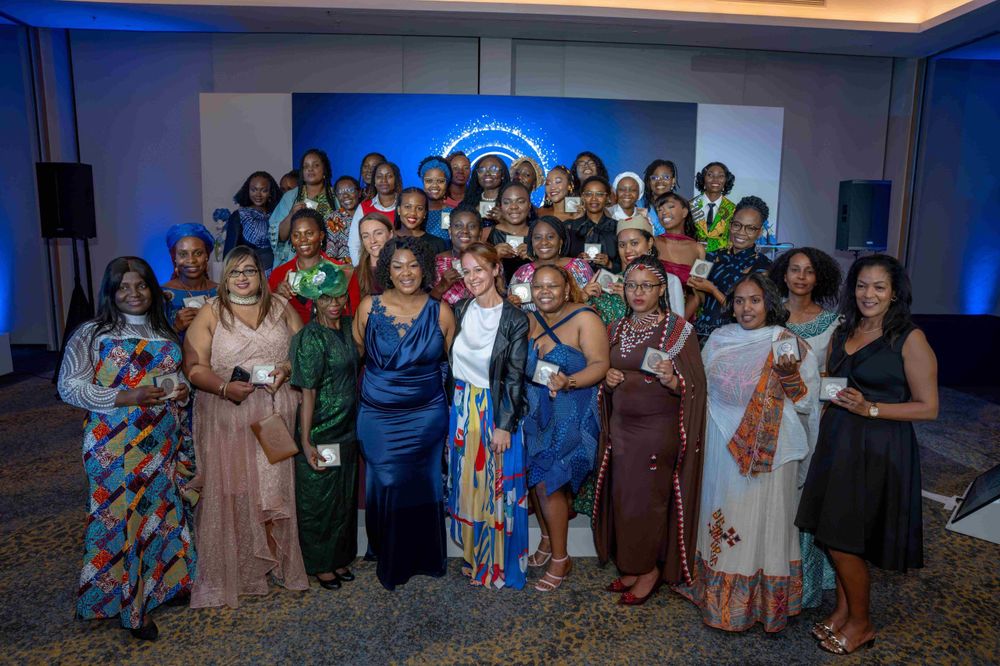
L’Oréal-UNESCO women in science awards, Digimart Global (South Africa): Eight South African women scientists have won top regional honours at the 2026 L’Oréal-UNESCO For Women in Science Awards for Sub-Saharan Africa. According to the publisher report, the recipients beat more than 1,000 applicants across the region, with projects spanning healthcare, water, agriculture, energy and technology.
Water, agriculture and clean energy research
University of Cape Town researcher Nonjabulo Mbhele is developing performance measures to pinpoint weaknesses in municipal water and sanitation infrastructure, from planning and construction to operation, maintenance and renewal. Fellow winner Nikita Singh is testing whether wastewater treatment systems can also recover valuable resources, using a 240-litre airlift raceway reactor that combines duckweed and microalgae.
Her work examines whether the system can treat wastewater, recover resources and support future biofuel production.
Also at the University of Cape Town, Shandry Tebele studies how plant roots and soil microorganisms interact in drought-tolerant species. By comparing these with agricultural crops, she aims to help breeders develop crops that withstand water scarcity.
At the University of Limpopo, Lebogang Motsomone uses computer modelling to test high-entropy alloys as potential materials for hydrogen storage, examining how their composition and structure affect hydrogen absorption.
Health research and diagnostics
At the University of Pretoria’s Nuclear Medicine Research Infrastructure, Johncy Mahapane is working to extend the shelf life of Actinium-225 Substance P, an investigational radiopharmaceutical for glioblastoma, to at least five days. A longer window would allow specialists to transport the treatment from central production facilities to distant hospitals.
Fellow University of Pretoria winner Roxanne Malan has built an artificial intelligence-supported system that pairs a smartphone camera with diagnostic software to detect and monitor voice disorders, aiming to reach patients in underserved communities.
At the University of the Witwatersrand’s Wits Donald Gordon Medical Institute, Caitlin Wheeler is mapping genetic patterns linked to autoimmune liver disease to build local clinical evidence for diagnosis and patient care. At the Durban University of Technology, Hlengiwe Nombuso Mtetwa analyses wastewater for early warning signs of tuberculosis, drug resistance and other infectious diseases, with the aim of helping public-health teams detect and contain outbreaks faster.
Visibility for women in African science
Michelle Gololo, L’Oréal Sub-Saharan Africa corporate affairs and engagement lead, said raising visibility helps correct the persistent gender imbalance in science across the continent. Gololo said that when African women’s research is seen, funded and cited, it changes who gets to lead and who believes they can.
Since 1998, Fondation L’Oréal and UNESCO have run the For Women in Science programme, supporting more than 5,000 researchers across over 140 countries.