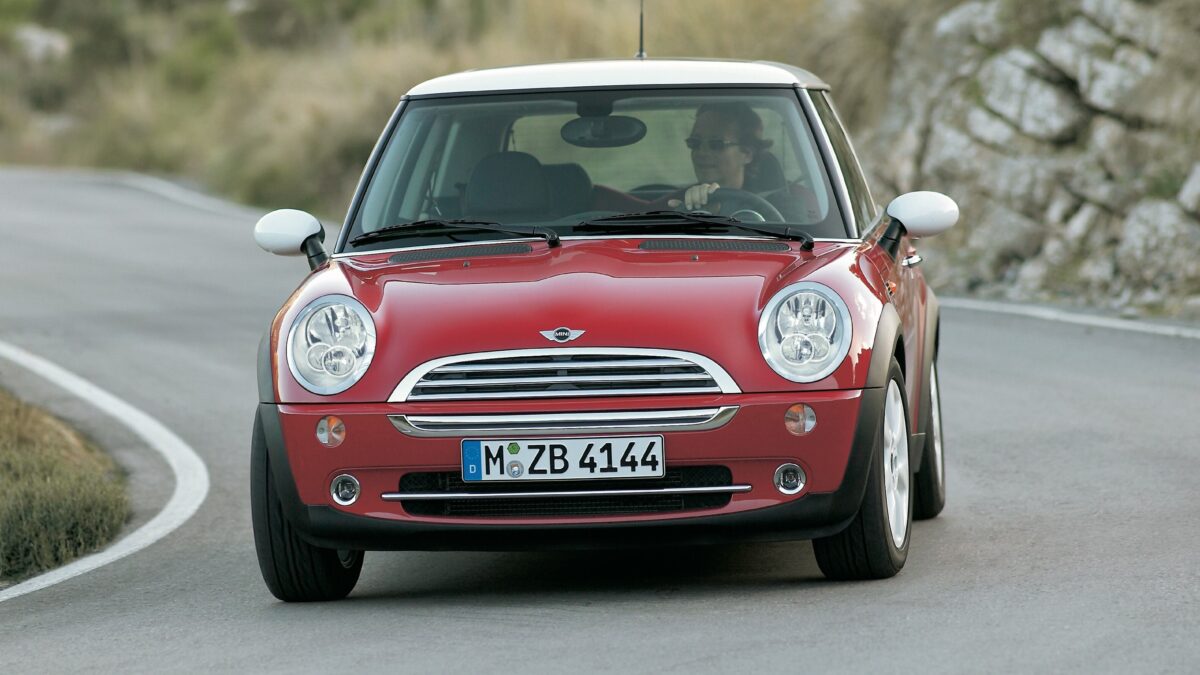
MINI Cooper R50 buyer’s guide, Digimart Global: Replacing the original Mini was always going to be a tall order. Designed by Alec Issigonis and launched in 1959, the iconic British small car remained in production for 41 years, with nearly 5.4-million examples built.
When BMW announced plans to reinvent it, scepticism was considerable, but the new model that arrived in July 2001 quickly won buyers over.
Retaining the round headlights, short overhangs and upright proportions of its predecessor, the R50 proved an instant hit. Demand was so strong that BMW introduced a weekend production shift at Plant Oxford within months of launch, and the 100,000th example rolled off the line just 13 months after production began.
Now 25 years old, the R50 is attracting modern-classic enthusiasts, but time has not been kind to every example on the used-car market. The range comprised the naturally aspirated Cooper and the supercharged Cooper S, both powered by a 1.6-litre four-cylinder engine.
The guide focuses on the Cooper, which produced 85kW and 149Nm, driving the front wheels through a five-speed manual or a continuously variable transmission (CVT). In manual form it had a claimed 0-100 km/h time of 9.2 seconds.
Why the facelift manual is the sensible starting point
In its July 2001 first drive, Top Gear praised the Cooper’s refinement, driving position and agility. Rear-seat space was tight and luggage capacity was just 150 litres behind the second row, compromises that have persisted in later Minis.
The Mini arrived in South Africa in April 2002, with the hatchback recording 898 local sales in its first year.
For someone intending to use and enjoy an R50, a well-maintained facelift manual is the sensible choice. Production of the updated model began in July 2004, bringing subtle styling and cabin changes and a new Getrag five-speed gearbox.
Earlier manual models used a Midland gearbox, whose bearings warrant particular attention. Mini specialist Mintech Spares identifies bearing failure, low oil levels and clutch-fork problems among its known faults, and whining, rumbling or difficulty selecting gears should be investigated before purchase.
Transmission and steering checks
The later Getrag gearbox is one reason to favour the facelift, although it is not immune to bearing wear and gear-selection problems. The CVT requires greater caution and is best avoided, according to Mintech, which identifies valve-body and electronic-control faults as common problems.
A Mini USA technical bulletin published in 2014 documented a warranty extension for qualifying replacement CVT components following a class-action settlement in that market, but this did not apply to Minis sold locally. If an automatic is essential, have it assessed by a transmission specialist, check its repair history and test the car both cold and fully warmed up.
Power steering also deserves close attention. Certain early Minis were recalled in the US over a possible loss of electro-hydraulic assistance, with the repair covering the pump, its cooling fan and associated wiring.
Heavy or intermittent steering should therefore be investigated.
Cooling, suspension and interior
The cooling system should be pressure-tested, with attention to the thermostat housing, radiator, hoses and water pump for leaks. Hella’s technical guidance also identifies air locks as a possible cause of temperature fluctuations on these engines, making correct filling and bleeding after repairs important.
First-generation cars are prone to wear in the front lower control-arm bushes, which should be inspected alongside the ball joints, dampers and mounts. Inside, test all electrical equipment and the air-conditioning, check for damp carpeting, and have any warning lights or stored fault codes investigated before agreeing on a price.
A classic, but not necessarily an investment
The R50 has a credible claim to modern-classic status, having reinterpreted a much-loved design and established the character of the modern Mini. However, AutoTrader figures show what sellers are asking but do not prove that values are rising or that the cars command a collector premium.
An original, carefully maintained manual is an appealing enthusiast purchase on its own merits. A good facelifted Cooper is the easiest place to start, while a properly maintained early example also deserves consideration.
The better buy is the one whose owner can show what has been done and whose inspection leaves the fewest expensive questions unanswered.